
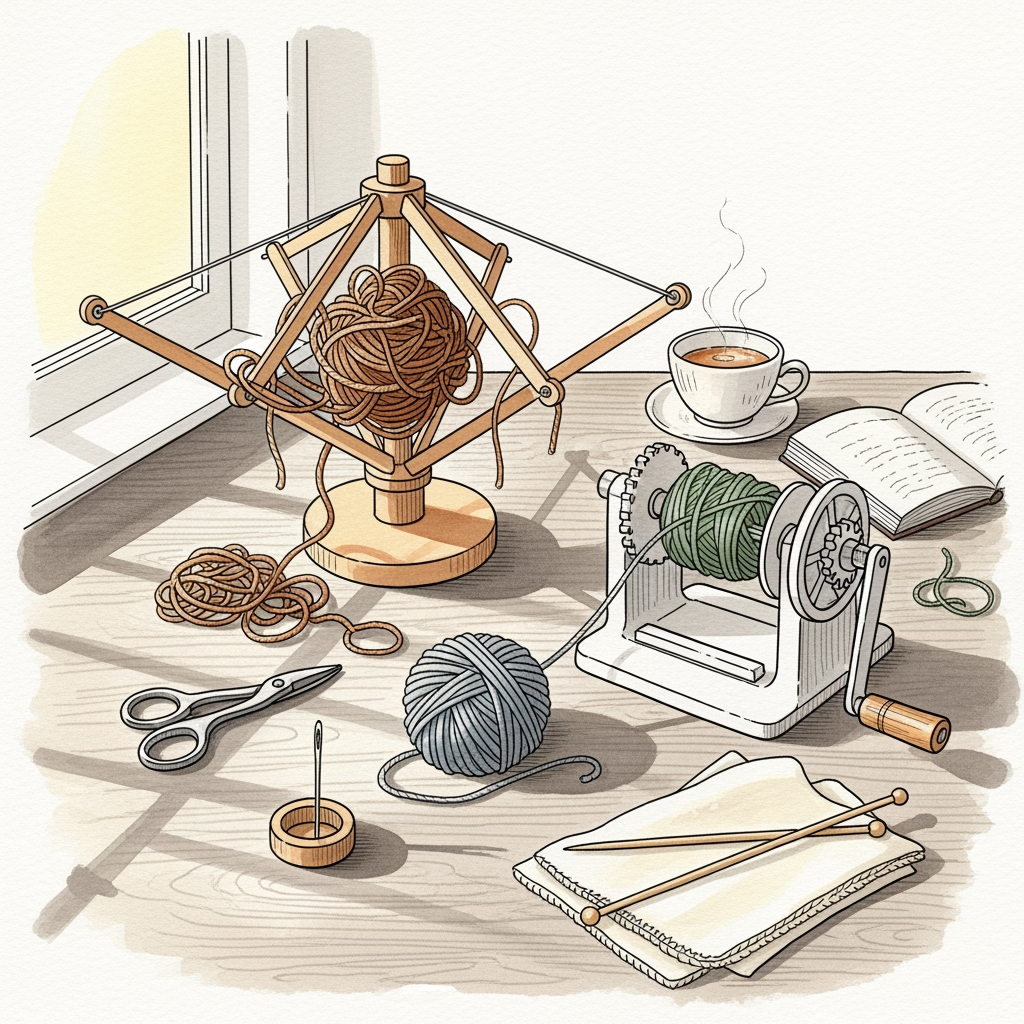
6 Best Swift Umbrellas For Skein Management Tested
Struggling with tangled yarn? We tested six top swift umbrellas to find the best for smooth skein management. Discover our top picks for effortless winding.
Nothing ruins the meditative rhythm of a new project quite like a tangled mess of yarn halfway through the winding process. A reliable umbrella swift acts as the third hand every knitter needs to transition from a loose hank to a tidy, workable cake. Choosing the right tool depends on your space, the frequency of your winding, and the types of fibers you prefer to work with. This guide breaks down the best options on the market to ensure your yarn stays pristine and your sanity stays intact.
Stanwood Needlecraft Tabletop Swift: Best Overall
This swift is the industry workhorse for a reason, balancing durability with a smooth, silent rotation. It features a heavy-duty metal clamp and a sturdy wooden frame that handles everything from delicate lace-weight silk to bulky wool blends without wobbling.
The standout feature here is the precision-engineered ball bearing system. It ensures the swift spins with the slightest tug, which is critical when you are winding high-twist yarns that might snap if they hit sudden resistance.
If you have a dedicated craft space, this is the gold standard. It’s reliable, predictable, and holds up to years of heavy use.
Amish-Style Wooden Swift: Best Non-Rotating Pick
Unlike traditional umbrella swifts, the Amish-style model sits on your table and relies on the yarn itself to pull the pegs around. It doesn’t use gears or complex umbrella mechanisms, making it virtually indestructible.
Because it is stationary, it is often preferred by knitters who worry about "yarn fly-away" where a spinning swift gains too much momentum. It’s also incredibly easy to store, as it breaks down into flat, slim pieces that tuck away into a drawer.
However, keep in mind that it requires a bit more manual oversight. It’s perfect for those who want a simple, low-maintenance tool that will last a lifetime.
Lacis Wooden Umbrella Swift: Best Premium Choice
When you invest in the Lacis, you are paying for exquisite craftsmanship and superior wood finish. The wood is sanded to a glass-like smoothness, which is vital when handling luxury fibers like mohair or angora that tend to snag on rough surfaces.
This swift is designed for the knitter who treats their tools as part of their craft. It operates with a level of grace that cheaper models simply cannot replicate, providing a consistent tension that prevents the yarn from stretching unevenly.
If you handle expensive hand-dyed yarns or delicate protein fibers, the extra care in the construction of this swift is worth the investment. It protects the integrity of your yarn from the moment it leaves the hank.
Knit Picks Yarn Swift: Best Value for Beginners
If you are just starting to build your stash and aren’t ready to drop a large sum on equipment, this is your best entry point. It is lightweight, intuitive to set up, and gets the job done efficiently for standard-sized hanks.
The trade-off for the lower price point is a lighter construction that may feel slightly less stable when dealing with very large, heavy skeins. It is perfectly adequate for most worsted or DK weight projects, but you’ll want to keep an eye on it during high-speed winding.
For someone winding their first few skeins of wool, this tool provides the perfect balance of function and affordability. It’s the ideal "starter" swift that won’t hold you back as you learn the ropes.
ChiaoGoo Yarn Swift: Best for Heavy Skein Loads


ChiaoGoo is famous for their needles, and they bring that same engineering rigor to their swift. It is built to handle the weight of heavy, 200-gram skeins of bulky yarn without the frame bowing or the tension slipping.
The metal components are robust, and the umbrella mechanism is reinforced to handle more torque than standard wooden models. If you frequently work with heavy, rustic wools or large-yardage hanks, this is the model that won’t buckle under the pressure.
It’s a serious tool for the serious knitter. You won’t have to worry about the swift collapsing or wobbling while you’re trying to wind a massive skein for a heavy winter sweater.
Strauch Ball Winder and Swift: Best Combo Unit
Sometimes, the best approach is to stop buying pieces individually and invest in a cohesive system. The Strauch combo unit is designed to work in perfect harmony, ensuring that the alignment between the swift and the winder is always spot-on.
The primary benefit here is alignment and tension control. Most tangles occur because the swift is positioned at an awkward angle relative to the winder; this unit removes that variable entirely.
While it takes up more permanent real estate on your table, the time you save by not having to re-adjust your setup is invaluable. It’s the ultimate choice for the high-volume knitter who wants a "set it and forget it" experience.
How to Properly Set Up Your Umbrella Swift
The most common mistake knitters make is placing the swift too far from their ball winder. You want the yarn to travel in a straight line with just enough slack to allow the swift to rotate freely without pulling the yarn taut.
Start by securing the clamp to a sturdy, flat surface; a wobbly table will result in a wobbly winding experience. Once secured, expand the umbrella to the size of your hank, ensuring the yarn sits snugly but not so tightly that it stretches the fibers.
- Check for level: Ensure the swift isn’t leaning, which causes uneven tension.
- Remove ties carefully: Always untwist the yarn ties before placing the hank on the swift.
- Test rotation: Give it a gentle spin to ensure it moves freely before you attach the yarn to the winder.
Troubleshooting Common Swift Tangles and Snags
Even with the best tools, tangles happen, usually because the yarn was twisted during the dyeing or hank-winding process. If your swift stops spinning suddenly, do not pull! Stop immediately and inspect the point of resistance.
Often, a single strand has caught on a peg or wrapped around the central spindle. A quick, gentle nudge usually clears the issue, but if the yarn is knotted, you must stop to untangle it by hand to prevent permanent fiber damage.
If you find your yarn consistently snagging, check your swift for small nicks or splinters. A light sanding with fine-grit sandpaper can often restore a wooden swift to its original, snag-free state.
Essential Maintenance Tips for Wooden Swifts
Wooden swifts are living tools and require occasional care to stay in top shape. If you live in a very dry climate, the wood can become brittle, while humid environments can cause the joints to stick.
A tiny drop of food-grade mineral oil on the moving joints once or twice a year will keep the rotation smooth and silent. Avoid using heavy household lubricants, as these can stain your yarn.
- Keep it dry: Never store your swift in a damp basement or near a radiator.
- Wipe down: Use a soft, dry cloth to remove dust after each use.
- Check bolts: Periodically tighten any screws or bolts that may have loosened over time.
Why a Quality Swift Saves Your Skein Integrity
You might think a swift is just a convenience, but it is actually a tool for yarn preservation. Winding by hand or using a makeshift chair-back method often leads to uneven tension, which can stretch the yarn and ruin the stitch definition of your final fabric.
A quality swift allows you to wind a cake with consistent, gentle tension, ensuring that your yarn remains "lofty" and bouncy. This is especially important for delicate fibers like Merino or Alpaca, which can lose their natural elasticity if pulled too tight during the winding process.
Ultimately, a swift protects your investment in high-quality yarn. By treating your hanks with care, you ensure that your finished project looks professional, feels soft, and maintains its intended gauge for years to come.
Investing in a quality umbrella swift is one of the most practical upgrades you can make to your fiber arts toolkit. By choosing a model that matches your project volume and fiber preferences, you eliminate the frustration of tangled hanks and uneven tension. Whether you opt for the heavy-duty reliability of a Stanwood or the artisanal quality of a Lacis, your future self will thank you every time you start a new project. Happy winding, and may your yarn always flow smoothly.
