6 Best Fiber Scales for Weighing Raw Fleece
Accurately measuring raw fleece is vital for fiber artists. We review the 6 best scales offering the precision and durability needed for consistent results.
Processing raw fleece from the sheep’s back to the spinning wheel is one of the most rewarding journeys a knitter can undertake. However, without precise measurements, you risk running out of fiber mid-project or miscalculating your yield after scouring. Choosing the right scale ensures that your hand-spun yarn remains consistent from the first ounce to the last. This guide explores the best tools to help you manage your fiber stash with professional-grade accuracy.
My Weigh iBalance 201: Best for Heavy Fleeces


When you are staring down a five-pound raw fleece, you need a scale that won’t buckle under the weight. The My Weigh iBalance 201 is a workhorse that handles larger loads while maintaining the sensitivity required for smaller batches.
It features a high capacity and a large, stable weighing platform that accommodates bulky bags of unwashed wool. This is essential when you are calculating yield loss, as you need to weigh the "grease weight" before scouring and the "clean weight" after.
The trade-off here is the footprint; it takes up a significant amount of table space. If you are working in a small corner of a living room, ensure you have a dedicated station for it. It is the gold standard for those who buy fleeces by the whole bag rather than by the ounce.
Ohaus Scout Pro: The Professional Fiber Standard

The Ohaus Scout Pro is the tool you see in professional fiber laboratories and high-end spinning mills. Its primary advantage is its extreme stability and consistent calibration, which is vital when you are blending fibers like silk and Merino.
For a serious spinner, this scale removes the guesswork from calculating fiber percentages in a blend. If you are trying to replicate a specific 70/30 wool-to-mohair ratio, the Scout Pro provides the clinical precision needed to ensure your yarn’s texture remains identical across multiple batches.
It is an investment piece, certainly, but it is built to last for decades of heavy use. If you are serious about selling your hand-spun yarn or teaching workshops, this is the level of equipment that separates a hobbyist from a professional.
AWS-600 Digital Pocket Scale for Field Weighing

Sometimes you find yourself at a fiber festival, standing in front of a gorgeous Border Leicester fleece, and you need to know exactly how much you are buying. The AWS-600 is small enough to tuck into a project bag or a coat pocket.
It is surprisingly accurate for its size, making it perfect for quick spot checks. While it lacks the platform size for a whole fleece, it is ideal for weighing out specific amounts of fiber for dyeing or blending on the go.
Don’t expect it to handle heavy, damp, or greasy raw wool effectively; it is best suited for clean, processed fiber or small samples. Keep it protected in its hard case to prevent the delicate internal sensors from being damaged by rogue knitting needles or crochet hooks.
Etekcity Digital Kitchen Scale: Best Budget Pick

Many knitters start their fiber journey with a standard kitchen scale, and for most, the Etekcity model is perfectly adequate. It is affordable, easy to find, and simple to operate, which is exactly what you need when you are just learning to process wool.
It works well for weighing out your finished skeins to ensure you have enough yardage for your pattern. While it may lack the milligram-level precision of a laboratory scale, it is more than accurate enough for the vast majority of knitting and spinning needs.
The main drawback is the auto-off feature, which can be frustrating if you are slowly adding fiber to a blend. Just be prepared to keep a small piece of fiber on the scale to keep it "awake" while you work.
Jennings CJ-4000: Precise for Small Fiber Lots

The Jennings CJ-4000 is a favorite among spinners who focus on intricate, high-value fibers like Cashmere or Angora. When you are working with expensive, lightweight fibers, every gram counts, and this scale offers the necessary resolution.
Its standout feature is the large, easy-to-read display that remains visible even when you have a bulky pile of fiber sitting on the platform. The platform itself is also quite generous, allowing for a good amount of fiber to be weighed without spilling over the sides.
It strikes a perfect balance between the ruggedness required for raw fleeces and the precision needed for fine fiber work. It is a reliable, mid-range choice that will grow with you as your spinning skills become more sophisticated.
Escali Primo Digital Scale for Batch Processing
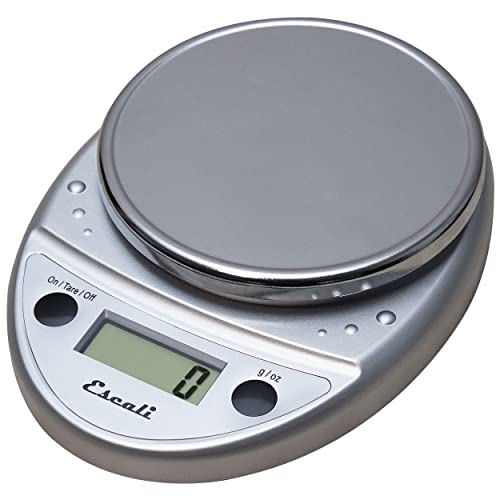
The Escali Primo is legendary for its durability and its simple, sealed-button design. In a fiber prep area, things get messy; you are dealing with lanolin, dust, and vegetable matter, and this scale is remarkably easy to wipe clean.
It is a "set it and forget it" tool that handles the repetitive tasks of batch weighing with ease. Whether you are weighing out portions of wool for a soak in a scouring bath or dividing fiber for a multi-color spinning project, it remains consistent.
Because it is so rugged, it is a great choice for a shared studio space or a household with curious pets. It is not the most precise tool for scientific measurements, but for the practical reality of fiber prep, it is a workhorse that rarely fails.
Why Accuracy Matters When Weighing Raw Fleeces
Raw fleece is unpredictable, often containing significant amounts of lanolin, sweat, and debris. If you don’t weigh your fiber accurately before and after processing, you will never know your true "yield percentage."
Knowing your yield is crucial for project planning. If you know that a specific breed of sheep typically loses 40% of its weight during scouring, you can calculate exactly how much raw wool you need to buy to end up with enough clean fiber for a sweater.
Without these measurements, you are essentially flying blind. You might end up with three pounds of clean wool for a project that only requires one, or worse, half a sweater’s worth of fiber that you can never match in color or texture again.
Understanding Grams vs Ounces in Fiber Prep
In the world of fiber arts, we often straddle the line between the Imperial and Metric systems. While many of us think in ounces, most fiber scales operate in grams, which are far more precise for small-batch blending.
I always recommend switching your scale to grams as soon as you start blending or dyeing. It is much easier to calculate a 15% addition of nylon to a wool blend when working in grams than trying to convert fractions of an ounce.
Keep a simple conversion chart taped to your spinning wheel or near your scale. Remember: one ounce is approximately 28.35 grams. Once you get used to the metric system, you will find it much easier to keep your projects consistent.
Essential Calibration Tips for Fiber Scales
A scale is only as good as its calibration, and over time, even the best sensors can drift. Always keep a set of calibration weights on hand to ensure your scale is reading true before you start a big project.
Environmental factors like humidity and temperature can also affect digital sensors. If you are weighing fiber in a damp basement or a dry, heated room, try to let your scale stabilize for a few minutes before taking your final measurement.
Never store your scale with weight on the platform, as this can compress the load cells and lead to permanent inaccuracies. Treat your scale with the same care you would give your favorite set of interchangeable needles.
How to Properly Weigh Sticky or Greasy Wool
Weighing raw, greasy wool requires a barrier to protect your scale’s platform and sensors. Always use a dedicated bowl or a plastic container when weighing raw fleeces to prevent lanolin and dirt from gumming up the works.
"Tare" your container before adding the fiber so that you are measuring only the weight of the wool. If you are weighing particularly sticky or wet wool, place a piece of parchment paper inside your container for an easy cleanup.
Remember that moisture content changes the weight of your fiber significantly. If you weigh your wool on a rainy day, it will be heavier than on a dry day; try to weigh your fiber in a consistent environment to keep your records accurate.
Investing in a quality scale is one of the most practical steps you can take to elevate your fiber arts practice. By understanding the weight of your raw materials, you gain control over your projects and ensure that your hard work results in the beautiful, consistent yarn you envisioned. Whether you choose a rugged, heavy-duty scale or a precise, compact model, your future self will thank you when you have the exact amount of fiber needed for that next big project. Happy spinning, and may your measurements always be spot on.