7 Best Pressing Cloths For Steam Blocking For Crafters
Master steam blocking with our top 7 pressing cloths. Learn how these essential tools protect delicate fibers and ensure professional, crisp craft finishes.
Steam blocking is the secret bridge between a handmade project that looks "homemade" and one that looks truly professional. It relaxes the fibers, evens out inconsistent tension, and sets the final dimensions of your garment. Choosing the right pressing cloth is essential to protect your delicate yarns from the harsh heat of a modern iron. Here are the top tools to ensure your hard work gets the perfect finish it deserves.
DMC Embroidery Cotton Pressing Cloth: Best Overall


This cloth is a classic for a reason, offering a simple, high-quality cotton weave that acts as a gentle buffer between your iron and your yarn. It is thin enough to allow steam to penetrate effectively while remaining opaque enough to prevent accidental scorching.
For delicate fibers like merino or baby alpaca, this cloth provides a reliable safety net. It doesn’t have any synthetic coatings that might melt or transfer, making it the safest choice for natural, protein-based fibers that are sensitive to direct heat.
The bottom line: If you want a no-fuss, reliable barrier that performs consistently across various projects, this is your go-to. It’s a staple that every knitter should keep in their notions bag.
Dritz Deluxe Pressing Cloth: Best for Durability
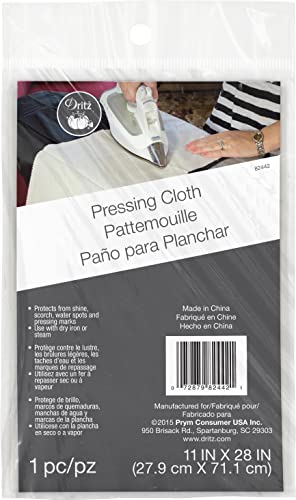
If you are a prolific knitter who finishes multiple sweaters a year, you need a cloth that stands up to frequent use. The Dritz Deluxe is built for longevity, maintaining its structural integrity even after dozens of intense steam sessions.
It is slightly thicker than standard cotton cloths, which provides an extra layer of insulation. This is particularly helpful when you are blocking dense, heavy wool projects like cabled cardigans that require a longer steam time to settle.
The trade-off is that it can feel a bit bulky when maneuvering around tight sleeves or necklines. However, for sheer longevity and heat resistance, it is hard to beat.
Reliable Mesh Ironing Cloth: Best for Visibility

One of the biggest anxieties in steam blocking is not being able to see if your stitches are shifting under the cloth. This mesh option solves that problem by allowing you to monitor your work through the fabric while you press.
Because it is a mesh, the steam flow is unrestricted, ensuring your yarn gets the full benefit of the moisture. This is excellent for lace projects where you need to see exactly where your points are landing to ensure a symmetrical block.
Be careful not to press too hard or too long, as the mesh grid can sometimes leave a faint imprint on very soft, high-loft yarns. Use it for precision work where visibility is your top priority.
Rowenta Pro Pressing Cloth: Best for Steam Flow

This cloth is designed specifically to maximize the output of high-end steam irons. If you use a professional steam station, you need a cloth that won’t trap the moisture and cause the iron to sputter.
The fabric weave is engineered to be highly breathable, allowing steam to pass through rapidly to relax the yarn fibers. This reduces the amount of time you need to hold the iron over the fabric, which in turn reduces the risk of over-steaming or "killing" your yarn.
It is an excellent choice for large-scale blocking like bedspreads or oversized shawls. It ensures that the steam reaches every stitch quickly and evenly.
Fiskars Heat Resistant Pressing Cloth: Best Value

You don’t always need a high-tech solution to get a professional result. The Fiskars option offers a straightforward, heat-resistant surface that does exactly what you need it to do without breaking the bank.
It is lightweight and easy to fold, making it a great choice for knitters who travel to retreats or workshops. While it lacks some of the bells and whistles of premium cloths, it provides a consistent, protective layer for standard blocking.
It is the perfect entry-level choice for a knitter just starting to build their toolkit. You get reliable performance at a price point that leaves more room in the budget for high-quality yarn.
Singer Silicone Ironing Mesh: Best Non-Stick Pick
Silicone-infused tools are a game changer if you are worried about fibers catching or sticking. This mesh provides a slick surface that glides easily over your knitting, preventing any snagging on delicate lace or intricate cable work.
It is exceptionally easy to clean, which is a major bonus if you accidentally get a bit of yarn fuzz or lint stuck to it. The non-stick nature also means you are less likely to accidentally pull or distort your stitches as you lift the iron.
Keep in mind that it has a slightly different "feel" than traditional cotton. If you prefer a smooth, snag-free experience, this is the superior option.
June Tailor Quilt Pressing Sheet: Best for Large

When you are blocking a full-sized sweater or a massive circular shawl, standard small cloths feel insufficient. The June Tailor sheet offers a generous surface area that covers large sections of your project in one go.
This reduces the number of times you have to move the cloth, which minimizes the chance of creating uneven blocking lines. It is also quite durable, handling the weight of heavy woolens with ease.
It’s an essential investment for garment knitters who want to ensure consistent results across large panels. It turns a tedious task into a much faster, more efficient process.
Why Steam Blocking Matters for Your Hand Knits
Steam blocking is not just about making a garment look flat; it is about "blooming" the yarn. When yarn is spun, it is under tension; steam relaxes those fibers, allowing them to expand and fill the gaps between your stitches.
This process is critical for evening out your gauge after a long project. If you have a few loose stitches from a change in lighting or mood, steam will help them settle into the surrounding fabric.
It also helps to set the final dimensions of your piece. Without it, your sweater might look slightly misshapen or "stiff" fresh off the needles. Blocking is the final step of the construction process, not just a finishing touch.
How to Choose the Right Cloth for Your Fiber Type
The fiber content of your project should dictate your pressing cloth choice. Different fibers react to heat and moisture in vastly different ways, and the wrong choice can lead to permanent damage.
- Wool and Protein Fibers: These are forgiving but can be "killed" (permanently flattened) by too much heat. Use a medium-weight cotton cloth.
- Plant Fibers (Cotton, Linen, Bamboo): These often require more heat to relax. A thicker, more durable cloth is ideal.
- Synthetics and Blends: These are highly sensitive to heat. Always use a mesh or a very thin cloth to prevent melting or creating a "shiny" finish on the fabric.
Always perform a swatch test if you are unsure. Take a small piece of your project, steam it through your chosen cloth, and see how the fiber responds before committing to the whole garment.
Essential Tips for Safe Steam Blocking at Home
Never let the iron actually touch your yarn. The goal is to use the iron as a steam generator, hovering it just above the surface of the pressing cloth to let the vapor do the work.
Avoid over-steaming, especially with superwash wools, which can grow significantly when wet and warm. Use short bursts of steam rather than holding the iron in one spot for an extended period.
Finally, always allow your project to dry completely before moving it. If you move a piece while it is still warm and damp, you risk stretching it out of shape. Patience is your best tool in the blocking process.
Steam blocking is a transformative skill that elevates every stitch you’ve labored over. By selecting the right pressing cloth, you protect your yarn and ensure your hard work shines through in the final garment. Take the time to experiment with these tools, and you will find your blocking routine becomes a rewarding part of your creative process. Happy knitting, and may your finished objects always fit perfectly.