6 Best Knitting Bags For Storing Large Projects Reviewed
Finding the perfect knitting bag for large projects is essential. We review six top-rated options, focusing on durability, storage capacity, and portability.
Finding the right vessel for a massive blanket or a complex sweater project is a struggle every dedicated knitter knows well. A bag needs to be more than a simple sack; it must protect your tension-sensitive yarn and keep your needles from snagging. After two decades of managing sprawling WIPs (Works In Progress), I have learned that the right storage can actually improve your knitting flow. Here are the top contenders that balance capacity, protection, and accessibility for your largest fiber adventures.
Della Q Maker’s Canvas Tote: Best Overall Pick


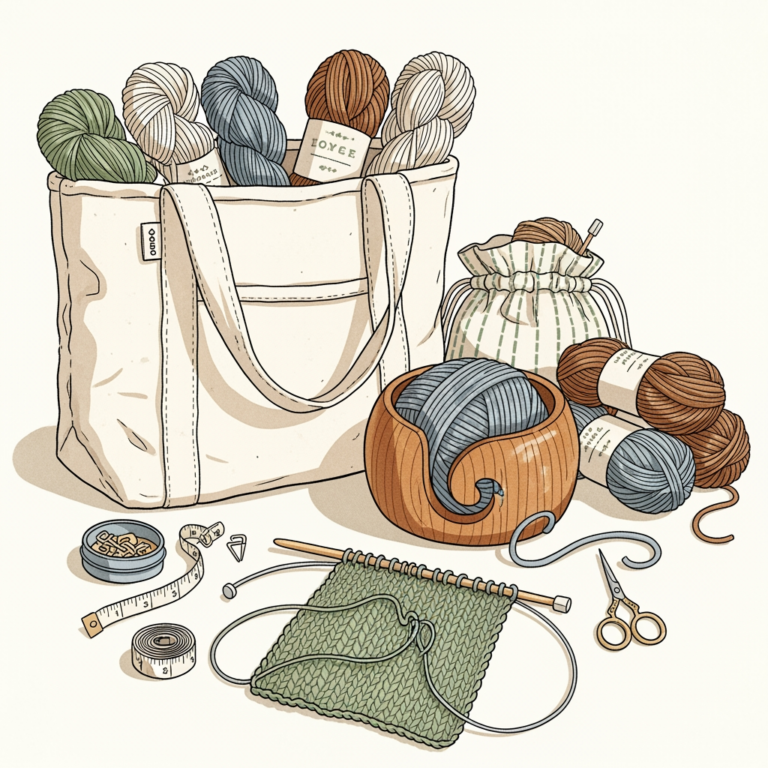
The Della Q Maker’s Canvas Tote is the gold standard for those of us who treat our knitting as a mobile lifestyle. It is cavernous enough to hold several skeins of bulky wool and your current project, yet it maintains a structured shape that prevents your yarn from tangling at the bottom.
What sets this bag apart is the thoughtful inclusion of dedicated pockets for needles and notions. You won’t be digging through a pile of loose stitch markers when you’re mid-row on a complex cable chart. It bridges the gap between a rugged utility bag and a sophisticated accessory.
The canvas construction is both durable and easy to spot-clean, which is vital when you’re dragging your project to retreats or coffee shops. If you prioritize reliability and sheer volume, this is the investment piece that will last through years of heavy use.
Tom Bihn Yarn Stuffer: Best for Portability
If you are the type of knitter who needs to shove a project into a larger travel bag or backpack, the Tom Bihn Yarn Stuffer is your best friend. It is essentially a high-quality, lightweight pouch designed to keep your yarn contained without adding unnecessary bulk.
It is perfect for projects involving delicate fibers like mohair or silk, which can easily catch on the rough edges of a standard handbag. By isolating your yarn in this stuffer, you protect the loft and integrity of your fiber while you’re on the move.
The tradeoff here is that it lacks the rigid structure of a tote, meaning it won’t protect your needles from bending if they are stored inside. Use this for your yarn and notions, but keep your needles in a separate, rigid case to ensure they stay straight and sharp.
Cocoknits Maker’s Portrait Bag: Best Design
The Cocoknits Maker’s Portrait Bag is a masterclass in ergonomic design for makers. Its upright, rectangular shape is specifically engineered to keep your project from being crushed, which is essential if you are working with high-twist yarns that might lose their stitch definition under pressure.
I love the magnetic closures and the clean aesthetic, which makes it feel less like a "craft bag" and more like a high-end personal item. It’s a joy to use when you want to keep your space tidy, as it stands firmly on its own without tipping over.
However, the sophisticated design means it is less forgiving of overstuffing than a canvas tote. It is best suited for the knitter who appreciates order and wants a beautiful, functional home for their current project.
Namaste Maker’s Train Case: Best Organization
For the knitter who loves a place for everything, the Namaste Maker’s Train Case is unparalleled. It features a tiered interior that allows you to separate your yarn, patterns, and notions with surgical precision.
This level of organization is a lifesaver when you are working on stranded colorwork or intarsia, where you might have multiple bobbins or skeins in play at once. You can keep your colors from tangling by utilizing the built-in dividers, which is a game-changer for complex projects.
Keep in mind that this case is quite structured, so it isn’t the most flexible option for fitting into tight spaces. If your knitting habits involve a dedicated "home station," this case will keep your tools in pristine condition for years.
Erin Lane Large Project Bag: Best Fabric Choice

Erin Lane bags are legendary in the knitting community for their incredible variety of sturdy, high-quality fabrics. These bags are built to withstand the weight of heavy, wool-laden projects without the seams fraying or the fabric stretching out of shape.
The drawstrings are consistently smooth and secure, ensuring your yarn stays clean and your stitch markers stay inside. Because they offer so many textile options, you can choose a fabric that suits your personal style while benefiting from a design that has been perfected through years of knitter feedback.
While they lack the rigid internal organization of a train case, their simplicity is their greatest strength. They are the perfect "grab-and-go" solution for the knitter who wants a durable bag that handles heavy loads with ease.
Big Knit Bag Canvas Bucket: Best Budget Option

The Big Knit Bag Canvas Bucket is a straightforward, no-nonsense solution for the knitter on a budget. It is essentially a deep, wide-mouthed bucket that allows you to drop in a large project and access your yarn without any fuss.
It is surprisingly resilient and can hold a massive amount of yardage, making it ideal for those working on large-scale blankets or sweaters. You don’t have to worry about delicate zippers or complex compartments; it is just pure, functional capacity.
The downside is the lack of internal pockets, so you will need a separate notions pouch to keep your needles and markers from getting lost. If you are a minimalist who just needs a sturdy container, this is the most cost-effective way to get the job done.
Critical Features for Large Knitting Project Bags

When shopping for a bag, always prioritize the interior lining. You want a smooth, snag-free material so that your yarn—especially if it’s a delicate single-ply or a fuzzy alpaca—doesn’t catch on loose threads or rough hardware.
Look for vertical storage capacity rather than just width. Large projects like sweaters are easier to manage when they can sit upright, which helps prevent the yarn from becoming a tangled mess at the bottom of the bag.
Finally, consider the closure mechanism. A sturdy drawstring or a reliable zipper is essential to prevent your yarn from rolling out and picking up lint, pet hair, or debris while you are commuting or storing your project at home.
How to Protect Your Yarn and Needles in Transit
Always store your needles in a protective sleeve or tube inside your bag. Even if your bag is padded, a stray needle can easily pierce through fabric or bend under the weight of a heavy project, which ruins the tip and affects your gauge.
If you are traveling with expensive hand-dyed yarn, consider placing it inside a breathable cotton bag before putting it into your larger project tote. This adds an extra layer of protection against spills, dirt, and the potential for the yarn to snag on other items in your bag.
Be mindful of temperature and moisture if you are traveling long distances. Natural fibers like wool can absorb odors or moisture, so keeping them in a sealed or well-protected container is key to maintaining the quality of your finished garment.
Choosing Between Tote Bags and Structured Cases
Tote bags are the ultimate choice for the "knitter on the go" who needs flexibility. They can be squeezed into overhead bins, car trunks, or backpack side pockets, making them the most versatile option for everyday use.
Structured cases, on the other hand, are designed for protection and organization. If you are working on a complex project with many components—like a sweater with separate sleeves and body sections—a structured case will keep everything neatly separated and ready for your next session.
Ultimately, your choice should depend on where you do the majority of your knitting. If you are a couch knitter, a structured case keeps your space tidy; if you are a commuter, the flexible tote is almost always the better choice.
Maintaining and Cleaning Your Knitting Tote Bags
Most canvas and fabric bags can be spot-cleaned with a mild detergent and a damp cloth. Avoid submerging bags with rigid internal supports, as this can warp the structure and make it difficult to get the bag back into its original shape.
If your bag has a lining, turn it inside out occasionally to shake out the "yarn confetti" that naturally accumulates. A quick vacuum with a soft brush attachment is the best way to remove small bits of fiber that can get trapped in the corners of your bag.
Always store your bags in a cool, dry place when not in use. If you store them in a humid environment, you risk mildew, which can transfer to your yarn and ruin your project before you even finish the first row.
Investing in a quality project bag is an investment in your own creative process. By choosing a vessel that protects your materials and keeps your tools organized, you remove the friction that often stops a knitter from picking up their needles. Whether you choose a structured case or a simple canvas tote, ensure it serves your specific needs and project style. Happy knitting, and may your yarn always remain tangle-free.