6 Best Loom Yarn Swifts For Yarn Preparation
Struggling with tangled yarn? Discover the 6 best yarn swifts to streamline your preparation. We review top models for efficiency, stability, and ease of use.
Transitioning from a tangled, hand-wound skein to a smooth, ready-to-knit center-pull ball is one of the most satisfying rituals in a knitter’s life. A high-quality yarn swift acts as your mechanical assistant, preventing the dreaded "yarn barf" and ensuring your precious hand-dyed wool doesn’t end up in a knotted disaster. Choosing the right tool depends on your stash size, storage space, and how often you find yourself winding hanks. This guide breaks down the best options to help you streamline your prep work and focus on the stitches ahead.
Stanwood Needlecraft Tabletop Swift: Best Overall
The Stanwood Tabletop Swift is widely considered the gold standard for a reason. It is incredibly smooth, featuring a metal clamp that secures firmly to almost any table edge without wobbling.


When you are winding a delicate lace-weight mohair, you need a swift that spins with minimal tension to prevent snapping the fibers. The Stanwood’s ball-bearing construction allows the swift to rotate effortlessly, keeping the yarn flow consistent and snag-free.
The main tradeoff here is the footprint, as it requires a dedicated table space to operate effectively. However, for the knitter who frequently works with hand-dyed hanks, the reliability and longevity of this unit make it a worthwhile investment.
Amish-Style Wooden Yarn Swift: Best Sturdy Choice
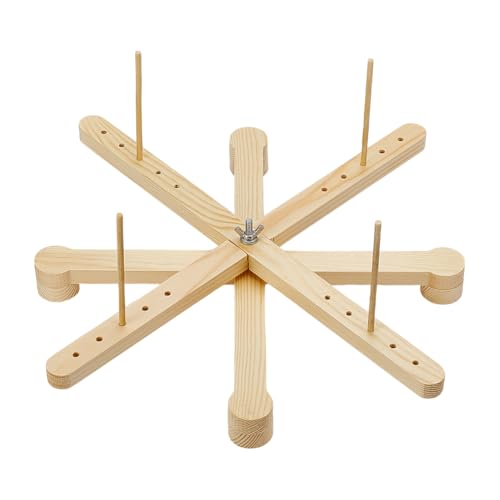
If you are tired of umbrella swifts collapsing or feeling flimsy, the Amish-style wooden swift is your answer. These are essentially two interlocking wooden slats that sit directly on your tabletop, creating a stable, stationary base.
Because they don’t rely on complex folding mechanisms, there is very little that can break or go wrong. They are perfect for heavy, bulky-weight wools that might otherwise cause a lightweight umbrella swift to tip over or lose its balance.
The downside is that they are not as adjustable as umbrella styles, meaning you have to manually move the pegs to accommodate different skein circumferences. If you prioritize durability and simplicity over rapid setup time, this is the tool for your studio.
Knit Picks Yarn Swift: Best Value for Beginners
The Knit Picks swift is a fantastic entry point for those just starting to move away from store-bought center-pull cakes. It provides the essential functionality of an umbrella swift without the premium price tag of high-end wooden models.
It is lightweight and easy to store, making it ideal for knitters with limited space or those who only wind yarn occasionally. While the plastic components may not feel as luxurious as solid wood, they are surprisingly resilient for everyday use.
Be mindful that this model is best suited for standard-sized skeins. If you regularly wind massive 400-gram "jumbo" hanks, you might find it struggles with the weight, so keep your skein size in mind before purchasing.
Lacis Wooden Umbrella Swift: Best Professional Tool
For the serious fiber artist who treats their tools like heirloom pieces, the Lacis Wooden Umbrella Swift is a masterpiece of design. It is crafted from high-quality wood that is sanded to a smooth finish, ensuring your yarn never catches on a splinter.
This swift is designed for precision, offering a smooth, silent rotation that feels like a dream. It handles a wide range of skein sizes with ease, making it a versatile companion for everything from fingering weight sock yarn to heavy worsted wool.
It is an expensive piece of equipment, but the build quality is unmatched. If you are a prolific knitter who winds yarn weekly, the tactile satisfaction and mechanical excellence of the Lacis will justify the cost over time.
Strauch Jumbo Ball Winder Swift: Best for Bulk

If you are a sweater-knitter who buys yarn in large, 500-gram hanks, standard swifts will likely frustrate you. The Strauch system is engineered specifically for high-capacity winding, providing the stability needed for heavy, dense yarn loads.
This swift is built like a tank, designed to handle the torque generated by aggressive ball-winding. It minimizes the risk of the swift "walking" across your table or collapsing under the weight of a large, heavy skein.
While it is an overkill for someone just winding a single skein of sock yarn, it is a game-changer for stash-management. If you process large quantities of yarn, this tool will save you hours of physical labor.
U-nitt Tabletop Umbrella Swift: Best Portability
The U-nitt swift strikes a balance between professional performance and portability. It folds down into a compact profile, making it easy to tuck into a project bag or a closet shelf when not in use.
Despite its compact nature, it offers a surprisingly wide reach, accommodating most standard skeins found in local yarn shops. It is a great middle-ground for the knitter who wants a reliable tool that doesn’t dominate their living room.
If you travel to knitting retreats or workshops, the portability of this model is its greatest strength. It’s a reliable workhorse that won’t take up precious real estate in your craft room.
Why Every Knitter Needs a Reliable Yarn Swift
Many beginners believe they can get away with draping a hank over the backs of chairs or their knees. While this works in a pinch, it often leads to uneven tension, which can negatively affect your gauge and result in a finished garment that doesn’t fit quite right.
A swift ensures the yarn is held at a constant tension, which is crucial for preventing the yarn from becoming stretched or "dead" before it even hits your needles. It also keeps your hands free, allowing you to focus on the winding process.
Ultimately, a swift is about protecting your fiber investment. When you spend money on high-quality wool or silk, you want to ensure it remains in pristine condition from the moment you take off the label to the moment you cast off your final stitch.
Understanding Umbrella vs. Amish Style Swifts
Umbrella swifts are the most common choice, opening and closing like an umbrella to adjust to the circumference of your yarn. They are generally faster to set up and offer a wider range of adjustability, making them great for diverse yarn collections.
Amish-style swifts are stationary, sitting flat on the table and using adjustable pegs to hold the yarn in place. They are inherently more stable and better at handling heavy, bulky yarns that might cause an umbrella swift to wobble.

- Umbrella Swifts: Best for frequent adjustments, space-saving, and ease of use.
- Amish Swifts: Best for heavy, large-volume yarns and long-term durability.
Choosing between them is a matter of your specific knitting habits. If you value speed and versatility, go with an umbrella; if you value rock-solid stability, go with the Amish style.
How to Properly Set Up Your Swift for Winding
Always place your swift on a clean, flat surface and ensure the clamp is tightened securely. Before putting the yarn on, check that the swift rotates freely; any resistance at this stage will translate into uneven tension in your ball.
When loading the yarn, remove the ties carefully, ensuring you don’t create any new tangles. Place the loop over the swift arms and expand it slowly until the yarn is taut but not stretched, then give it a gentle spin to ensure it isn’t caught on any of the arms.
If you are winding by hand, maintain a steady rhythm and keep the yarn flow consistent. If you are using a mechanical ball winder, ensure the swift is positioned directly in front of the winder so the yarn feeds at a straight, natural angle.
Maintenance Tips to Keep Your Swift Running Smooth
Wooden swifts can sometimes benefit from a light buffing with a dry cloth to remove dust or residue. If your swift starts to feel sluggish, avoid using heavy oils that might stain your yarn; a tiny bit of paraffin wax on the moving joints can help if they are squeaking.
Regularly check the screws and bolts to ensure they haven’t loosened over time. A quick tighten before each use will prevent the "wobble" that leads to yarn tangles and frustration.
Finally, always store your swift in a dry, cool environment. Wood can warp or swell in humid conditions, which will affect the smooth rotation of the arms. Treat your swift with care, and it will be a lifelong partner in your knitting journey.
Investing in a quality yarn swift is one of the most practical upgrades you can make for your knitting practice. By removing the friction from the winding process, you ensure that your yarn remains in the best possible condition for your next project. Whether you choose a portable umbrella style or a heavy-duty Amish model, your hands and your yarn will thank you. Happy knitting, and may your yarn always wind smoothly!