6 Best Swift Units For Skein Preparation To Use
Optimize your yarn workflow with our guide to the 6 best swift units. Discover top picks for efficient, tangle-free skein preparation and easy winding.
Every knitter knows the heartbreak of a tangled hank that turns a peaceful evening of winding into an hour-long exercise in frustration. A high-quality yarn swift is the essential bridge between a beautiful, hand-dyed skein and a perfectly wound center-pull cake. Choosing the right tool depends on your space, your budget, and how often you find yourself battling unruly yarn. This guide breaks down the best options to help you spend more time knitting and less time untangling.
Stanwood Needlecraft Tabletop Swift: Best Overall
The Stanwood tabletop swift is the gold standard for many because it balances size, speed, and smooth rotation perfectly. Its heavy-duty construction ensures that it doesn’t wobble or tip when you are winding a large, heavy skein of wool.


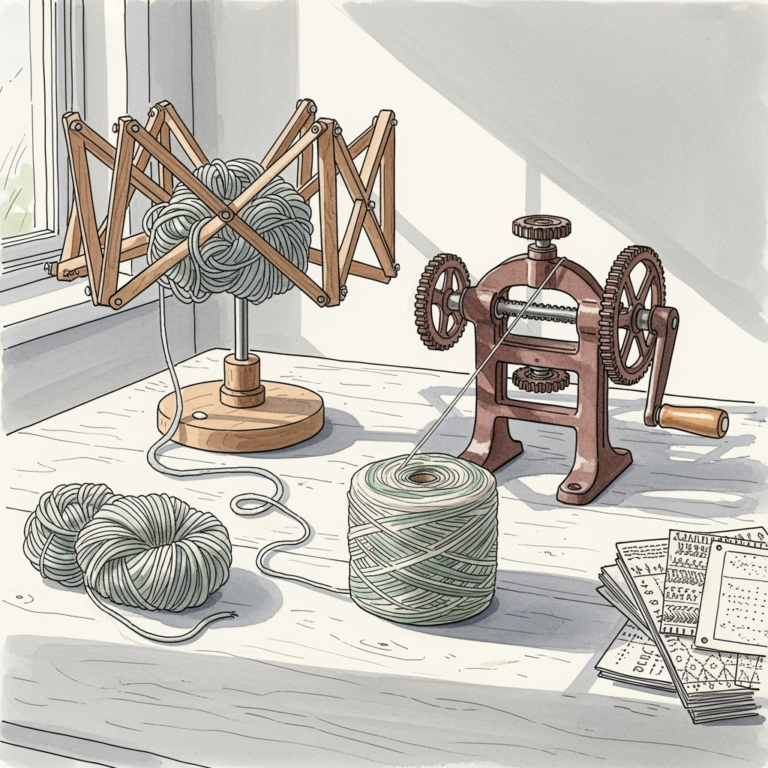
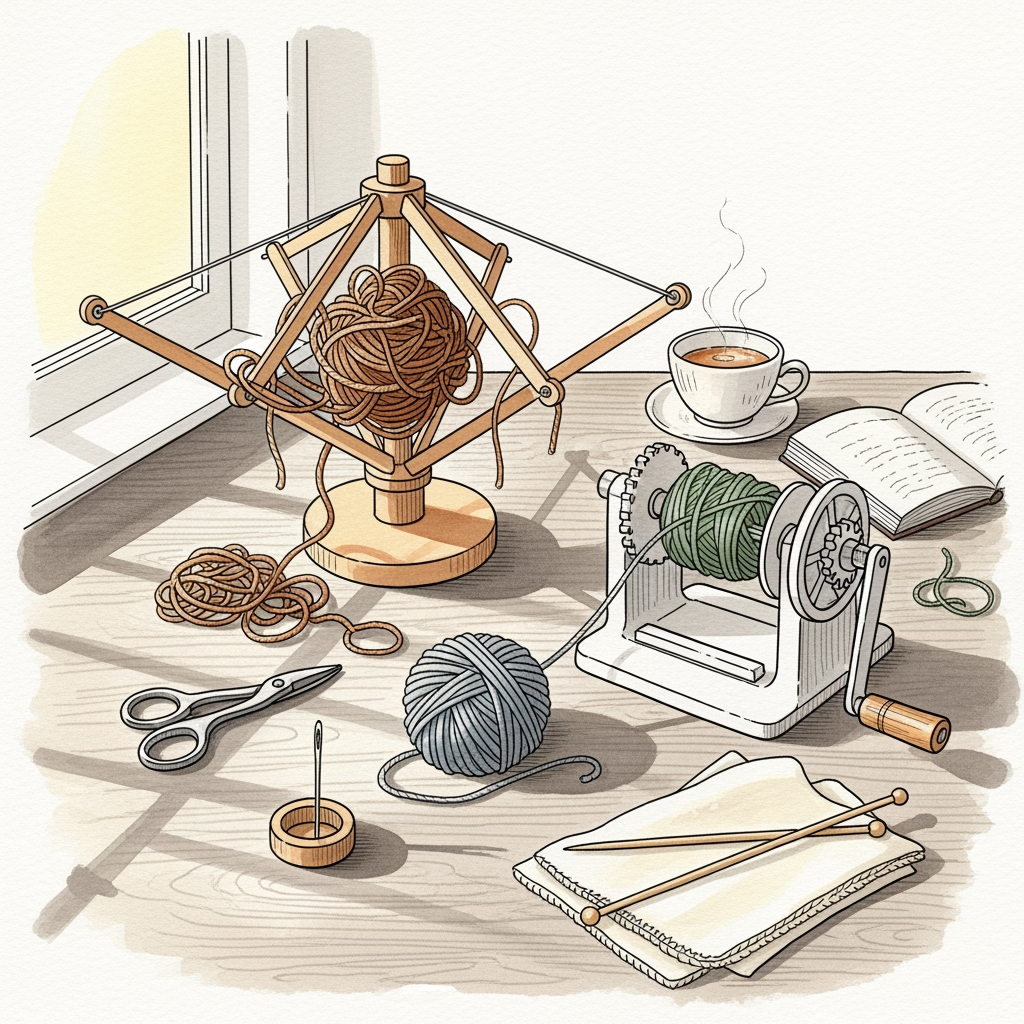
The umbrella mechanism opens and closes with satisfying precision, accommodating everything from tiny lace-weight hanks to massive, bulky-weight skeins. Because it sits on your table, you don’t need to worry about finding a ledge or a counter edge to clamp onto.
If you find yourself winding yarn frequently, the smooth ball-bearing action of this swift is a game-changer. It spins effortlessly, which prevents the yarn from stretching or snapping under tension while you wind.
Amish-Style Wooden Yarn Swift: Best for Storage
If you live in a small apartment or lack dedicated craft room space, the Amish-style swift is a brilliant solution. Unlike umbrella swifts that are bulky and complex, this design consists of simple, flat wooden slats that disassemble in seconds.

These swifts are incredibly sturdy because they rely on gravity and a low center of gravity rather than mechanical tension. You simply place the cross-base on your table, insert the central spindle, and adjust the pegs to fit the circumference of your hank.
Because there are no hinges or complex moving parts, there is almost nothing to break or wear out over time. When you are finished, it packs down into a flat bundle that slides easily into a drawer or a narrow shelf.
KnitPicks Yarn Swift: Best Budget Choice
For the knitter who is just starting to build their tool kit, the KnitPicks swift offers reliable performance without a professional-grade price tag. It is lightweight and portable, making it an excellent choice for knitters who take their projects to local guilds or knitting retreats.
It functions on the classic umbrella mechanism, which is intuitive for most users. While the materials are lighter than high-end models, it handles standard fingering and worsted-weight yarns with ease.
The main trade-off here is the plastic components, which may not withstand decades of heavy, daily use like solid wood models. However, for the occasional hobbyist, it is a perfectly capable tool that gets the job done efficiently.
Lacis Wooden Umbrella Swift: Best for Stability
The Lacis wooden umbrella swift is built for the knitter who demands a rock-solid foundation. Its heavy-duty wooden frame provides a level of resistance that prevents the swift from "jumping" when you hit a knot or a snag in the yarn.
The craftsmanship is noticeably superior, with smooth, sanded edges that won’t catch on delicate fibers like alpaca or mohair. When you are winding a luxury fiber, you want a tool that glides so that the delicate halo of the yarn remains undisturbed.
This swift is an investment piece, but the stability it offers is unparalleled. It is the kind of tool that you buy once and pass down to the next generation of knitters in your family.
Strauch Jumbo Ball Winder Swift: The Pro Choice

If you are a serious maker who regularly works with massive skeins of yarn, the Strauch system is the professional choice. It is designed to handle the weight and volume of larger hanks that would cause a standard swift to buckle or spin unevenly.
This swift is engineered for those who produce a high volume of yarn cakes, perhaps for a small business or a very ambitious stash-building habit. It is exceptionally robust and maintains consistent tension even when spinning at high speeds.

It is definitely overkill for someone who only winds a skein once a month, but for the power-user, it is a dream. The mechanical efficiency saves time and prevents the physical fatigue that can come with winding large quantities of yarn.
Nancy’s Knit Knacks Swift: Best Built to Last
Nancy’s Knit Knacks is legendary in the fiber arts community for creating tools that are essentially indestructible. Their swifts are crafted with high-quality materials and thoughtful engineering that accounts for the actual physics of winding yarn.
The rotation is buttery smooth, and the clamping mechanism is designed to fit a wide variety of table thicknesses without slipping. You can feel the quality in the weight of the wood and the precision of the hardware.
This is the "buy it for life" option. If you are tired of replacing flimsy plastic swifts that eventually snap or lose their tension, this is the upgrade you’ve been waiting for.
Why You Need a Swift for Hand-Dyed Skein Prep
Hand-dyed yarn almost always comes in a twisted hank, which is essentially a giant loop of yarn. If you try to pull from this loop without a swift, you are almost guaranteed to end up with a tangled "yarn barf" that can take hours to resolve.
A swift holds the yarn in a taut circle, allowing you to wind it into a center-pull cake. This process is vital because it lets you inspect the yarn for knots or dye inconsistencies before you start your project.
Furthermore, winding your yarn allows it to "rest" before you knit with it. If you have ever noticed your tension changing mid-project, it is often because the yarn was still under tension from the way it was wound; a swift helps mitigate this.
Umbrella vs. Amish Style: Which Swift to Choose
Umbrella swifts are generally faster to set up and adjust because they expand like a standard umbrella. They are ideal for knitters who have a variety of skein sizes and want a "set it and forget it" experience.
Amish-style swifts are better for those who prefer a manual, tactile experience and have limited storage space. They require you to manually adjust the pegs for each skein, which takes a little more time but feels very secure.

- Choose Umbrella if: You value speed, convenience, and have the shelf space to store a larger tool.
- Choose Amish-Style if: You need a compact storage solution or prefer a tool with no complex mechanical parts.
Essential Tips for Setting Up Your Yarn Swift
Always ensure your swift is placed at a comfortable height relative to your ball winder. If the yarn has to travel uphill or downhill at a sharp angle, it will increase the tension and potentially stretch your yarn, especially with elastic fibers like superwash wool.
Check that the swift is clamped securely to your table surface. A swift that shifts during the winding process is the primary cause of uneven yarn cakes, which can lead to messy, inconsistent tension in your finished fabric.
Before you start winding, make sure the yarn loop is centered on the swift arms. If the loop is off-center, the swift will wobble, which can cause the yarn to jump off the arms and create a knot.
How to Maintain Your Swift for Smooth Rotation
Wood swifts benefit from an occasional light wipe-down with a soft cloth to remove dust and yarn fibers. If the rotation starts to feel stiff, a tiny drop of furniture wax or a specialized wood lubricant on the moving joints can work wonders.
Avoid storing your swift in areas with extreme temperature fluctuations, such as an unheated attic or a damp basement. Wood is a natural material that can warp or crack if the humidity levels are not stable.
Finally, always inspect the arms for any small splinters or rough patches. If you find one, a quick pass with fine-grit sandpaper will keep your delicate yarns safe from snagging and pulling.

Investing in a quality swift is one of the most practical upgrades you can make for your knitting practice. By choosing a tool that fits your space and your winding habits, you transform a tedious chore into a smooth, satisfying part of your creative process. Whether you opt for a compact Amish-style wooden frame or a heavy-duty umbrella model, your yarn will thank you. Happy winding, and may your yarn cakes always pull from the center without a hitch.