6 Best Swift Stands For Holding Hanks To Use
Discover the 6 best swift stands for winding yarn hanks. This guide evaluates stability, material, and ease of use to help you streamline your knitting prep.
Transforming a tangled, hand-dyed hank of luxury wool into a neat, ready-to-knit cake is one of the most satisfying rituals in a knitter’s life. Without the right swift, however, that process can quickly devolve into a frustrating session of fighting knots and uneven tension. Investing in a reliable yarn swift is the difference between an effortless winding experience and a pile of snarled fiber. Here are the top tools to ensure your yarn stays pristine from the hank to your needles.
Stanwood Needlecraft Tabletop Swift: Best Overall
The Stanwood Tabletop Swift is a staple in many dedicated knitting rooms for good reason. Its heavy-duty construction and smooth rotation make it a workhorse for everything from delicate lace-weight mohair to sturdy, multi-ply worsted wool.


Unlike cheaper models that wobble under the weight of a heavy hank, this swift features a robust metal clamp and a solid wooden frame. It handles the tension of a high-speed ball winder without skipping a beat, ensuring your yarn feeds consistently.
The real beauty here is the balance. If you frequently work with expensive, hand-dyed yarns that are prone to tangling, the smooth, frictionless movement of this swift will save you from the heartbreak of snapped strands. It is the gold standard for reliability.
Amish-Style Wooden Yarn Swift: Best Space Saver
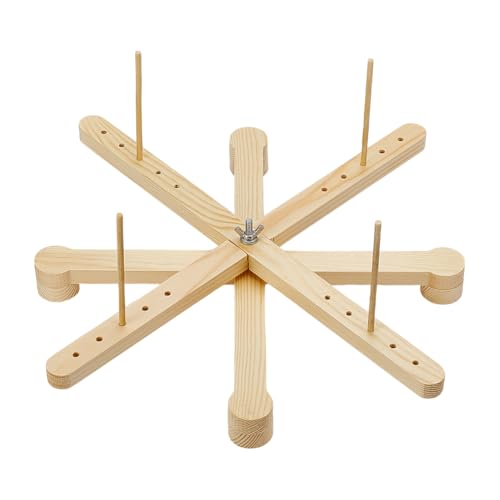
If your knitting space is also your dining room table, the Amish-style swift is your best friend. Unlike umbrella swifts that require a permanent clamp to a surface, these sit directly on the table and collapse into a slim profile for easy storage.
These swifts operate on a rotating wooden cross-arm system that is incredibly intuitive to set up. Because they don’t rely on complex mechanical hinges, they are surprisingly durable and rarely suffer from the mechanical failures that plague cheaper umbrella models.
However, keep in mind that they don’t have the same "tension control" as a clamped swift. You’ll need to ensure your yarn is placed evenly across the arms to prevent it from slipping off during a fast wind. Perfect for the minimalist knitter.
Lacis Wooden Umbrella Swift: Best for Large Hanks
When you are dealing with massive 200-gram hanks of bulky yarn, standard swifts often fail to expand wide enough. The Lacis Wooden Umbrella Swift is designed to accommodate those oversized skeins with ease, preventing the yarn from sagging or dragging.
The umbrella mechanism allows for precise adjustment, letting you dial in the exact circumference needed for your specific hank. This is crucial; if the swift is too loose, your yarn will slide off, but if it’s too tight, you risk stretching the fibers prematurely.
This model is built for longevity and handles the weight of heavy, moisture-laden fibers like cotton or linen well. If you are a fan of large-scale projects like blankets or oversized sweaters, this is the robust tool you need.
KnitPicks Yarn Swift: Best Value for Beginners
For those just starting to transition from store-bought balls to indie-dyed hanks, the KnitPicks swift is an accessible entry point. It provides the essential functionality of an umbrella swift without the heavy investment of professional-grade hardware.
It’s lightweight and easy to clamp onto almost any desk or shelf. While it may not have the same heavy-duty finish as higher-end models, it functions perfectly for standard-sized hanks of wool, acrylic, or blends.
Don’t expect it to handle industrial-sized skeins or constant, heavy-duty daily use for years on end. However, for the occasional project, it offers the best balance of price and performance.
Strauch Jumbo Ball Winder and Swift: Best Pro Set
If you are a prolific knitter who works through yarn at a rapid pace, the Strauch system is the gold standard of efficiency. This is an investment piece, but it is built to last a lifetime of heavy use.
The synergy between their jumbo swift and the ball winder is unmatched. You can wind massive quantities of yarn into perfectly centered, tangle-free cakes that won’t collapse while you are pulling from the center.
The precision engineering means you can wind at a faster pace without worrying about the yarn catching or the swift jamming. This is the ultimate setup for the serious fiber artist.
ChiaoGoo Yarn Swift: Best Portable Metal Option

Metal swifts offer a distinct advantage over wood: they are immune to the warping that can occur in humid climates. The ChiaoGoo swift is sleek, modern, and incredibly smooth, making it a favorite for those who value aesthetics and durability.
Because it is made of metal, it has a slightly different feel during rotation. It is remarkably consistent and provides a very fluid feed, which is excellent for slippery fibers like silk or bamboo blends that can sometimes catch on wooden grain.
It is also exceptionally easy to clean. If you work with fibers that shed a lot of dust or plant matter, a quick wipe-down keeps it running like new. A sleek, modern choice for the tech-minded knitter.
How to Properly Set Up Your Swift for Winding
Setting up your swift correctly is the most overlooked step in the winding process. Always ensure your swift is positioned at a comfortable height relative to your ball winder, usually about 18 to 24 inches away, to allow for a smooth, natural flow of yarn.
Before placing your hank, untwist it completely and shake it out to ensure there are no pre-existing knots. Place the hank over the swift arms and expand them slowly until the yarn is taut but not stretched.
Test the rotation with a gentle flick of your hand. If the swift spins freely without catching, you are ready to begin winding. Taking these extra thirty seconds will prevent hours of detangling later.
Umbrella vs. Amish Style: Which Swift Suits You?
Choosing between these two styles comes down to your storage space and your yarn habits. Umbrella swifts, which expand like a canopy, are excellent for precision and adjusting to various hank sizes, but they require a sturdy edge to clamp onto.
Amish-style swifts, which are essentially two interlocking wooden slats, are superior for those who work on tables without a lip. They are also much easier to store in a drawer or a narrow shelf.
Consider the weight of the yarn you use most often. If you exclusively work with heavy, high-yardage hanks, the umbrella style generally provides better support for those larger circumferences. Match the tool to your most common project type.
Essential Tips for Winding Hanks Without Tangles
Always wind your yarn slowly, especially when you first start. It is tempting to crank the handle as fast as possible, but speed is the primary cause of "yarn barf," where the center of the cake pulls out in a tangled mess.
Keep a light tension on the yarn with your free hand as it travels from the swift to the winder. This ensures the cake is wound tightly enough to hold its shape but not so tightly that you stretch the fiber, which can ruin your gauge.
If you encounter a knot in the yarn, stop immediately. Do not try to wind through it; gently untangle it by hand before resuming. Patience at the winder is the best insurance for your knitting time.
Maintaining Your Swift for Smooth Yarn Rotation
Most swifts require very little maintenance, but a little care goes a long way. For wooden swifts, keep them in a climate-controlled area to prevent the wood from swelling or shrinking, which can make the arms stick.
If your swift begins to squeak or feel sluggish, a tiny drop of sewing machine oil on the central pivot point is usually all it needs. Avoid using heavy greases that can attract dust and lint.
Periodically check the screws and hinges to ensure they haven’t loosened over time. A quick tightening can restore the stability of your swift and prevent vibrations during use. A well-maintained tool is a knitter’s best partner.
Selecting the right swift is a personal decision that depends as much on your physical space as it does on your yarn collection. Whether you choose the reliable Stanwood or the space-saving Amish style, the goal remains the same: to protect your fiber and streamline your workflow. With the right setup, you can spend less time managing tangles and more time enjoying the rhythm of your stitches. Happy knitting!