6 Best Collapsible Blocking Mats For Small Apartments
Maximize your crafting space with our top 6 collapsible blocking mats. These space-saving tools offer the perfect solution for knitters in small apartments.
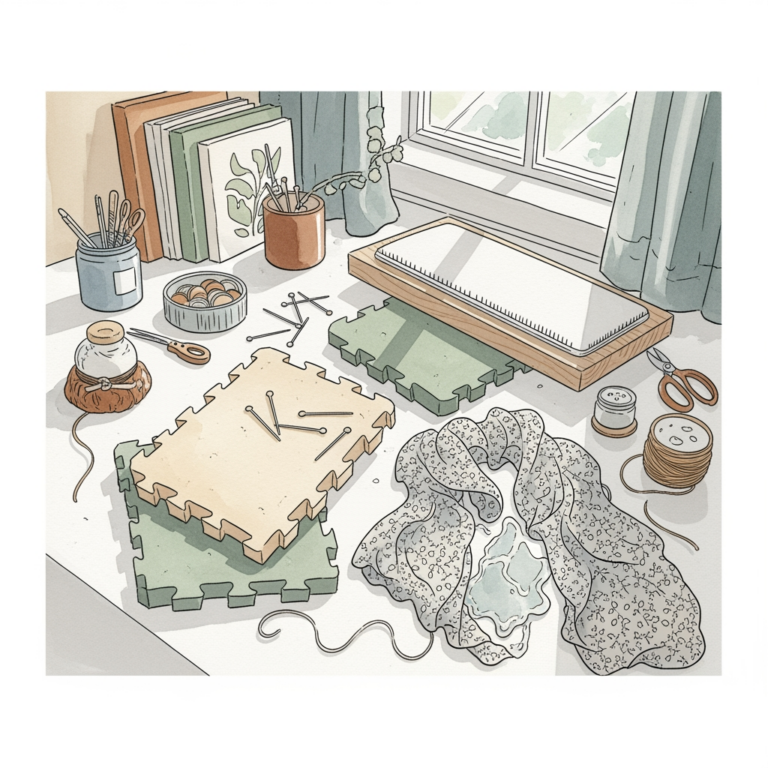
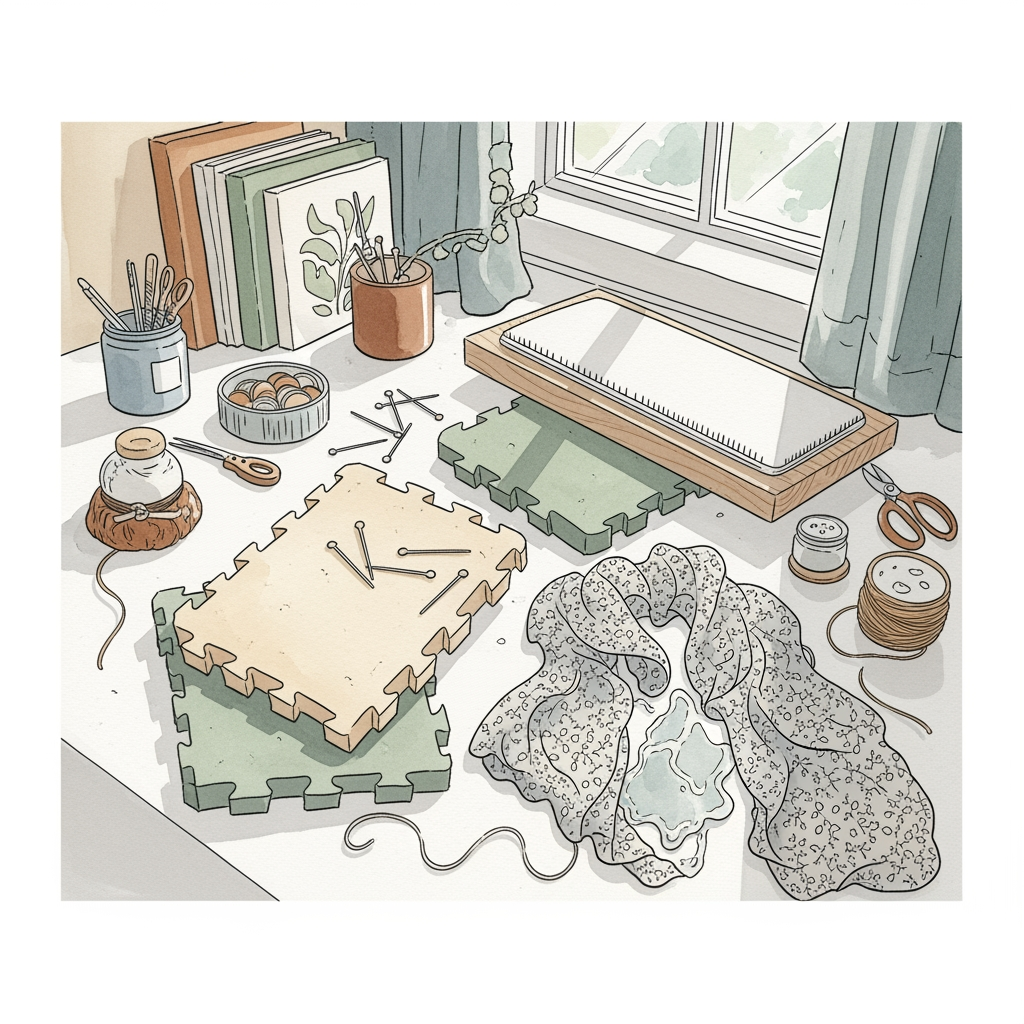
Living in a small apartment shouldn’t mean sacrificing the professional finish that proper blocking provides to your hand-knits. Finding the right tools requires balancing the need for a large, flat surface with the reality of limited square footage. The best solutions are those that collapse, fold, or stack away neatly between projects. These six options offer the perfect compromise for knitters who need precision without cluttering their living space.
Knitter’s Pride Lace Blocking Mats: Best Overall
These mats are a staple in my studio because they strike the perfect balance between firmness and ease of use. The grid lines are printed clearly, which is a lifesaver when you are trying to ensure a lace shawl is perfectly symmetrical.
Because they are slightly thicker than standard floor tiles, they hold T-pins securely without wobbling. This is crucial when you are blocking heavy wool sweaters that require a lot of tension to open up the stitch definition.
The bottom line: if you want a reliable, professional-grade surface that fits under a bed or behind a bookshelf, this is your gold standard.
Mindful Collection Folding Mats: Best Portability


The folding design of these mats is a stroke of genius for anyone who frequently takes their knitting to retreats or workshops. They hinge perfectly, meaning you don’t have to worry about individual tiles separating while you are pinning down a delicate project.
They are lightweight, yet they don’t sacrifice the density needed to keep your work from sliding around. I particularly appreciate that they come in a convenient carry case, keeping them clean and dust-free when not in use.
If you are a mobile knitter who values organization and speed, these folding mats are a worthy investment.
Exerpeute Interlocking Tiles: Best Budget Option

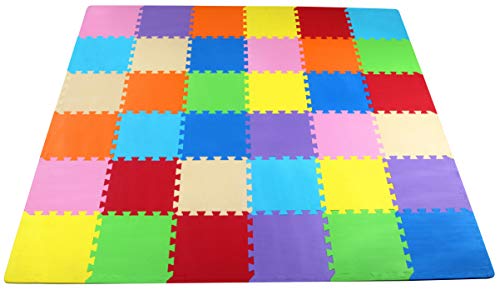
Don’t let the "exercise mat" label fool you; these tiles are essentially the same material as high-end blocking boards but at a fraction of the cost. They are excellent for knitters who are just starting out and need a large surface area for a big project like a blanket or an afghan.
The main tradeoff is that they may not have the precise grid markings found on dedicated knitting mats. You might need to use a ruler or a tape measure to ensure your corners are square, but for the price, that is a minor inconvenience.
For the budget-conscious maker, these tiles offer the best value for covering a large floor space without breaking the bank.
Clover Knit Blockers Set: Best Surface Texture
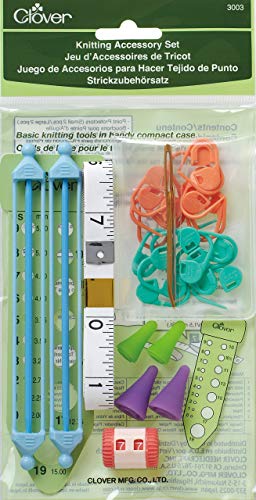
While these aren’t mats themselves, they are the essential companion for any surface you choose. The texture of these plastic blockers is designed to grip the yarn without snagging, which is vital when working with delicate silk or mohair blends.
Using these in conjunction with a foam mat allows you to block long, straight edges in seconds rather than spending an hour individually pinning every inch. They save your fingers from the constant pricking of traditional T-pins.
If you struggle with hand fatigue or arthritis, pairing these with a high-density mat will completely change your blocking experience.
Lacis Modular Blocking Mats: Best for Small Spaces

These mats are designed with a smaller footprint in mind, making them ideal for the "nook knitter" who only has a small coffee table or desk space. You can assemble only as many tiles as you need for a specific project, such as a pair of socks or a hat.
Because they are modular, you won’t have a giant mat taking up your entire floor when you are only blocking a small swatch or a baby garment. They are durable, easy to clean, and store away in a tiny stack.
When space is at a premium, modularity is your best friend. This is the most practical choice for city dwellers with limited floor area.
BeCraftee Foam Blocking Tiles: Best for Storage
The BeCraftee set is designed specifically with the knitter’s storage woes in mind. They come with a dedicated, breathable storage bag that keeps the tiles together and prevents them from getting lost or damaged in a closet.
The foam is high-density, meaning it resists the indentations that often plague cheaper mats over time. I find them to be exceptionally firm, which is perfect for blocking intricate lace where precise tension is non-negotiable.
If you are tired of your blocking gear migrating across your apartment, the storage-focused design of this set is a game-changer.
How to Measure Your Workspace for Blocking Mats
Before you buy, measure the widest and longest dimensions of the space you plan to use for blocking. I always recommend adding at least six inches of buffer on all sides to account for the pins and the edges of the mat.
If you only have space on a dining table, look for mats that can be configured into a long, narrow rectangle rather than a large square. Don’t forget to account for the "overhang" of your project, especially if you are blocking a circular shawl.
Always measure your space twice, but remember that modular mats can be reconfigured to fit awkward corners or narrow hallways.
Comparing Foam Density for Long-Term Durability
Foam density is the most overlooked factor in buying blocking mats. Low-density foam feels squishy, but it will lose its shape quickly when subjected to the constant pressure of pins and heavy, wet wool.
High-density foam, like that found in premium knitting mats, provides a stable base that keeps your stitches in place as they dry. It also resists the "memory" of previous projects, meaning you won’t have deep, permanent holes after just a few uses.
- Low Density: Cheap, soft, but wears out quickly.
- High Density: Firm, durable, and keeps its shape for years.
- Recommendation: Always opt for the highest density you can afford for long-term use.
Essential Tips for Blocking Delicate Lace Fibers
When blocking lace, the goal is to open up the stitches without overstretching the fiber. Use a "gentle hand" approach, pinning the edges first and then working your way toward the center to ensure even tension.
For fibers like alpaca or silk, which have little elasticity, be careful not to pull too hard, or you risk distorting the lace pattern permanently. If you are working with superwash wool, remember that it tends to "grow" significantly when wet, so pin it to your desired dimensions rather than stretching it to the max.
Always use rust-proof pins to prevent staining your beautiful, hard-earned lace work.
Maintaining Your Blocking Mats for Years of Use
To keep your mats in top condition, always ensure your project is damp, not dripping wet, before pinning it down. Excess water can soak into the foam over time, potentially leading to mold or degradation of the material.
After blocking, wipe the mats down with a soft, dry cloth to remove any residual moisture or fiber debris. Store them in a cool, dry place away from direct sunlight, which can cause the foam to become brittle and crack.
If you take care of your mats, they will remain the most reliable tool in your knitting arsenal for decades to come.
Investing in quality blocking mats is the final step in elevating your knitting from "homemade" to "handmade professional." By choosing a system that fits your specific apartment layout and storage needs, you remove the friction that often prevents us from finishing our projects properly. Take your time to measure your space, prioritize foam density, and treat your tools with care. Your future finished objects will thank you for the extra attention to detail.