7 Best Blocking Pins For Wet Finishing Worth Trying
Master your wet finishing with our top 7 blocking pins. Discover durable, rust-proof options that ensure perfect shape and professional results for projects.
Achieving a professional finish on your hand-knits is the final, crucial step that transforms a pile of loops into a wearable masterpiece. While the knitting process gets all the glory, the blocking process is where the true stitch definition and drape are born. Choosing the right pins can mean the difference between a frustrating afternoon and a satisfying reveal. These seven options represent the gold standard for securing your work while it dries.
Knitter’s Pride Knit Blockers: Best Overall Pick


These are not traditional pins, but rather wide, plastic-topped bars embedded with multiple stainless steel prongs. They are a game-changer for anyone who has ever spent an hour meticulously pinning out a large shawl or a sweater back.
Because they cover more surface area at once, they significantly reduce the time spent on the "pinning" phase of blocking. They are particularly effective for straight edges, like the hem of a sweater or the border of a rectangular scarf.
The primary tradeoff is that they don’t allow for the fine-tuned, single-point adjustments that individual pins provide. Use these for the bulk of your straight edges, and keep a few individual pins handy for the curves.
Clover T-Pins: The Classic Stainless Steel Choice

Clover T-Pins are the industry standard for a reason: they are reliable, sturdy, and widely available. The T-bar head makes them easy to push into thick blocking mats and even easier to pull out when your project is dry.
Their stainless steel construction is essential for wet finishing. You never have to worry about these leaving unsightly rust spots on your delicate wool or silk projects, even if they stay in the piece for days.
If you are working on a project with a lot of lace, these pins are your best friend. Their thin gauge allows them to slide through delicate picot edges without distorting the yarn fibers.
Cocoknits Rust-Resistant Blocking Pins Set

Cocoknits has refined the classic pin design with a focus on ergonomics and material integrity. These pins are specifically designed to be rust-resistant, providing peace of mind when working with expensive, light-colored yarns.
The heads are shaped to be gentle on your fingers, which is a major plus if you have arthritis or struggle with the dexterity required for traditional, thin-headed pins. They offer a smooth finish that won’t snag or pull at your stitches.
While they are a bit of an investment compared to generic options, the durability makes them a long-term staple. If you find yourself blocking frequently, the ease of use will pay for itself in saved time and comfort.
Boye Plastic Head T-Pins for Delicate Fibers

The defining feature of these pins is the large, smooth plastic head. This design is perfect for knitters who find the sharp ends of metal T-pins difficult to manage during long blocking sessions.
Because the heads are bulky, they provide a great visual indicator of where your edge is pinned. This is helpful for beginners who are still learning to maintain consistent tension while pinning out a project.
However, keep in mind that the plastic heads can sometimes be a bit bulky if you are pinning very intricate lace. They are best suited for heavier weight garments or projects where you need to exert a bit more pressure to hold the fabric in place.
Susan Bates Blocking Pins for Heavy Projects

When you are blocking a heavy, cabled wool sweater or a dense felted piece, standard pins often bend under the tension. Susan Bates pins are known for their thicker gauge and high-quality steel, making them resilient under pressure.
They are designed to hold firm even when the fabric is heavy and saturated with water. This prevents the "creeping" effect where the weight of the wet garment pulls the pins out of your mat over time.
Do not use these for fine, cobweb-weight lace. The thicker diameter can actually stretch out the delicate stitches, leaving a permanent gap in your fabric that will be visible once the piece is dry.
Beadsmith Extra-Long Pins for Thick Knits
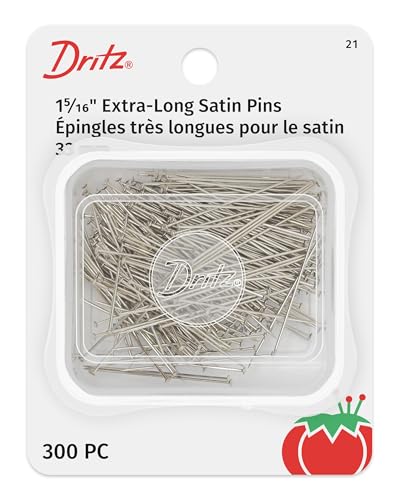
Sometimes, a standard pin just isn’t long enough to reach through multiple layers or thick, lofty wool. Beadsmith’s extra-long pins offer the reach you need for bulky projects or when you need to pin through a double-thick hem.
These pins are incredibly useful for blocking complex, multi-layered items like hats or thick cowls. Their length allows you to anchor them deep into your blocking surface, ensuring your work stays exactly where you placed it.
Because they are longer, they are more prone to bending if handled roughly. Always pull them straight out of the mat to maintain their integrity and keep them from warping over time.
Dritz Quilting Pins for Precision Blocking
Originally designed for quilting, these pins are a secret weapon for knitters who prioritize extreme precision. They are incredibly sharp and thin, which allows for surgical accuracy when pinning specific stitch motifs.
If you are blocking stranded colorwork or complex cables, these pins allow you to manipulate individual stitches without distorting the surrounding fabric. They are the ultimate tool for "opening up" lace patterns.
Be aware that these are usually shorter than standard blocking pins. They are not ideal for very thick projects, but for fine-tuning the look of a garment, they are unmatched in their ability to provide a clean, professional finish.
Why Material Matters: Stainless vs. Plated Pins
The most common mistake a knitter can make is using cheap, plated pins for wet blocking. Over time, the moisture from your project will cause the plating to corrode, resulting in rust that can permanently stain your hand-dyed or light-colored yarn.
Always look for "stainless steel" on the packaging. Stainless steel is resistant to oxidation, meaning it will remain smooth and clean even after dozens of uses.
- Stainless Steel: The gold standard; will not rust or discolor your fiber.
- Nickel-Plated: Can rust if the plating chips; use with caution on light-colored wool.
- Plastic/Coated: Great for comfort, but ensure the coating is high-quality and won’t flake off into your work.
Essential Blocking Tools for Every Skill Level
Beyond the pins themselves, your blocking setup determines the success of your finish. A high-density foam blocking mat is essential, as it provides a consistent surface for your pins to grip.
You will also need a tape measure and a set of blocking wires for larger, straight-edged pieces. Wires allow you to tension an entire side of a shawl at once, creating a perfectly straight edge that pins alone cannot achieve.
Finally, invest in a spray bottle or a dedicated basin for soaking. Remember that "wet finishing" doesn’t always mean soaking; sometimes a light misting is all you need to coax the fibers into place.
Troubleshooting Common Wet Finishing Mistakes
The most frequent error is over-stretching the fabric. While blocking is meant to open up lace and smooth out stitches, pulling too hard will distort the fabric and ruin the drape you worked so hard to create.
Another common issue is pinning too far apart. If your pins are spaced too widely, the fabric will "scallop" between the pins, resulting in an uneven, wavy edge rather than a crisp, professional line.
- Scalloping: Fix this by adding more pins between the existing ones.
- Over-stretching: Use a tape measure to ensure you are only blocking to the dimensions specified in your pattern.
- Rust Stains: If you accidentally use a non-stainless pin and get a spot, treat it immediately with a gentle wool wash and a soft brush.
Blocking is the bridge between a project that looks "homemade" and one that looks truly professional. By investing in the right pins and understanding how they interact with your specific fiber, you gain total control over the final outcome. Take the time to pin carefully, treat your tools with care, and watch your stitches transform before your eyes. Happy knitting, and enjoy the satisfaction of a perfectly finished piece.