
7 Best Steamer Brushes For Reviving Yarn Loft
Restore your yarn’s natural loft with ease. We review the 7 best steamer brushes to fluff fibers, remove wrinkles, and revitalize your knitting projects today.
After spending two decades at the loom and knitting needles, I have learned that the difference between a "homemade" look and a professional finish often lies in how you treat your finished fabric. Steam is the secret weapon that transforms flat, stitches-pinched yarn into a vibrant, airy textile. Choosing the right steamer is about finding the balance between moisture penetration and heat control. Here are my top recommendations for reviving the loft in your hand-knits.
Conair Turbo ExtremeSteam: Best Overall Choice


The Conair Turbo ExtremeSteam is the workhorse I see most often in home studios. It strikes a perfect balance between steam output and ease of use, making it ideal for those who finish a few sweaters a year.
The key to this model is its consistent pressure, which forces steam into the core of the yarn without soaking the fibers. When you are blocking a dense, cabled wool sweater, you need that penetration to "relax" the twist and let the yarn bloom to its full potential.
Be aware that because it is so powerful, you must keep it moving. If you hold it in one spot for too long on a sensitive fiber like alpaca, you risk flattening the halo permanently.
Rowenta X-Cel Handheld: Best for Delicate Knits

If you specialize in lace weight mohair or intricate silk blends, the Rowenta X-Cel is your best friend. Its steam distribution is exceptionally gentle, which is crucial when you are working with fibers that easily lose their structure.
Lace knitting requires a delicate touch; you want to open up the eyelets without "killing" the yarn. This steamer provides a fine, consistent mist that hydrates the fibers just enough to allow you to stretch them into their final shape.
Avoid the temptation to crank the heat to the maximum setting on this unit. For delicate protein fibers, a lower temperature with consistent steam flow is always superior to a high-heat blast.
J-2000 Jiffy Garment Steamer: Best Professional
The Jiffy J-2000 is an investment piece, but if you are a prolific knitter who finishes dozens of projects, it is the gold standard. It is a stationary unit, meaning you have a massive water reservoir and a hose that won’t tire your wrist.
Professional finishers use this because it produces "dry" steam that revitalizes fibers without leaving them damp. When you are blocking a large-scale project like a heavy aran-weight blanket, the Jiffy’s continuous output saves hours of time.
It is bulky and requires counter space, so it isn’t for the casual hobbyist. However, for the serious maker, the ability to control the steam flow for extended sessions is unmatched.
PureSteam Portable Steamer: Best Travel Option

We’ve all been there: you arrive at a knitting retreat only to find your carefully packed shawl has been crushed in your suitcase. The PureSteam is the perfect size to toss into a project bag to touch up your garments on the go.
It is surprisingly effective for its size, handling light wools and cottons with ease. While it won’t replace a full-sized unit for a heavy blocking session, it is perfect for refreshing a garment before a photo shoot or a day out.
Keep in mind that the water tank is small, so you will be refilling it often. Use distilled water to prevent mineral buildup, which can clog the small nozzles on portable units.
Beautural 1200W Steamer: Best Budget Selection

The Beautural 1200W proves that you don’t need to spend a fortune to get a professional-looking finish. It’s a straightforward, no-frills tool that provides enough steam to handle most standard wool and acrylic blends.
This is an excellent choice for beginners who are just learning the art of steam blocking. It’s lightweight, heats up quickly, and does exactly what it says on the box without complex settings.
The trade-off here is durability; it isn’t built for daily, heavy-duty use. For the occasional sweater or scarf, however, it is a reliable and cost-effective entry point into fiber finishing.
Hilife Handheld Steamer: Best Compact Design
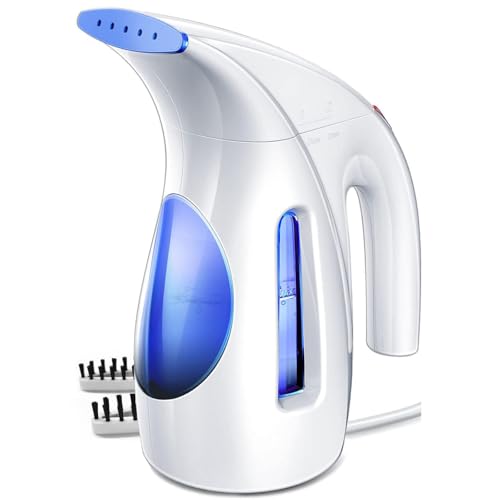
The Hilife steamer is incredibly popular for its ergonomic design and simple operation. It fits comfortably in the hand, which is vital when you are maneuvering around the curves of a sleeve or a neckline.
Its compact footprint makes it ideal for those with limited space. I often recommend this for knitters living in apartments or those who store their tools in small bins alongside their yarn stash.
Because it is so compact, it does not have the steam volume of larger units. Use it for quick touch-ups or blocking smaller accessories like hats and mittens rather than large, heavy garments.
Fridja F1000 Professional: Best for Lofting
The Fridja F1000 is unique because it features a heated plate that acts like a light iron, which is fantastic for "lofting" or fluffing up yarn. This is particularly useful for yarns that have been compressed during the knitting process.
By combining the heat of the plate with the steam, you can guide the fibers into a vertical, airy orientation. This is a game-changer for yarns with a high halo, like angora or brushed alpaca.
Be very careful with the heated plate, as it can scorch fibers if left in contact for too long. Use a hovering motion to get the benefits of the steam without risking damage to your hard work.
Understanding Steam and Fiber Lofting Mechanics
Steam works by introducing moisture and heat to the fiber, which causes the individual strands to relax and expand. This process, known as "blooming," allows the yarn to occupy more space and reach its intended gauge.
- Wool: Responds beautifully to steam; the heat relaxes the scales of the fiber.
- Cotton/Linen: Often needs more direct, heavier steam to soften the inherent stiffness of the plant fibers.
- Synthetics: Must be treated with extreme caution, as high heat can permanently melt the plastic structure of the yarn.
Always remember that steam is a tool for shaping, not a permanent fix for poor tension. If your gauge is fundamentally off, no amount of steaming will correct it.
How to Safely Steam Block Your Hand-Knit Garments
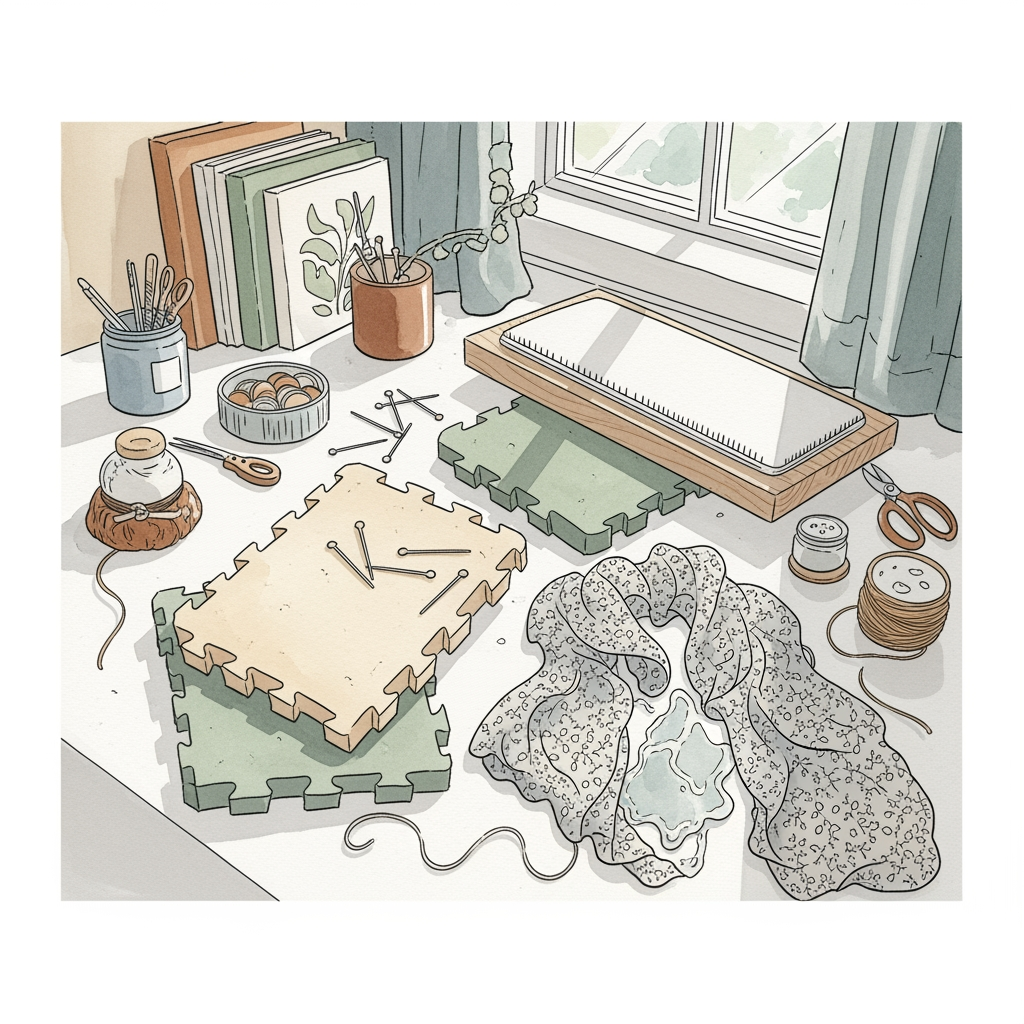
Start by pinning your garment to your blocking mats, ensuring you have the measurements correct. Never touch the steamer head directly to the fabric, as this can crush the stitches and create a shiny, pressed look.
Hold the steamer about two to three inches away from the surface of the knit. Move the steamer in slow, steady sweeps across the entire garment, allowing the steam to penetrate the fibers evenly.
Once the garment is damp and warm, let it sit undisturbed until it is completely cool and dry. This "setting" phase is just as important as the steaming itself, as it allows the fibers to lock into their new, relaxed state.
Essential Safety Tips for Steaming Wool Fibers
Steam is hot enough to cause severe burns, so always keep your fingers away from the steam path. I recommend wearing a light glove if you are working on a piece that requires you to hold the fabric taut while steaming.
Never steam a garment while you are wearing it. The heat can transfer through the fabric and cause painful burns on your skin, and the moisture can lead to mold or mildew if the garment isn’t dried properly.
Finally, always test your steamer on a swatch first. This allows you to gauge how the yarn reacts to the heat and ensure that you aren’t accidentally felting or damaging the fibers before you commit to the full garment.
Steam blocking is the final, transformative step that turns a collection of loops into a finished piece of art. Whether you choose a high-end professional unit or a compact travel steamer, the goal remains the same: treat your fibers with kindness and patience. Take your time, test your settings, and watch as your hard work blooms into the beautiful fabric you envisioned when you first cast on. Happy knitting!

