7 Best pH Testing Strips For Acid Dye Baths Tested
Achieve perfect color results with our guide to the 7 best pH testing strips for acid dye baths, ranked by accuracy, readability, and overall performance.
Achieving vibrant, wash-fast colors on your hand-dyed protein fibers relies entirely on the chemistry of your dye bath. If the pH level is off, you’ll end up with muddy hues or colors that bleed out during the first rinse. These seven testing options will help you dial in the acidity required for professional-grade results. Mastering this step is the difference between a project that fades and a hand-knit heirloom that lasts for decades.
Hydrion 0-6 pH Strips: Best for Acid Dye Precision


When you are working with acid dyes on wool, you need to hit that "sweet spot" of pH 4.0 to 5.0 for the best exhaustion. These Hydrion strips are specifically calibrated for the lower end of the scale, providing much more sensitivity than a broad-range test.
Because they focus only on the 0-6 range, the color changes are distinct and easy to read even in a steamy kitchen environment. You won’t have to squint at a chart trying to guess if your water is a 4 or a 5.
If you are dyeing luxury fibers like silk or high-twist merino, precision prevents the fiber from feeling harsh or brittle. Use these if you want to ensure your dye bath is perfectly acidic before you drop in your precious hand-spun skeins.
Precision Labs 0-14 pH Strips: Best for Versatility
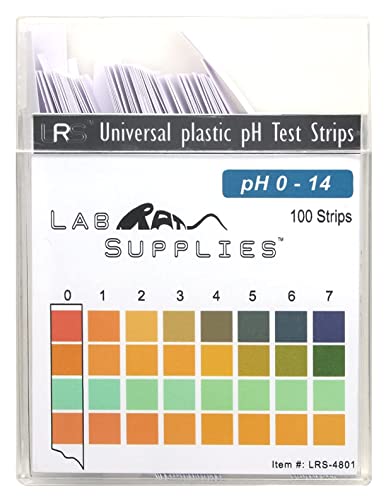
If you find yourself switching between acid dyes for wool and fiber-reactive dyes for cotton, these wide-range strips are your best friend. They cover the entire spectrum, which is essential if you are experimenting with different dye classes in the same workspace.
The trade-off here is a slight loss in precision at the specific acidic levels required for protein fibers. You might find it harder to distinguish between a pH of 4.5 and 5.0 compared to a specialized strip.
However, for the knitter who keeps a diverse "dye kitchen," the convenience of one box for every project is hard to beat. They are a solid, reliable choice for general monitoring across all your fiber arts projects.
MColorpHast 0-6 pH Strips: Best Non-Bleeding Option

One of the most frustrating things about cheap pH paper is the dye "bleeding" into your test sample, which can ruin your color reading. MColorpHast strips are designed with a protective barrier that keeps the indicator dye trapped on the strip.
This is a game-changer when you are working with concentrated dye stocks where a single drop could stain your testing area. You get a crisp, clean color match every single time, even if the water in your pot is already deeply saturated with color.
These are slightly more expensive, but the peace of mind is worth it when you are working with expensive hand-dyed yarn. You won’t have to worry about false readings caused by the dye bath’s own pigment.
Whatman 0-14 pH Indicator Paper: Best Lab Quality

Whatman is a gold standard in scientific circles, and their indicator paper is incredibly consistent. If you are the type of knitter who treats their dye studio like a laboratory, you will appreciate the stability and accuracy of these papers.
They are particularly good at maintaining a stable color for several minutes, giving you plenty of time to compare them against the reference chart. This is helpful if you are juggling multiple dye pots and need to check levels in quick succession.
While they are overkill for a casual hobbyist, they are an excellent investment for someone dyeing large batches for a small business. You are paying for the reliability that ensures every batch of yarn matches the last.
Litmus 0-14 pH Paper Rolls: Best Budget Choice
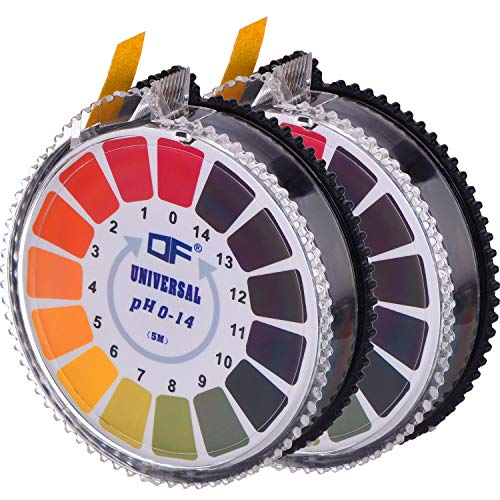
If you are just starting out with dyeing, you don’t need fancy, high-tech equipment to get great results. These simple rolls allow you to tear off exactly the length you need, making them very economical for frequent testing.
The downside is that they are generally less precise than the color-coded strips mentioned above. They are best for a quick "is it acidic enough?" check rather than fine-tuning your bath to a specific decimal point.
Use these for your initial acidification steps, but consider keeping a more precise strip on hand for the final check. They are the perfect entry-level tool for learning how pH affects your fiber’s color uptake.
Johnson Test Papers 2-9 Strips: Best for Wool Dyes
These strips are perfectly optimized for the range where almost all protein fiber dyeing occurs. By narrowing the range to 2-9, they provide significantly better resolution for the specific pH levels needed for wool and alpaca.
Most acid dyes for wool perform best in the 4-6 range, and these strips make that range very easy to identify. You won’t be distracted by readings at the extreme ends of the scale that you’ll never actually use.
They offer a great balance between the high-end lab strips and the basic budget options. For the dedicated wool dyer, this is often the "sweet spot" for both price and performance.
EMD Millipore pH Strips: Best for Clear Readings

The color charts provided with EMD Millipore strips are exceptionally vivid, making them easy to read under poor lighting conditions. If your dye area is in a basement or a dimly lit corner, you will appreciate the high contrast.
They are very responsive, providing an accurate reading almost instantly upon contact with the dye bath. This speed is helpful when you are working with heat-sensitive dyes that need to be monitored closely as the pot reaches a simmer.
These strips are reliable, durable, and provide a level of clarity that takes the guesswork out of your process. They are a professional-grade tool that will help you achieve consistent, repeatable results.
Why pH Balance Matters in Your Acid Dye Bath
The pH level of your dye bath determines how effectively the dye molecules bond to the protein fibers. If the bath is too alkaline, the dye will not exhaust, leaving you with a pot of colored water and patchy, uneven yarn.
Conversely, if the bath is too acidic, the dye may strike too quickly, resulting in blotchy colors rather than a smooth, saturated tone. Think of it like tension in knitting; if your tension is too loose or too tight, the fabric structure suffers.
Maintaining the correct pH ensures that the color is "struck" evenly across the entire surface of the fiber. This is essential for preventing bleeding during the final blocking process when the yarn is soaked in water.
How to Properly Calibrate Your Dye Bath Water
Before adding your yarn, always test the pH of your water after adding your acid (usually citric acid or vinegar) but before adding the dye. This allows you to adjust the chemistry without the dye pigment obscuring the color of your test strip.
- Start with a small, measured amount of acid.
- Stir the bath thoroughly to ensure the acid is fully distributed.
- Dip your strip and wait for the recommended time before reading.
- Adjust in small increments, re-testing after each addition.
Remember that different water sources—such as hard well water versus soft city water—will react differently to acids. Always test your water before you start your project to see how much acid is required to reach your target pH.
Troubleshooting Common pH Level Dyeing Issues
If you notice your dye isn’t exhausting, your bath is likely too alkaline, and you need to add more acid. If the dye strikes instantly and leaves the rest of the bath clear, your bath is likely too acidic, causing the dye to grab the first fiber it touches.
Uneven or "speckled" results often happen when the pH is erratic or the bath wasn’t stirred well enough. Consistency is key; if your pH is stable, your color distribution will be much more uniform.
Don’t be afraid to keep a log of your pH readings for every batch you dye. Over time, you will start to see patterns that help you predict exactly how much acid your specific yarn and water combination needs.
Mastering pH balance in your dye bath is a skill that elevates your fiber arts from a fun experiment to a professional craft. By choosing the right testing strips and keeping a consistent process, you ensure that your beautiful hand-dyed yarn remains vibrant for years. Happy dyeing, and may your colors always strike exactly where you want them.