7 Best Rotating Chart Stands For Standing Knitters
Discover the 7 best rotating chart stands for standing knitters. Improve posture and efficiency with these top picks designed for ergonomic, hands-free ease.
Standing while knitting is a game-changer for those of us who struggle with back pain or simply want to stay active while working on complex colorwork charts. Finding the right stand to hold your pattern at eye level is the secret to maintaining your posture and your place in the row. These seven rotating stands offer the stability and adjustability needed to transform your knitting space into an ergonomic studio. Let’s dive into the best options to keep your eyes on your stitches and your neck pain-free.
K&M 118/1 Orchestra Stand: The Sturdy Gold Standard
If you have ever spent hours navigating a complex lace chart, you know the frustration of a stand that wobbles with every turn of the page. The K&M 118/1 is the industry heavyweight, built with a level of German engineering that ensures your pattern stays exactly where you put it. It is arguably the most reliable piece of equipment you can add to your knitting room.
The wide, solid desk is perfect for those massive, multi-page charts often found in intricate gansey or stranded knitting patterns. Because it is a floor-standing unit, you can adjust the height to perfectly match your standing eye level, which is vital for preventing the "knitter’s hunch."
The tradeoff here is portability; this is not a stand you will be folding up and tucking into your project bag. It is a permanent fixture, but for the knitter tackling a long-term heirloom project, it is worth every square inch of floor space it occupies.
Neewer Desktop Tablet Mount: Best for Small Spaces
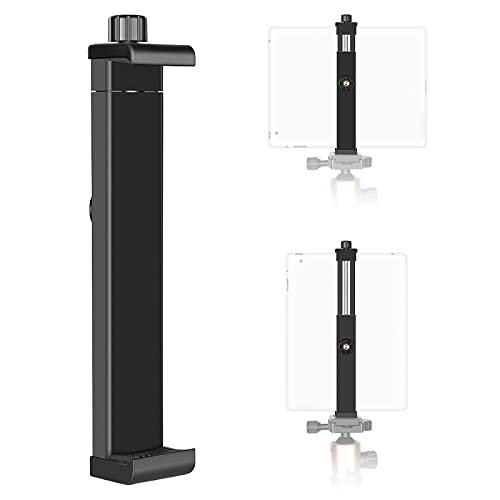

Sometimes, your knitting corner is just a corner of a dining room table or a small desk. The Neewer mount clamps directly onto your surface, saving you precious floor space while keeping your digital charts right in front of you.
This is an excellent choice for knitters who use apps like KnitCompanion to track their progress. Because it features a 360-degree rotation, you can quickly swivel your tablet from portrait to landscape mode depending on the layout of your chart.
Just remember that because it clamps to your table, you need a sturdy surface to attach it to. If your table is flimsy, the vibration of your needles might cause the stand to shake, which can be distracting when you’re trying to count stitches in a delicate lace repeat.
LEVO Deluxe Floor Stand: Perfect for Large Charts

The LEVO stand is a luxury item, but for the knitter who works exclusively with large-format paper charts or heavy tablets, it is an ergonomic powerhouse. Its weighted base provides incredible stability without the need for a bulky tripod footprint.
What sets this apart is the "swing-arm" design, which allows you to pull the chart directly over your knitting needles or push it away when you need to stand back to check your work. It feels fluid and intuitive, moving with your body rather than forcing you to adjust your posture to fit the stand.
The main consideration is the price point, which is significantly higher than a standard music stand. However, if you are a professional knitter or someone who spends multiple hours a day working on complex projects, the investment in your physical comfort pays for itself in reduced strain.
Artisanal Wood Music Stand: The Aesthetic Choice

There is something undeniably satisfying about working with beautiful tools, and a wooden music stand brings a touch of warmth to any knitting nook. These stands are often handcrafted, offering a sturdiness that rivals metal stands while looking like a piece of furniture rather than a piece of office equipment.
Beyond the aesthetics, wood provides a soft, non-reflective surface that is easy on the eyes during long sessions. Many of these stands feature adjustable pegs or shelves that can hold a heavy knitting book wide open, which is essential when you are referencing a stitch dictionary alongside your pattern.
Keep in mind that these are often heavier and less adjustable on the fly than modern metal stands. They are the "slow fashion" choice for the knitter who values a beautiful, curated environment as much as the finished garment.
Mount-It! Tablet Floor Stand: Best for Flexibility
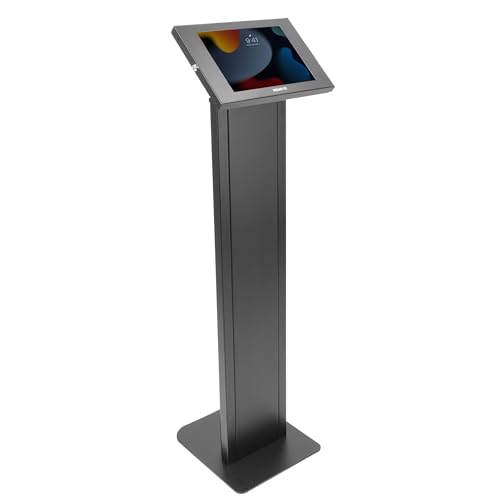
The Mount-It! stand is all about modularity, featuring an articulated arm that can be bent and positioned in almost any direction. If you are a knitter who likes to stand at a high counter while working on socks, this stand can be adjusted to hover right at your eye level.
The base is heavy and stable, preventing the stand from tipping even when the arm is fully extended. It is particularly useful if you find yourself switching between standing and sitting, as you can adjust the height in seconds without needing any tools.
The only downside is the complexity of the joints; over time, you may need to tighten the tension screws to ensure the arm doesn’t sag. It is a small maintenance task, but one that is necessary to keep your chart perfectly positioned.
UBeesize Gooseneck Stand: Best Budget Solution

If you are just starting to experiment with standing while you knit, you don’t need to break the bank. The UBeesize gooseneck stand is a simple, flexible solution that clips to a shelf or table and holds a tablet or phone firmly in place.
The "gooseneck" allows for infinite micro-adjustments, which is great if you are knitting a project where you need to look back and forth between your chart and your needles frequently. It is lightweight and portable, making it the perfect companion for knit nights or travel.
However, because it is flexible, it can be a bit "bouncy" if you bump it. It is best used for lighter devices rather than heavy, thick paper patterns, which might cause the neck to droop over time.
Peak Music Stand with Tray: Best for Heavy Books
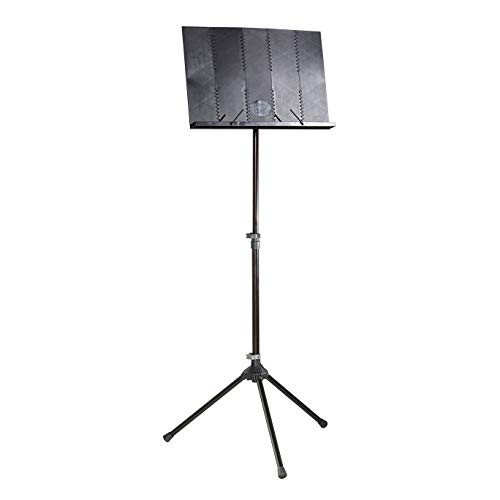
When you are working from a thick, spiral-bound knitting book, you need a stand with a deep tray and a wide reach. The Peak Music Stand is designed for musicians who need to hold heavy scores, making it perfect for holding your favorite stitch encyclopedias.
The desk is wide enough to accommodate two pages of a pattern side-by-side, which is a major advantage for complex cable patterns where you need to see the legend and the chart simultaneously. It is built to last and can handle the weight of even the heaviest coffee-table-style knitting books.
The stand is quite large, so it is best suited for a dedicated knitting space. If you have the room, the stability and surface area it provides are unmatched for the serious, book-loving knitter.
Why Standing Knitters Need a Dedicated Chart Stand
Knitting is a repetitive motion sport, and "knitter’s neck" is a very real occupational hazard. When we hunch over our laps to read a chart, we put immense strain on our cervical spine, which can lead to chronic pain and fatigue.
A dedicated chart stand forces you to maintain an upright, neutral spine while you work. By bringing the chart up to eye level, you allow your shoulders to relax and your neck to stay aligned, which keeps you knitting longer and more comfortably.
Furthermore, a stand keeps your chart clean and safe from accidental spills or yarn tangles. When your pattern is elevated, it is protected from the "yarn graveyard" that often accumulates on the floor or the sofa beside you.
Key Features to Consider Before Buying Your Stand
When selecting a stand, think about the weight of your materials and the height of your preferred knitting station. A heavy-duty stand is a must for books, while a lightweight arm is sufficient for a smartphone or tablet.
- Adjustability: Can the stand tilt and rotate to accommodate your specific posture?
- Stability: Does the base have enough weight to prevent tipping when you reach for your yarn?
- Surface Area: Is the tray wide enough for your specific pattern format?
- Portability: Do you need to move the stand between rooms, or will it stay in one place?
Don’t overlook the importance of the clamp or tray depth. If you use a tablet, ensure the holder has a secure grip that won’t obscure your pattern or accidentally press your volume buttons.
How to Position Your Chart to Prevent Neck Strain
The goal of your stand is to create a "gaze angle" that requires minimal head movement. Place your chart directly in front of you, slightly below eye level, so that your eyes can shift from the chart to your needles with only a slight downward movement of the eyes, not the head.
If you find yourself still leaning forward, your stand is likely too low or too far away. Adjust the height until your elbows are at a comfortable angle and your back feels supported by your posture, not by the weight of your head pulling you down.
Finally, remember to take "micro-breaks" every few rows. Even with the perfect stand, standing in one position for too long can cause stiffness, so take a moment to stretch your neck and shoulders to keep your body as limber as your yarn.
Finding the right rotating chart stand is an essential step in professionalizing your knitting practice and protecting your long-term health. By choosing a stand that matches your specific project needs and space constraints, you ensure that your focus remains entirely on the beauty of your stitches. Whether you opt for a heavy-duty floor model or a sleek desktop mount, your body will thank you for the improved ergonomics. Happy knitting, and may your rows always be even and your neck always pain-free.