6 Best Locking Needles For Secure Stitch Holding
Discover the top 6 locking needles for secure stitch holding. This guide reviews reliable options to keep your knitting projects safe and organized with ease.
Every knitter knows the heart-stopping moment when a stitch slips off the needle during a complex cable or lace transition. Locking stitch markers act as your project’s safety net, providing a secure way to hold live stitches or mark critical pattern repeats. Investing in the right tools prevents hours of frustrating tinking—the process of unknitting stitch by stitch—and keeps your rhythm fluid. This guide explores the best locking markers on the market to help you find the perfect match for your fiber and technique.
Clover Locking Stitch Markers: The Gold Standard
Clover locking markers are the industry benchmark for a reason. Their signature teardrop shape and reliable hinge mechanism make them incredibly easy to manipulate, even for those with limited dexterity or arthritic hands.
These markers are constructed from a sturdy, smooth plastic that won’t snag on delicate fibers like mohair or silk. Because they don’t have sharp edges, you can leave them in your work for extended periods without worrying about yarn distortion or breakage.
The bottom line is that these are the most versatile markers in any knitter’s toolkit. Keep a tin of these on your desk for everything from basic stockinette to complex brioche projects.
Cocoknits Colorful Nylon Stitch Markers Review


Cocoknits has mastered the art of functional, aesthetically pleasing design. Their nylon-coated steel markers are a favorite among knitters who appreciate a minimalist, high-quality aesthetic that doesn’t sacrifice utility.
The nylon coating provides just enough grip to keep the marker from sliding around unnecessarily, yet it remains smooth enough to glide over your needles. Because they are steel-based, they are incredibly durable and won’t snap like cheaper plastic alternatives.
If you are a fan of magnetic storage or need to pick up dropped markers with a magnet, these are a game-changer. They provide a premium feel that makes the tactile experience of knitting feel just a little more luxurious.
HiyaHiya Locking Stitch Pins for Fine Yarns

When you are working with lace-weight yarn or fine fingering-weight wool, bulky markers can actually stretch your stitches out of shape. HiyaHiya’s locking pins are designed specifically for these delicate, high-stakes projects.
These pins function much like a safety pin, allowing you to secure a single stitch without adding unnecessary weight to your fabric. They are incredibly thin, ensuring that your gauge remains consistent even where the marker is placed.
However, be careful with very fuzzy fibers like angora, as the pin mechanism can occasionally catch on the halo of the yarn. Use these for your most intricate lace shawls where precision is the absolute priority.
Susan Bates Crystalites: Best Budget Option
For the knitter who tends to lose markers under the sofa or in the depths of a project bag, Susan Bates Crystalites offer an unbeatable value. These are simple, no-nonsense tools that get the job done without any bells or whistles.
The translucent plastic makes them easy to spot against dark yarns, which is a common pain point for many knitters. They are lightweight and flexible, making them a great choice for beginners who are still learning how to manage their tools.
While they may not have the longevity of a metal marker, they are perfectly functional for everyday projects. Buy them in bulk and keep a few stashed in every project bag you own.
Knitter’s Pride Rainbow Locking Markers Set

Knitter’s Pride offers a vibrant, color-coded solution that is perfect for complex colorwork or multi-step patterns. Being able to distinguish between your "beginning of round" marker and your "pattern repeat" markers by color is a massive time-saver.
The locking mechanism is secure and provides a satisfying "click" when closed, so you know your stitches are safe. The smooth finish ensures they won’t snag on your yarn, even when you are working with multiple strands simultaneously.
These are an excellent choice for knitters who struggle with keeping track of complicated chart repeats. Use the different colors to map out your project visually, turning a confusing pattern into a manageable set of instructions.
Tulip Etimo Locking Stitch Markers Excellence
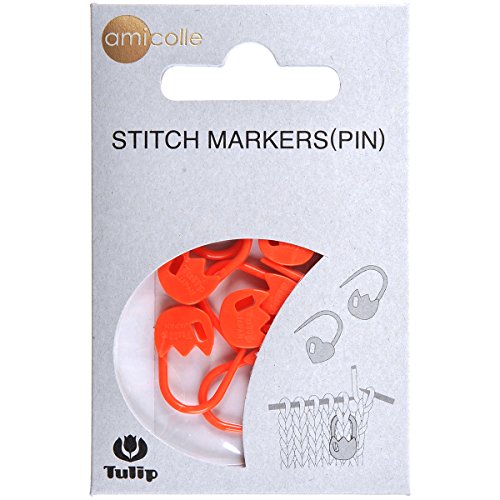
Tulip is renowned for their high-end crochet hooks, and their locking markers carry that same reputation for precision engineering. These markers are designed with a unique shape that stays closed securely while remaining incredibly easy to open.
The material used is a high-grade resin that feels smooth and substantial in your fingers. They are arguably the most comfortable markers to use during a long knitting session, as they don’t require much force to snap shut.
If you are a professional knitter or someone who spends hours on a single project, the ergonomic design of these markers is well worth the investment. They are a true example of how a small tool can significantly improve the quality of your knitting life.
Why Locking Markers Prevent Dropped Stitches
A dropped stitch is the nightmare of every knitter, especially when it cascades down several rows. Locking markers act as a physical barrier, holding the loop firmly in place until you are ready to address it.
By placing a locking marker through a live stitch, you essentially "pause" that part of your project. This is particularly useful when you need to put your knitting down mid-row or when you are working with slippery materials like bamboo or silk.
Don’t wait until a stitch falls to use these tools. Use them proactively to mark your place, secure your stitches during a break, or hold your work while you try on a sweater for fit.
Choosing the Right Size for Your Needle Gauge
Matching your marker size to your needle gauge is a nuanced skill that many beginners overlook. Using a marker that is too large for your needle can cause the stitches on either side to become elongated or uneven.
- For Fingering weight (2.0mm – 3.25mm): Use micro-locking pins or small plastic markers.
- For Worsted weight (4.0mm – 5.0mm): Standard teardrop or circular markers work best.
- For Bulky weight (6.0mm+): Larger, thicker markers are necessary to ensure they don’t get lost in the fabric.
Always test your marker on a swatch before committing to a large project. If the marker feels like it is pulling at the yarn, switch to a smaller size immediately to maintain your tension.
How to Properly Use Locking Markers in Lace
Lace knitting is unforgiving, and a single misplaced stitch can ruin a complex pattern repeat. Locking markers are essential for keeping track of your yarn-overs and decreases during the process.
Place your markers at the beginning and end of each pattern repeat to ensure you are always on track. If you find yourself losing count, the markers provide a visual checkpoint that allows you to verify your stitch count at the end of every row.
Remember to remove or move the markers as you complete each section. Leaving them in for too long can sometimes leave a slight indent in the yarn, especially in delicate fibers like alpaca or merino.
Essential Maintenance for Your Stitch Markers
Like any other tool in your kit, your stitch markers require a bit of care to keep them in good working order. Over time, plastic markers can develop burrs from the friction of the yarn, which can lead to snagging.
If you notice your markers are catching, run a fine-grit emery board or a piece of high-grit sandpaper over the rough edge. For metal markers, check the hinge periodically to ensure it hasn’t become loose or bent out of shape.
Keep your markers organized in a dedicated tin or small pouch to prevent them from being crushed or lost. A well-maintained set of markers will serve you for years, making your knitting process smoother and far more enjoyable.
Selecting the right locking stitch markers is about balancing your personal comfort with the specific needs of your project. Whether you prefer the reliability of Clover, the sleekness of Cocoknits, or the precision of Tulip, these tools are indispensable for maintaining your stitch count and your sanity. Take the time to experiment with different types and sizes to see what feels most natural in your hands. Happy knitting, and may your stitches always stay exactly where you put them.