7 Best Stitch Stoppers For Circular Needle Ends
Keep your knitting secure with our top 7 stitch stoppers. Discover the best tools to prevent dropped stitches and keep your circular needle projects safe.
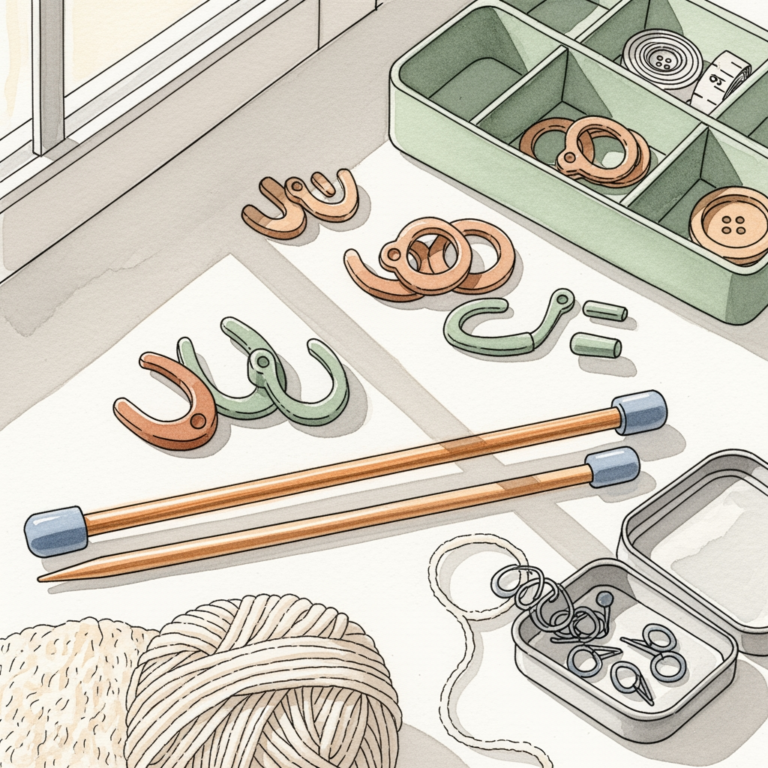
We have all experienced that heart-sinking moment when you pull a project from your bag, only to find half your stitches have slipped off the circular needle tips. Stitch stoppers are the unsung heroes of the knitting world, acting as a vital insurance policy for your hard work. Whether you are working on a complex lace shawl or a simple stockinette sweater, these small tools prevent dropped stitches and accidental unraveling. Selecting the right set can transform your knitting experience from stressful to seamless.
ChiaoGoo Small and Large Silicone Needle End Caps


ChiaoGoo’s silicone caps are arguably the most versatile option on the market today. Because they are made from a pliable, high-friction silicone, they grip onto a wide variety of needle materials, including slick stainless steel and polished bamboo.
These caps are particularly effective because they don’t rely on a screw-in mechanism. You simply push them onto the needle tip, and the silicone hugs the taper, staying put even if your project gets tossed around in a project bag.
The real-world trade-off here is the dust factor. Since they are tacky, they tend to pick up lint and stray fibers, which can reduce their grip over time. A quick rinse with warm water and mild soap usually restores them to their original, sticky glory.
KnitPicks Options Interchangeable Needle End Caps

If you are already invested in the KnitPicks interchangeable system, these caps are an essential addition to your kit. They are designed specifically to screw into the threads of your cable, effectively turning your cable into a stitch holder.
This is a superior method for long-term storage because it creates a secure, mechanical lock. Unlike push-on caps that might pop off if a heavy sweater pulls on them, these threaded caps remain firmly attached until you are ready to resume knitting.
Be mindful that these are brand-specific. While they are perfect for your Options cables, they will not work with other brands, making them a less flexible choice if you prefer a "mixed-bag" collection of needles.
Lykke Driftwood Interchangeable Needle End Stoppers

Lykke’s wooden stoppers are as beautiful as they are functional, often matching the aesthetic of their signature driftwood needles. These stoppers are a fantastic choice for the knitter who appreciates tactile, natural materials.
They offer a snug fit that feels premium in the hand. Because they are wood, they are lightweight and won’t add unnecessary bulk or weight to the end of your needles, which is helpful if you are working on a heavy, cabled blanket.
However, be careful with the finish. While beautiful, wood can occasionally splinter if dropped on a hard surface or if the threading is forced. Treat them with the same care you would your favorite pair of wooden needles.
HiyaHiya Interchangeable Needle Tip Adapters/Caps

HiyaHiya is known for precision engineering, and their caps are no exception. These are designed to fit their specific screw-on system, providing a seamless transition from cable to stopper.
The standout feature here is the inclusion of small holes in the end caps, which allow you to use your tightening key to secure them. This ensures they won’t vibrate loose during travel, a common issue with friction-fit alternatives.
If you are a knitter who travels frequently, these are a top-tier choice. They are compact, durable, and offer a level of security that brings peace of mind when your project is buried at the bottom of a carry-on bag.
Addi Heart-Shaped Needle Point Protectors and Caps

Addi’s heart-shaped protectors are a classic in the knitting community for a reason. They are soft, flexible, and designed to fit snugly over a wide range of needle sizes, making them a great universal tool.
Their unique shape isn’t just for aesthetics; it also prevents the needles from rolling off a flat table. If you’ve ever watched a needle roll under a couch, you know exactly why this design feature is worth its weight in gold.
Because they are made of a soft rubberized plastic, they are gentle on your hands. They are excellent for those with arthritis or hand fatigue, as they provide a comfortable surface to rest your fingers against while you work.
Clover Point Protectors for Circular Needle Tips

Clover is the reliable workhorse of the knitting world, and their point protectors are no different. These are the classic "cone" style protectors that have been a staple in knitting bags for decades.
They are incredibly affordable and easy to find, making them a great "starter" stopper for new knitters. They come in various sizes, color-coded for easy identification, which saves time when you’re hunting for the right fit in a disorganized notions tin.
The downside is that they can sometimes be a bit loose on very fine needles. If you are working on fine lace weight yarn with 2.0mm needles, these might slide off more easily than a dedicated, smaller-sized stopper.
Knitter’s Pride Interchangeable Needle End Caps
Knitter’s Pride offers a robust range of end caps that are widely compatible across many of their interchangeable lines. These caps are durable, functional, and designed to withstand the wear and tear of daily use.
They are particularly good for knitters who own multiple sets from the same manufacturer. Because the threading is consistent, you can swap them between your circular cable projects without a second thought.
Like the other threaded options, they provide a secure hold that you don’t get with slip-on caps. If you are putting a project away for a month or more, I always recommend using a threaded cap to ensure the cable doesn’t accidentally detach.
Why Use Stitch Stoppers for Your Circular Needles
Stitch stoppers are not just for when you put a project away; they are also for when you are actively knitting. If you need to switch needles to check your gauge or if you are using a circular needle for a flat project, they keep your work safe.
They also protect the tips of your needles. High-end needles, especially those made of aluminum or coated wood, can be damaged if the tips are banged against hard surfaces. A stopper acts as a buffer against accidental drops.
Finally, they prevent yarn snags. When you aren’t using a pair of circulars, the open ends can catch on your project bag’s lining or other yarn skeins. A stopper acts as a smooth cap that protects both your needles and your precious fiber.
How to Choose the Right Size for Your Needle Ends
Choosing the right size is all about the diameter of your needle. For push-on caps, you want a snug fit that won’t slide off, but you don’t want to force a small cap onto a large needle, as this can stretch or tear the silicone.
- Small (2.0mm – 3.75mm): Requires a tighter, more precise fit.
- Medium (4.0mm – 6.0mm): The most common size, usually interchangeable across brands.
- Large (6.5mm – 10.0mm+): Look for caps with a wider, more flexible base to accommodate the thicker needle diameter.
If you are between sizes, always err on the side of a tighter fit. A loose cap is essentially useless, as it will inevitably slip off the moment you turn your back on your project.
Best Practices for Storing Your Knitting Projects
Beyond using stitch stoppers, how you store your project matters immensely. I always recommend using a project bag that is large enough to hold your work without compressing it, which helps prevent yarn from becoming felted or distorted.
Keep your needles and yarn away from direct sunlight and extreme humidity. Natural fibers like wool and alpaca can be sensitive to environmental changes, and even synthetic needles can warp if left in a hot car for an extended period.
Lastly, label your project bags. Include a small index card with the needle size used, the yarn brand, and the date you started. It sounds simple, but your future self will thank you when you pick up a long-dormant project and know exactly where you left off.
Investing in quality stitch stoppers is a small price to pay for the security of your knitting projects. By choosing the right style for your needle type, you can protect your yarn, your tools, and your peace of mind. May your stitches always stay on the needles and your projects always reach the bind-off row. Happy knitting!