
6 Best Knit Blocking Combs For Quick Edge Finishing
Discover the 6 best knit blocking combs for efficient edge finishing. Learn how these tools ensure professional, uniform results for all your fiber projects.
Blocking is the final, transformative step that turns a collection of loops into a professional-grade garment. While traditional pins can be tedious and prone to leaving gaps, blocking combs offer a faster, more uniform solution for straight edges. Choosing the right set can save you hours of frustration and ensure your lace or stockinette pieces lay perfectly flat. Here are the top six blocking combs that every serious knitter should consider for their toolkit.
Knitter’s Pride Knit Blockers: The Industry Gold


These blockers are the gold standard for a reason: they feature a unique design that combines multiple pins into a single, sturdy plastic base. By anchoring several needles at once, you can cover more ground in a fraction of the time compared to individual pins.
The pins themselves are made of high-quality stainless steel, which is essential for preventing rust when working with damp, heavy wools. If you are blocking a large, wet lace shawl, the weight of the fabric won’t cause these to buckle or bend under pressure.
One minor trade-off is their bulk; they are wider than traditional pins, which can make them slightly trickier to maneuver around tight curves or intricate neckline shaping. However, for long, straight edges or rectangular wraps, they are unmatched in efficiency.
Cocoknits Blocking Combs: Best Ergonomic Design

Cocoknits understands that fiber arts should be a comfortable experience, and their blocking combs reflect that philosophy. The base is designed with a slight curve or texture that makes it much easier to grip, even when your hands are slightly damp from the blocking process.
The pins are spaced thoughtfully to provide enough tension to hold the fabric taut without distorting the stitch pattern. This is particularly useful when working with delicate fibers like alpaca or merino, where over-stretching can permanently ruin the loft of the yarn.
If you struggle with hand fatigue or dexterity issues, these are a fantastic investment. The tactile design ensures you aren’t fighting your tools while trying to pin down a complex project.
Clover Blocking Combs: Ideal for Delicate Fibers
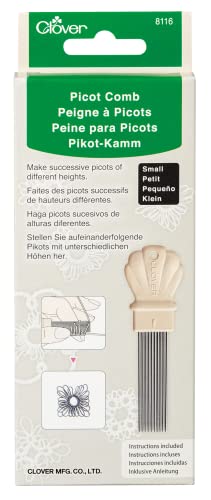
Clover has a long-standing reputation for precision, and their blocking combs are no exception. The pins are remarkably smooth, which is a critical feature when you are working with high-twist yarns or luxury fibers that snag easily.
When you slide these into your blocking mat, they glide through the fibers rather than piercing them aggressively. This prevents the "puckering" effect that can happen when a pin is too thick or rough for the yarn gauge.
These are best suited for smaller, lighter projects like baby sweaters or fine-gauge lace. If you try to use them on a heavy, worsted-weight wool blanket, you might find the pins a bit too slender to maintain the necessary tension.
Lacis Blocking Combs: Best for Precision Tension

Lacis tools are often favored by knitters who prioritize technical perfection and historical accuracy in their work. Their combs are designed to provide consistent, even tension across the entire edge of a piece.
The spacing on these combs is very uniform, which helps in creating a perfectly straight border on shawls or scarves. If you are a perfectionist regarding your edges, the structural integrity of these combs will be a welcome addition to your stash.
Because they are so precise, they require a bit more patience during the initial setup. They aren’t the "quick and dirty" option, but they are the best choice for a project where you’ve spent dozens of hours and want the finish to be flawless.
Boye Blocking Combs: Reliable Budget Option

Boye provides a solid, no-nonsense tool that gets the job done without breaking the bank. These combs are durable and effective, making them an excellent entry point for newer knitters who are just starting to realize why blocking is so important.
They lack some of the ergonomic bells and whistles of higher-end brands, but they perform the primary function of holding a straight edge perfectly well. They are ideal for the knitter who wants to keep their budget focused on high-quality yarn rather than expensive accessories.
Don’t let the lower price point fool you; they are robust enough to handle standard acrylics and wool blends with ease. They are a workhorse tool that will survive years of use in your knitting bag.
Darice Blocking Combs: The Essential Basic Set

Darice offers a straightforward set that covers the basics for most everyday knitting projects. If you are looking to replace a handful of lost T-pins with something more efficient, this is a great, accessible choice.
These are lightweight and easy to store, making them perfect for knitters who don’t have a dedicated studio space. They provide enough grip to keep your work in place while it dries, which is the most important factor in the blocking process.
While they may not have the premium feel of boutique brands, they are perfectly functional for the vast majority of projects. They are the "reliable station wagon" of the blocking world—simple, effective, and dependable.
Why Blocking Combs Outperform Standard T-Pins
Standard T-pins have been the knitter’s go-to for decades, but they often lead to "scalloped" edges. Because you are pinning individual points, the fabric tends to pull inward between the pins, creating an uneven, wavy border.
Blocking combs solve this by distributing the tension across a wider surface area. By anchoring a longer section of the fabric at once, you eliminate the gaps and ensure the edge remains perfectly straight or curved according to your design.
Additionally, using fewer, larger tools is significantly faster than inserting dozens of individual pins. If you are blocking a large project, this efficiency is a game-changer for your workflow.
How to Choose the Right Comb for Your Project
The right choice depends heavily on your project’s fiber content and weight. For heavy, dense wools, look for combs with thicker, sturdier pins that won’t bend.
For delicate lace or fine-gauge silk, prioritize combs with smooth, thin pins that won’t snag or leave large holes in the fabric. Always consider the "stretch" of your yarn; superwash wool, for instance, grows significantly when wet, so you need a tool that can handle that extra tension.
- For heavy blankets: Choose wide-based, heavy-duty combs like Knitter’s Pride.
- For fine lace: Opt for smoother, thinner pins like those from Clover.
- For beginners: Start with a reliable, mid-range option like Boye or Darice.
Essential Tips for Perfect Edge Blocking
Always ensure your blocking mat is on a flat, stable surface before you start. If your mat is uneven, your finished piece will be as well, regardless of how good your blocking combs are.
When pinning, work from the center of the edge outward to ensure the tension is distributed evenly. Avoid pulling the fabric too tight; you want to "shape" the piece, not force it into a size it wasn’t designed to be.
If you are blocking a garment with seams, pin the seams first to ensure they are aligned correctly. This will make the final assembly process significantly easier and more professional in appearance.
Maintaining Your Blocking Tools for Longevity
Even the best stainless steel can eventually succumb to rust if left in a damp environment for too long. Always ensure your pins are completely dry before storing them in their container.
If you notice any residue on the pins from yarn oils or cleaning agents, wipe them down with a soft, dry cloth. Keeping them clean ensures they won’t transfer any unwanted substances to your next project.
Store your combs in a dedicated case or box to keep the pins straight. If a pin gets bent, it can snag your delicate fibers, so protecting the integrity of the tool is just as important as the knitting itself.
Investing in the right blocking combs will fundamentally change how you view the finishing process. By choosing tools that suit your specific project needs, you ensure your hard work is displayed to its best advantage. Remember that blocking is a skill that improves with practice, so don’t be afraid to experiment with different tension levels. Happy knitting, and enjoy the satisfaction of a perfectly blocked finished object.