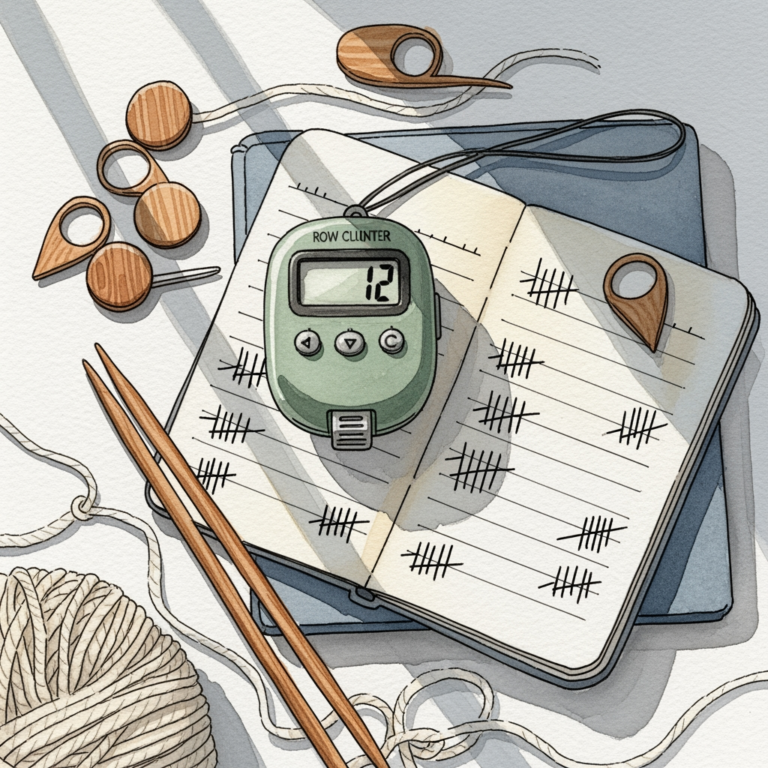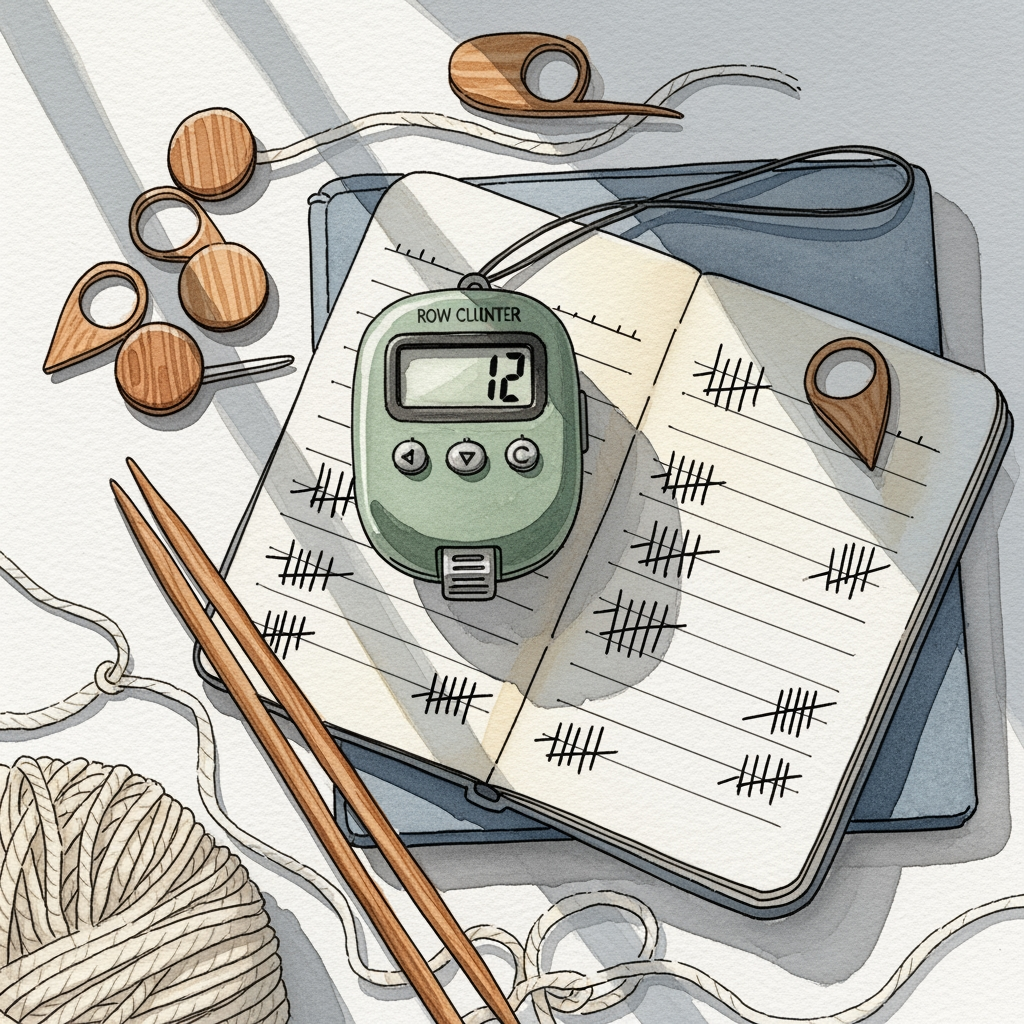
6 Best Row Counters For Wrist-Worn Convenience
Track your knitting progress effortlessly with these 6 top wrist-worn row counters. Discover convenient, hands-free tools that keep your patterns on track.
Every knitter knows the sinking feeling of losing count mid-row during a complex lace repeat or a long stockinette sleeve. Relying on your memory is a recipe for uneven hems and mismatched sleeves, especially when working with dark yarns or intricate cables. A dedicated wrist-worn counter removes the mental load, letting you focus entirely on your tension and stitch patterns. These six tools offer the precision needed to ensure your finished project matches your vision perfectly.
The Cocoknits Maker’s Keep: Best Overall Choice
The Cocoknits Maker’s Keep is far more than a simple counter; it is a comprehensive workstation for your wrist. By integrating a magnetic slap-bracelet design with a sturdy, reliable counter, it keeps your tools within reach at all times.
For those working on complex garments, the ability to store stitch markers directly on the magnetic surface is a game-changer. You won’t find yourself scrambling for a locking marker when you reach a transition point in your pattern.
While the footprint is larger than a standard digital counter, the utility is unmatched. It is the best overall choice because it solves two problems at once: row tracking and tool management.
Knitters Pride Wrist-Worn Counter: Best Value


If you want a straightforward, no-nonsense tool that simply does the job, the Knitters Pride counter is your go-to. It features a simple, tactile button that provides a satisfying click, ensuring you know exactly when your row is registered.
The strap is lightweight and adjustable, making it comfortable even during long sessions of knitting with heavy wool or bulky alpaca. It doesn’t get in the way of your movements, even when working with DPNs or circular needles.
This is the best value because it avoids unnecessary bells and whistles. It is an affordable, durable solution for any knitter who wants to focus on their craft without overcomplicating their setup.
The Clover Kacha-Kacha Wrist Counter: Best Design

The Clover Kacha-Kacha is legendary in the knitting community for its distinct, audible "kacha" sound. This feedback is essential for knitters who need to confirm their input without looking down at their wrist constantly.
The design is incredibly ergonomic, sitting flush against the wrist so it doesn’t snag on delicate mohair or fine lace yarns. Its locking mechanism prevents accidental clicks, which is a common frustration with cheaper, loose-button models.
This is the best design because it balances form and function perfectly. It feels like a high-quality instrument rather than a plastic toy, making it a reliable companion for years of knitting.
The Mini Digital Finger Counter: Best Portability

For the knitter who travels light, the mini digital finger counter is an essential piece of kit. It slips over your finger like a ring, keeping the counter right where your hands are already working.
Its tiny size makes it perfect for projects on the go, such as knitting socks on a train or working on a sweater at a cafe. Because it is digital, it offers a clear, easy-to-read display that doesn’t require squinting.
It is the best for portability, though keep in mind the small buttons can be tricky for those with limited dexterity. If you prefer a minimalist approach, this is the most unobtrusive way to track your progress.
The Rowan Wrist Counter: Best Traditional Option

The Rowan counter leans into a more classic aesthetic that appeals to knitters who enjoy the tactile nature of traditional tools. It operates with a smooth, mechanical feel that mimics the rhythm of knitting itself.
There is something grounding about using a mechanical counter when working with natural, heritage-breed fibers. It feels consistent with the slow, deliberate pace of hand-knitting a woolen sweater or a traditional gansey.
This is the best traditional option for those who find digital screens distracting or cold. It is a reliable, analog choice that brings a sense of continuity to your knitting practice.
The Addi Click Counter: Best Premium Accessory

The Addi Click counter is a high-end tool designed for the serious maker who values precision engineering. It is built to last, featuring a robust construction that stands up to the rigors of daily knitting.
It attaches securely to your wrist or even to the end of a circular needle cable, offering versatility in how you track your rows. The interface is intuitive, allowing for rapid adjustments if you need to backtrack after a dropped stitch.
This is the best premium accessory for those willing to invest in their craft. While it comes at a higher price point, the build quality and reliability provide peace of mind during long-term projects.
Why Wrist Counters Improve Your Knitting Accuracy
We have all experienced the "row-count amnesia" that happens when a phone rings or a pet interrupts your flow. A wrist counter acts as a secondary brain, holding your place so you don’t have to restart your row count from scratch.
This is particularly critical when working with patterns that have long repeats, such as a 24-row cable sequence. If you miss a row, the entire symmetry of your garment is compromised, often requiring tedious frogging.
By automating the tally, you can maintain a consistent rhythm. Consistency in counting leads to consistency in tension, which results in a professional-looking finish that sets your work apart from amateur attempts.
How to Choose the Right Counter for Your Projects
Selecting the right tool depends heavily on the type of knitting you do most often. Consider these factors when making your choice:
- Project Complexity: If you are doing complex lace, you need a counter with a locking mechanism to prevent accidental clicks.
- Yarn Type: If you are working with delicate, fuzzy yarns like mohair, choose a counter with a smooth profile to prevent snagging.
- Knitting Environment: If you knit in low light, a digital display with a clear backlight is superior to a mechanical dial.
Don’t be afraid to try different styles. What works for a simple stockinette scarf might not be the best choice for a complex, multi-chart colorwork sweater.
Comparing Digital Displays vs. Mechanical Counters
Digital counters offer the advantage of high visibility and, often, a simple reset button that makes starting a new project effortless. They are generally more lightweight, though they do require battery changes eventually.
Mechanical counters provide a tactile, satisfying click that many knitters find helps them stay in the "zone." They never run out of batteries, making them a permanent, low-maintenance fixture in your knitting bag.
Ultimately, the choice comes down to your personal preference for feedback. If you like the physical sensation of a button press, go mechanical; if you prefer a quick, visual confirmation, digital is your best bet.
Essential Tips for Tracking Rows While Knitting
Always reset your counter the moment you cast off or complete a project to avoid confusion on your next start. It is also helpful to keep a small notepad nearby to jot down the total row count when you finish a section.
If you are working on a multi-part project, like a sweater, keep a dedicated counter for each piece. This prevents the nightmare of trying to match a sleeve length to a body that you finished weeks ago.
Finally, remember that the counter is there to serve you, not the other way around. If you find yourself obsessing over the numbers, take a breath and remember that knitting is meant to be a meditative, enjoyable process.
Investing in a reliable wrist counter is one of the most practical upgrades you can make to your knitting toolkit. By removing the guesswork, you liberate your mind to focus on the beauty of the stitches and the quality of your tension. Whether you choose a high-tech digital display or a classic mechanical clicker, the right tool will make your knitting journey significantly more rewarding. Happy knitting, and may your row counts always be accurate.