6 Best Darning Mushrooms For Garment Repair Rated
Discover the 6 best darning mushrooms for garment repair. Our expert guide compares materials and shapes to help you mend your favorite clothes with ease.
There is nothing quite as heartbreaking as discovering a moth hole in a hand-knit sweater you spent months perfecting. Fortunately, a darning mushroom acts as the ultimate support system, providing the necessary tension to weave your yarn back into a seamless fabric. Whether you are fixing a worn heel on a sock or patching a snagged cardigan, the right tool makes the process meditative rather than frustrating. This guide breaks down the best darning mushrooms on the market to help you restore your favorite garments with confidence.
Clover Darning Mushroom: The Best Overall Choice


The Clover Darning Mushroom is a staple in many sewing kits for a reason: it balances weight and surface area perfectly. Its smooth, polished finish ensures that even delicate lace-weight yarns won’t snag while you are maneuvering your needle.
For someone working on a classic wool-blend sock, this tool provides the ideal tension to keep your stitches even. The mushroom cap is wide enough to cover most heel repairs without requiring constant repositioning.
If you are looking for a reliable, "do-it-all" tool that will last for decades, this is your best bet. It is the gold standard for a reason—it simply stays out of your way while you work.
Lacis Wooden Darning Mushroom: Best Value Pick
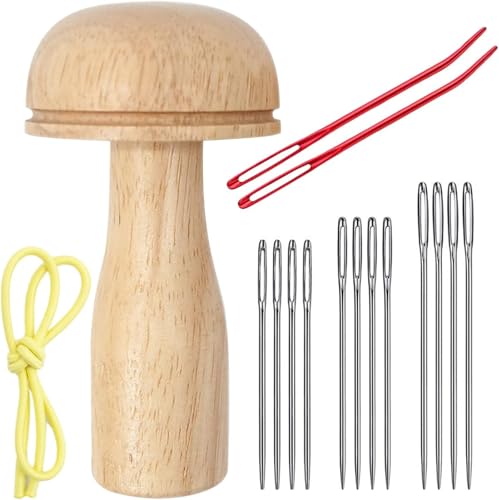
If you are just starting your mending journey and don’t want to invest in a high-end tool, the Lacis wooden mushroom is an excellent entry point. It is crafted from simple, unfinished wood that provides a bit of natural "grip" against the fabric.
Because the surface isn’t high-gloss, it prevents your garment from sliding around while you are trying to anchor your first set of warp threads. This is particularly helpful when working with slippery fibers like silk or bamboo.
While it lacks the ergonomic bells and whistles of more expensive models, it gets the job done reliably. It’s an honest, no-frills tool that proves you don’t need to spend a fortune to achieve professional-looking repairs.
Katrinkles Darning Mushroom: Best Artisan Design
Katrinkles has a knack for creating tools that are as beautiful as they are functional, and their darning mushrooms are no exception. Often crafted from high-quality hardwoods like cherry or birch, these pieces feel substantial and balanced in the hand.
The design is often more thoughtful regarding the neck and handle, making it easier to grip for longer mending sessions. If you suffer from hand fatigue while darning, the extra attention to the handle shape here is a game-changer.
These are heirloom-quality tools that look lovely sitting in your sewing basket. They aren’t just utility items; they are a joy to use, which often makes the tedious task of mending feel like a special ritual.
Darn Good Yarn Mushroom: Best for Beginners

The Darn Good Yarn darning mushroom is designed with the novice in mind, focusing on simplicity and ease of use. It usually features a very intuitive shape that is easy to hold steady, even if your hands aren’t yet accustomed to the dexterity required for darning.
It is particularly effective for those learning the "darning stitch"—the process of weaving yarn over and under to create a new fabric patch. The cap size is versatile, fitting well inside most standard sock heels or cuffs.
If you are nervous about your first repair, this tool provides a stable foundation. It removes the guesswork, allowing you to focus entirely on your needle placement and tension.
Prym Darning Mushroom: Best Ergonomic Handle

Prym is well-known for engineering tools that prioritize the user’s physical comfort. Their darning mushroom features a handle that is specifically contoured to fit the palm, which reduces the strain on your wrist during long repair sessions.
If you are tackling a large area of wear on a heavy-weight wool sweater, the ergonomic grip allows you to maintain steady pressure without your hand cramping. It is a thoughtful design that recognizes the physical reality of fiber arts.
The material is typically high-grade plastic, which is incredibly smooth and lightweight. If you prefer a tool that doesn’t add extra weight to your project, this is an excellent choice.
Schachenmayr Darning Egg: Best for Small Areas

Sometimes a full-sized mushroom is simply too bulky for tight spaces like children’s socks or the narrow fingers of a glove. The Schachenmayr darning egg is the perfect solution for these delicate, small-scale repairs.
Its oval shape allows you to reach into cramped corners where a wide mushroom cap simply wouldn’t fit. It is also highly portable, making it the perfect tool to toss into your knitting bag for on-the-go mending.
Because it is smaller, it requires a bit more dexterity to keep the fabric taut. However, for those precise, tiny repairs, nothing else matches its maneuverability.
How to Choose the Right Shape for Your Repairs
The shape of your darning tool dictates how well the fabric sits against it. A flatter top is better for large, flat areas like elbows, while a more rounded, bulbous shape is essential for the curves of a heel or toe.
Consider the "curvature" of the item you are repairing. If you are mending a sock, you need a rounded surface to mimic the shape of the foot, otherwise, your repair will pull and distort when the garment is worn.
- Round/Mushroom: Best for heels, toes, and elbows.
- Egg/Oval: Best for narrow sleeves, gloves, and children’s items.
- Flat/Disc: Best for large, flat patches on sweaters or blankets.
Wood vs. Plastic: Selecting Your Darning Tool
The material of your darning tool influences how the fabric behaves while you work. Wooden tools provide a natural friction that helps keep the fabric from sliding, which is great for beginners or slippery fibers like mohair.
Plastic tools, conversely, are exceptionally smooth. They are ideal for high-tension work where you want the fabric to glide easily as you rotate the mushroom under the hole.
- Wood: Best for control, grip, and natural aesthetics.
- Plastic: Best for durability, ease of cleaning, and slickness.
Essential Techniques for Seamless Mending
The secret to a seamless mend is not just the tool, but the tension of your thread. Always match the weight and fiber content of your darning yarn to the original garment as closely as possible.
When setting up your "warp" (the vertical threads), ensure they are spaced evenly. Do not pull them too tight; remember that the fabric needs to stretch when worn, or your repair will create a stiff, uncomfortable spot.
Work your "weft" (the horizontal threads) by weaving over and under the warp. Always catch the surrounding "live" stitches of the garment to ensure the patch is anchored into the existing structure, preventing future holes from forming at the edges.
Caring for Your Darning Tools and Notions
Treat your darning mushroom with the same care you give your knitting needles. If you have a wooden tool, consider occasionally rubbing it with a tiny amount of beeswax to keep the wood from drying out or snagging your yarn.
Keep your tools in a dedicated notions bag to prevent them from getting scratched or chipped. A nick in the surface of a darning mushroom can snag your yarn, which is a frustration you want to avoid mid-mend.
Finally, keep your darning needles stored separately. A dull or rusted needle can damage your fabric, so ensure your repair kit is as well-maintained as your favorite pair of needles.
Investing in a quality darning mushroom is a commitment to the longevity of your hand-knit wardrobe. By choosing the right shape and material for your specific repair needs, you transform mending from a chore into a rewarding act of preservation. Remember that every repair tells a story of a garment well-loved and well-worn. With these tools in your kit, you are ready to keep your stitches intact for years to come.