6 Best Craft Mats For Workspace Protection To Try
Protect your surfaces with our top six craft mat picks. Discover durable, self-healing options designed to enhance precision and workspace longevity today.
Whether you are blocking a delicate lace shawl or trimming ends on a heavy wool sweater, your workspace deserves protection. A high-quality craft mat acts as a buffer between your sharp tools and your table, ensuring longevity for both your gear and your furniture. Choosing the right surface can transform a cluttered kitchen table into a professional-grade fiber arts studio. Here are the best options to keep your workspace pristine while you focus on your tension and stitch definition.
Fiskars Self-Healing Mat: Best Overall Choice


The Fiskars mat is a staple in many sewing rooms, and for good reason; it handles the occasional slip of a rotary cutter with grace. Its self-healing properties mean that small incisions close up, preventing your blade from catching in deep grooves later on.
For a knitter who occasionally dabbles in sewing or fabric-backed embroidery, this is the gold standard. It provides a stable, non-slip surface that keeps your project from sliding around while you are trying to measure gauge or trim yarn ends.
However, keep in mind that these mats can warp if left in direct sunlight or near a heat source like a radiator. If you use a steam iron nearby for blocking, ensure your mat is far enough away to avoid heat damage.
OLFA Rotary Cutting Mat: Best for Durability

If you are the type of knitter who also constructs custom project bags or sews linings for your finished garments, the OLFA mat is your best friend. It is incredibly dense and stands up to the rigors of heavy-duty cutting tools for years.
The surface is firm but forgiving, providing enough resistance to make clean cuts without dulling your blades prematurely. It feels substantial under your hands, which is a nice tactile bonus when you are working on a large-scale project.
Be aware that because it is so durable, it is also quite heavy and not easily portable. This is a "set it and forget it" piece of equipment for a dedicated crafting corner.
Dahle Vantage Self-Healing Mat: Best Surface
The Dahle Vantage mat features a unique multi-layered construction that feels smoother than most competitors. This makes it an excellent choice for knitters who need to pin down lace projects or delicate swatches for blocking.
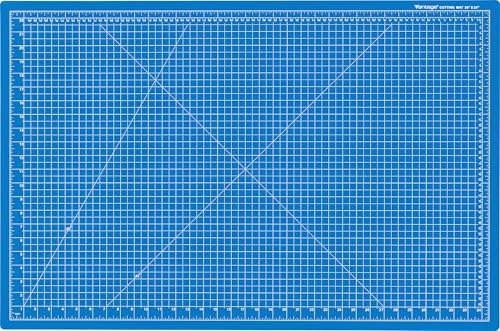
The surface texture is matte and non-glare, which is a lifesaver when you are trying to count stitches or check the ply of a yarn under bright task lighting. You won’t be distracted by annoying reflections while you work.
While the surface is top-tier, the mat can be slightly thinner than others on this list. Treat it with care, and it will remain a smooth, reliable partner for your most intricate fiber work.
Alvin Professional Cutting Mat: Best Quality

Alvin mats are often favored by architects and designers, and their precision translates perfectly to the fiber arts. If you require absolute accuracy when measuring your work or cutting fabric for a lining, this mat provides the best grid consistency.
The material is exceptionally high-quality, resisting the "curling" that often plagues cheaper mats over time. It lays perfectly flat, which is essential when you are trying to measure the dimensions of a finished garment.
These mats are an investment piece. If you are serious about the longevity of your tools, the extra cost is justified by the professional-grade performance and stability.
Arteza Self-Healing Mat: Best Budget Option

If you are just starting your journey into knitting and sewing, you don’t need to break the bank to protect your desk. The Arteza mat offers a solid, reliable surface that gets the job done without the premium price tag.
It performs well for basic tasks like trimming yarn, cutting tags, or measuring swatches. While it may show wear faster than the heavy-duty professional options, it is perfectly adequate for the average home crafter.
Think of this as your "entry-level" protector. It’s a great way to safeguard your furniture while you decide how much space and equipment you truly need for your hobby.
US Art Supply PVC Mat: Best for Large Spaces

For those of us who regularly block large sweaters or expansive shawls, a standard 18×24 mat simply won’t cut it. The US Art Supply PVC mat comes in larger sizes that accommodate bigger projects without the need to piece together multiple mats.
The PVC material is durable and provides a nice, grippy base for your project. This is particularly useful when you are dealing with slippery fibers like silk or bamboo, which tend to slide around on harder surfaces.
Because of its size, storage can be a challenge. Ensure you have a flat place to slide it under a bed or behind a bookshelf, as rolling it might cause permanent distortion.
Why Fiber Artists Need Dedicated Workspace Mats
Many knitters assume their work is "soft" and therefore harmless to their furniture. However, the accumulation of tiny snips from scissors, the pressure from blocking pins, and the accidental spills of tea or dye can ruin a wooden table over time.
A dedicated mat creates a boundary. When you lay your mat out, it signals that you are in "work mode," helping you focus on your stitch count and pattern reading without worrying about the surface underneath.
Furthermore, a mat provides a consistent background. If you are working with dark yarn, a light-colored mat helps you see your stitches clearly, reducing eye strain during long knitting sessions.
How to Clean and Maintain Your Cutting Surface
To keep your mat in top shape, wipe it down regularly with a damp cloth and mild soap. Avoid harsh chemicals or solvents, as these can break down the self-healing polymers and leave your mat brittle.
Never use a steam iron directly on the mat, as the heat will cause the plastic to warp and ruin the grid alignment. If you need to block a piece, use the mat as a base but place a towel between the wet project and the mat surface.
If your mat starts to feel "tacky" or collects lint, a gentle scrub with a soft brush and water usually does the trick. Always let it air dry completely before storing it away.
Key Factors When Selecting Your Crafting Mat
When choosing a mat, consider the scale of your projects. If you mostly knit socks, a small 12×18 mat is plenty; if you knit blankets or sweaters, go as large as your workspace allows.
- Self-Healing Capability: Essential for anyone using rotary cutters or sharp scissors.
- Grid Clarity: Look for high-contrast markings that are easy to read.
- Surface Texture: A matte finish is better for reducing glare under task lights.
- Portability: Do you need to store it away, or will it stay on your desk?
Don’t prioritize aesthetics over utility. A pretty mat is useless if it’s too small or too slick to hold your blocking pins in place.
Essential Workspace Protection Tips for Knitters
Always use a dedicated pair of scissors for yarn and another for paper or cardboard. Cutting paper dulls blades instantly, and you want your yarn scissors to be sharp enough to snip through a thick, multi-ply wool without fraying the ends.
When blocking, use rust-proof T-pins to avoid staining your yarn or your mat. If you are working with superwash wool, be extra careful, as these fibers can be more prone to stretching and may require more pins to hold their shape during the drying process.
Finally, keep your workspace clutter-free. A clean mat is a happy mat, and an organized workspace is the fastest way to improve your knitting speed and accuracy.
Protecting your workspace is an investment in your craft that pays dividends in both tool longevity and project quality. Whether you choose a high-end professional mat or a budget-friendly option, the key is consistency in use and maintenance. By creating a dedicated, safe environment for your knitting, you allow yourself the freedom to focus entirely on the rhythm of your needles and the beauty of your yarn. Happy knitting, and may your workspace always be as sharp as your skills.