6 Desk Lamps For Composition Work That Improve Focus
Struggling to stay productive? Discover 6 desk lamps for composition work designed to reduce eye strain and improve your focus. Shop our top picks for your desk.
Knitting dark yarn in low light is a recipe for missed stitches and lost patience. Proper illumination is just as critical to a successful project as choosing the right needle material or managing tension. Without adequate light, eye strain sets in quickly, leading to dropped stitches that are notoriously difficult to repair in mohair or brushed fibers. Investing in a high-quality desk lamp transforms the knitting experience, allowing for longer sessions and greater precision with intricate charts or complex cable patterns.
BenQ e-Reading LED Desk Lamp: Best Overall


The wide, curved head of the BenQ e-Reading lamp provides an expansive field of light that is perfect for large projects. When working on a heavy cabled blanket or a long lace shawl, this lamp covers the entire span of the knitting without creating harsh shadows or hot spots.
The brightness and color temperature controls are highly responsive, allowing for an immediate shift from warm, relaxing evening light to a crisp, daylight-balanced setting. This is especially helpful when working with dark navy or black wool, where the high contrast is necessary to clearly distinguish stitch definition.
The base is heavy and stable, preventing accidental tips during vigorous purling or when the project weight pulls against the table edge. While the price point is elevated, the build quality ensures a long-term companion for a craft that spans decades of practice.
Neatfi XL Bifocals Magnifier Lamp: Best for Detail

If the focus is on intricate stitch patterns like brioche or tiny bobbles, magnification becomes an essential tool. The Neatfi XL combines a broad light source with a high-quality glass lens to bring tiny details into clear view.
This lamp is particularly effective when working with fine-gauge yarn or repairing dropped stitches in complicated lace motifs. The bifocal feature allows for a quick glance through the magnified section to check stitch integrity, while the outer area remains clear for standard knitting rhythm.
Be mindful that the large head of this lamp can be heavy, requiring a sturdy surface for clamping. It is an ideal solution for those who find their eyes tiring after extended periods of reading complex charts or performing delicate grafting on fine-weight fibers.
Phive CL-1 Architect Lamp: Our Top Budget Pick

The Phive CL-1 offers a professional-grade range of motion at a fraction of the cost of high-end design lamps. Its classic architect-style arm allows you to position the light exactly where it is needed, whether the project sits on a lap or a flat tabletop.
This lamp is excellent for knitters who need a focused beam directly onto the needle tips. Because it uses an LED source, it stays cool to the touch, which is a major safety advantage when working near expensive natural fibers like silk or merino that might be sensitive to heat.
The clamp-on design saves valuable surface space, leaving more room for patterns, yarn bowls, and notions trays. It is a reliable, no-nonsense choice that prioritizes function and versatility over luxury aesthetics.
OttLite Wellness Glow LED Lamp: For Eye Comfort
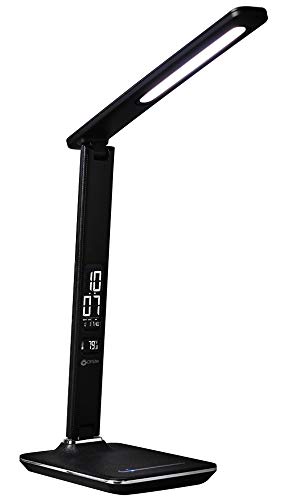
Knitting for hours on end demands a light source that mimics the natural spectrum of daylight to prevent premature fatigue. The OttLite Wellness series is specifically engineered to reduce glare and distortion, which is essential when color-matching yarn for stranded colorwork projects.
The light quality is exceptionally soft, which prevents the reflective glare often caused by shiny metal or carbon-fiber needles. This reduced glare makes it significantly easier to maintain consistent gauge, as the eyes do not have to struggle to separate the stitches from the needle surface.
While it lacks the massive reach of an architect lamp, its compact footprint and gentle light output are perfect for a dedicated knitting chair or bedside table. It remains a top recommendation for those who prioritize long-term eye health and accurate color representation.
Lume Cube Edge Lit Light: Best for Small Spaces
Sometimes the knitting nook is little more than a corner of a dining table or a cramped desk. The Lume Cube provides a sleek, modern solution that offers high-intensity light without taking up a significant physical footprint.
The edge-lit design directs light downward, which is highly effective for highlighting the texture of a project without blinding the knitter. It is a fantastic choice for those who work with highly textured yarn or complex cabling, as the light creates subtle shadows that emphasize stitch geometry.
Because it is compact and features a low-profile base, it tucks away easily when the space needs to be cleared for other activities. It strikes an excellent balance between portability and professional-grade performance.
Dyson Lightcycle Morph: The Ultimate Splurge
The Dyson Lightcycle Morph represents a leap in technology, featuring smart features that adjust brightness based on the time of day and local ambient light. For a dedicated maker who spends significant hours at the craft, this level of automation ensures optimal conditions without constant manual adjustments.
The unique design allows the light to be bounced off walls for ambient illumination or pointed directly at the work for intense, focused detail. This flexibility is unmatched when transitioning between knitting a simple stockinette section and concentrating on a complex chart that requires sharp focus.
While the cost is significant, the longevity and consistent light quality offer a genuine improvement in the daily experience of knitting. It is an investment for the serious maker who views their workspace as a permanent, functional studio.
Lumens vs. Color Temperature: What to Look For
Understanding lighting starts with two core concepts: lumens and color temperature. Lumens measure the total quantity of visible light, while color temperature, measured in Kelvins (K), defines the “warmth” or “coolness” of that light.
For knitting, look for: * High Lumens (600+): Necessary for working with dark colors or black yarn where high contrast is required. * Daylight Balanced (5000K–6500K): Ideal for checking color accuracy when choosing yarn colors or working on complex stranded colorwork. * Warm White (2700K–3000K): Better for evening knitting sessions to reduce eye strain and maintain a relaxing atmosphere.
Always prioritize lamps that offer adjustable settings for these two variables. A lamp that is fixed at a single temperature will eventually prove limiting as you switch between different types of projects and times of day.
Understanding CRI: Why It Matters for Color Work
Color Rendering Index (CRI) is a measurement of how accurately a light source reveals colors compared to natural sunlight. For knitters, a high CRI rating of 90 or above is non-negotiable when dealing with subtle color variations or multi-colored yarns.
If a lamp has a low CRI, a vibrant teal might appear grey, or subtle differences between two shades of green might vanish entirely. This can lead to disastrous results when selecting yarn for a fade or color-blocked garment, as the true shades will only become apparent in natural light after the project is complete.
Always check the product specifications for a CRI rating. Investing in a high-CRI light is the only way to ensure the colors chosen in the shop or from a screen match the project in hand.
How to Position Your Lamp to Reduce Eye Strain
Positioning is the final piece of the puzzle. A common mistake is placing the light source directly in front of the knitter, which often results in glare reflecting off the needles.
- Side Lighting: Position the lamp to the left or right of the work, slightly behind the shoulder or to the side. This illuminates the stitches from an angle, highlighting their structure without creating annoying reflections.
- Downwards Angle: Ensure the light hits the fabric directly, not the face. This creates a cone of illumination that keeps the focus entirely on the yarn.
- Distance: Keep the light close enough to be effective but far enough to avoid blocking movement. The light should illuminate the hands and the active needle tips, not just the lap.
Experiment with different heights and angles until the shadow of your hands is minimized. A well-positioned light will make even the most tedious grafting or Kitchener stitch feel like a breeze.
Clamp-On vs. Freestanding: Which Is Right For You?
The choice between a clamp-on and a freestanding lamp depends entirely on the stability and accessibility of your workspace. Clamp-on lamps are superior for desks or tables with thin edges, providing a secure, space-saving hold that won’t move during intense projects.
Freestanding models offer more flexibility, allowing the light to be moved between a knitting chair, a sofa, or a workstation. However, they require a flat, stable surface and can be prone to tipping if the arm is fully extended or if the base is not sufficiently weighted.
Consider how much space is available and whether the lamp needs to move. If you rotate between projects in different areas of the house, a sturdy freestanding base with a flexible neck is often the better investment.
Finding the right lamp is about matching the tool to the way you knit and the space you inhabit. By focusing on light quality, color accuracy, and proper positioning, you ensure that every stitch is placed with confidence and care. Whether you are tackling a simple scarf or an intricate, multi-skein sweater, the right light is the quiet partner that makes every project more enjoyable.