7 Best Non-Slip Mats For Fringe Trimming To Try
Achieve precise fringe trims with ease. We review the 7 best non-slip mats designed to keep tools stable, ensuring safety and accuracy for every salon session.
Achieving a perfectly even fringe on a hand-knitted shawl or wall hanging is often the difference between a project looking homemade and one looking professional. When you are working with slippery fibers like silk or high-twist wool, the fabric will inevitably slide around under your rotary cutter or scissors. A high-quality non-slip mat acts as a third hand, anchoring your work so you can focus on achieving a clean, crisp edge. This guide explores the best mats to ensure your final trim is as precise as your stitches.
Fiskars Self-Healing Mat: The Professional Choice


The Fiskars mat is a staple in many sewing rooms for a reason: it strikes a balance between surface density and blade preservation. When you are trimming heavy wool fringe, you need a surface that doesn’t "give" too much under pressure.
The self-healing properties are essential here. As you make repeated passes with your rotary cutter, the mat fibers close back up, preventing the deep grooves that can cause your blade to skip or snag on the next cut.
If you are working on a large-scale project, like a heavy-gauge rug or a long scarf, the grid markings are incredibly helpful for maintaining consistent fringe length. The bottom line: It is the reliable workhorse for those who want a long-lasting, predictable surface.
Gorilla Grip Silicone Pad: Best Surface Stability

If your workspace is a slick kitchen table or a polished desk, you know the frustration of your mat "walking" while you’re mid-trim. The Gorilla Grip pad uses a high-friction silicone base that essentially bonds to your tabletop without needing any adhesives.
This is particularly useful for fringe work because you often need to apply firm, downward pressure to keep the yarn strands aligned. If the mat slips, your fringe length will vary, leading to a jagged, uneven finish that is impossible to fix once the yarn is cut.
While it lacks the printed grid lines found on traditional cutting mats, its unmatched grip makes it the superior choice for delicate fiber work where stability is your primary concern.
Cricut EasyPress Mat: Heat Resistant Fringe Care

You might think of this as a tool for iron-on vinyl, but it is a secret weapon for knitters who block their fringe with steam. The heat-resistant core allows you to lay your fringe flat and steam it into submission before trimming.
Because the surface is slightly cushioned, it provides a gentle "sink" for the yarn, which can actually help keep the strands from sifting around. It’s perfect for those who prefer to steam-set their fringe to remove the "kink" from the original yarn twist.
The tradeoff is that it is not a self-healing cutting surface. Use it for the prep work, but switch to a harder mat if you are using a sharp rotary blade.
Arteza Cutting Mat: Durability for Heavy Fringe

Arteza mats are known for their thickness, which is a major advantage when you are working with heavy, dense fibers like rug wool or cotton cord. A thicker mat prevents your rotary cutter from accidentally cutting through to your table surface.
The surface texture is slightly matte, which provides just enough friction to keep individual yarn strands from sliding away from the blade. This is critical when you are trimming a thick bundle of fringe where the bottom layers tend to shift.
If you find yourself trimming fringe for multiple projects a month, the extra-thick construction of this mat offers the best resistance to deep gouges.
Dahle Vantage Mat: Precision Cutting Performance
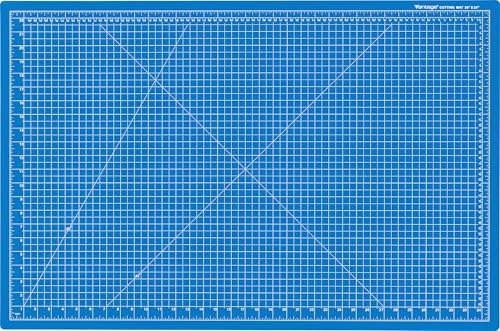
Dahle mats are engineered with a multi-layered construction that offers a distinct "feel" when the blade passes through. It is neither too soft nor too hard, providing the perfect feedback for a clean, single-pass cut.
For intricate fringe work—such as thin, delicate mohair or fine silk—this precision is vital. You don’t want the mat to be so soft that the yarn gets pushed into the material, as this often leads to a frayed, fuzzy edge rather than a sharp, clean line.
Choose this mat if your work involves fine-gauge yarns where every millimeter of accuracy counts toward the final aesthetic.
Alvin Professional Mat: Best for Large Projects
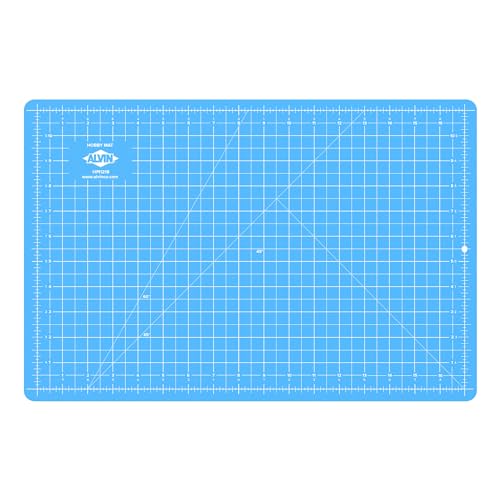
When you are finishing a large-scale project like a blanket or a wall hanging, you need a surface that accommodates the entire width of the piece. The Alvin mat is widely available in large formats that eliminate the need to shift your work mid-trim.
Shifting your project is the most common cause of "stepping" in your fringe, where one section ends up shorter than the next. By laying your entire piece flat on a large Alvin mat, you can trim from edge to edge in one fluid motion.
It is a space-intensive choice, but for large-scale fiber art, it provides the best insurance against uneven edges.
OLFA Rotary Mat: The Gold Standard for Trimming
The OLFA mat is the industry standard for a reason: it is designed specifically for rotary cutters. The surface is formulated to hold the blade at the perfect angle, which minimizes blade dulling and ensures a smooth glide.
When you are trimming a thick fringe, you want a mat that doesn’t resist the blade, as resistance leads to "sawing" motions that ruin the yarn ends. The OLFA surface is smooth enough to glide, yet grippy enough to keep your yarn bundle exactly where you placed it.
If you prioritize blade longevity and a consistent, clean cut, this is the gold standard.
Why Non-Slip Mats Are Essential for Fringe Work
Fringe is notoriously difficult to trim because it is rarely a single, solid piece of material. It is a collection of individual fibers, each with its own memory and tendency to move.
- Prevents "creep": Even a slight nudge can shift the bottom strands of your fringe, leading to a slanted cut.
- Safety: A mat that stays put prevents the rotary cutter from slipping, which is the most common cause of injury.
- Consistency: A grid-marked mat allows you to measure your fringe length exactly, ensuring a uniform look across the entire project.
How to Maintain Your Cutting Mat for Longevity
Treat your mat like a fine knitting needle; keep it away from direct sunlight, which can warp the material and ruin its flatness. Never store it standing up at an angle, as this can cause it to bow over time.
To clean, wipe it down with a damp cloth and a drop of mild soap. Avoid harsh chemicals or alcohol-based cleaners, as these can dry out the self-healing surface and cause it to crack when you apply pressure with your blade.
If you notice your blade skipping, it might be time to rotate your mat or clean out the tiny fiber "dust" that accumulates in the self-healing grooves.
Essential Safety Tips for Trimming Yarn Fringe
Always cut away from your body, even if your mat is non-slip and secure. It is easy to get overconfident, but rotary cutters are razor-sharp and can slice through yarn—and skin—without any resistance.
- Use a heavy ruler: Use a metal-edged quilting ruler to guide your blade; it provides a physical barrier between your fingers and the cutter.
- Check your blade: A dull blade requires more pressure, and more pressure leads to slips. Change your blade the moment you feel it "tugging" on the yarn.
- Mind your posture: Ensure your table is at a comfortable height so you aren’t leaning over at an awkward angle, which compromises your control over the blade.
Trimming fringe is the final, satisfying step in your knitting journey, and having the right surface makes all the difference. By investing in a high-quality, non-slip mat, you protect your hard work and ensure the final product looks as professional as the stitches themselves. Choose the mat that fits your project size and fiber type, keep your blades sharp, and your fringe will look flawless every time. Happy trimming!