6 Best Portable Desk Lamps For Evening Charting
Enhance your evening charting with our top 6 portable desk lamps. Discover ergonomic, flicker-free lighting solutions designed for comfort and productivity.
Knitting by the glow of a living room lamp often leads to missed stitches, especially when working with dark yarns or complex lace charts. Proper illumination is not just about seeing; it is about preventing the eye strain that turns a relaxing hobby into a source of fatigue. The right desk lamp acts as a vital tool in your kit, ensuring your tension remains consistent even during late-night sessions. This guide explores the best lighting solutions to keep your stitches crisp and your progress steady.
OttLite Creative Curves LED Desk Lamp: Best Overall


The OttLite Creative Curves lamp is a staple for a reason: it mimics natural daylight, which is essential for accurate color perception. When you are working with variegated hand-dyed yarns, you need to see the true shifts in tone to avoid accidental pooling.
Its design is remarkably intuitive, featuring a flexible neck that allows you to direct light exactly where your needles meet the yarn. If you are working on a pair of socks with a gusset heel, you can angle the light to illuminate the tight turns without creating harsh shadows.
The base is compact, leaving plenty of room on your side table for a yarn bowl or a project bag. It is a reliable, no-fuss choice for knitters who want a consistent, high-quality light source that doesn’t require constant adjustment.
BenQ ScreenBar Halo for Wide Knitting Chart Views

If you prefer to keep your charts open on a laptop or tablet while you knit, the ScreenBar Halo is a game-changer. It mounts directly onto your monitor, casting a wide, even glow across your desk without taking up any precious surface space.
This setup is ideal for those following complex colorwork charts or digital patterns that require frequent reference. Because it sits above your screen, it eliminates the glare that often makes reading digital charts difficult during evening hours.
The light is adjustable in both brightness and color temperature, which is helpful if you find yourself knitting late into the night. Warmer tones can help reduce blue light exposure, helping you wind down while you finish that last row of ribbing.
TaoTronics LED Desk Lamp with Flexible Gooseneck
The TaoTronics lamp offers incredible versatility for knitters who frequently switch between different projects. The gooseneck design is sturdy enough to hold its position, even when you are reaching over to grab a different set of double-pointed needles.
With multiple brightness levels and color modes, you can customize the light to match the fiber you are using. For example, a bright, cool light is perfect for seeing the stitch definition in dark, fuzzy mohair, while a softer, warmer light prevents eye fatigue when working with lighter-colored wool.
It is a budget-friendly option that doesn’t sacrifice performance. While it lacks the high-end aesthetics of some designer lamps, its functional reliability makes it a workhorse for any dedicated knitter’s station.
Lepower Metal Architect Lamp for Focused Lighting

There is something classic about the architect-style lamp, and the Lepower model brings that tradition into the modern era. Its long, adjustable arm is perfect if you have a large knitting chair and need to pull the light source closer to your lap.
This lamp is particularly effective for focused, intricate work like lace or cabling. By positioning the head low, you can create a high-contrast pool of light that makes every yarn-over and cable cross stand out against your needles.
Because it is made of metal, it is durable and built to withstand the occasional bump from a stray ball of yarn. It is a great choice for the knitter who values a sturdy, tactile tool that feels as solid as a good pair of nickel-plated needles.

Brightech Litespan LED Floor and Desk Lamp Combo
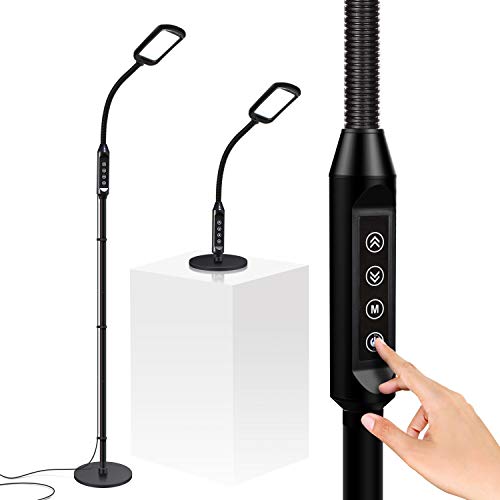
The Brightech Litespan is a clever hybrid that adapts to your changing needs. Whether you are knitting in a deep armchair or sitting upright at a table, this lamp can be configured to provide the perfect height and angle.
This flexibility is excellent for knitters who suffer from back or neck pain and need to adjust their posture throughout a long project. Having a consistent light source that moves with you ensures that your eyes don’t have to constantly readjust to different lighting environments.
The light quality is crisp and clear, making it easy to spot dropped stitches or split plies. It is a smart investment if you want a single lighting solution that covers all your knitting scenarios.
Vekkia Rechargeable Book Light for Travel Charts
Not every knitting session happens at a desk; sometimes, the best place to knit is on a train or a long car ride. The Vekkia rechargeable light clips directly onto your pattern or a clipboard, providing focused light without disturbing those around you.
It is lightweight and portable, fitting easily into any project bag alongside your notions pouch. While it isn’t a replacement for a full desk lamp, it is an essential tool for the traveling knitter who refuses to put their needles down.
The battery life is impressive, usually lasting through several long sessions before needing a charge. Just remember to keep it clipped to your chart rather than your needles to avoid adding unnecessary weight to your hands.
Key Features to Look for in a Knitting Task Lamp
When shopping for a lamp, prioritize adjustability and color accuracy. A lamp that can pivot, tilt, and telescope will serve you better than a fixed-head model because your knitting position will change depending on the size of your project.
- Dimmability: Essential for matching light intensity to the yarn color.
- Flexibility: Gooseneck or multi-jointed arms are superior for directing light into tight spaces.
- Base Stability: Ensure the lamp won’t tip over if your yarn pulls on it.
- Glare Reduction: Look for lamps with diffusers to prevent harsh reflections on your needles.
Avoid lamps that only offer a single, harsh "daylight" setting, as this can be too intense for long-term use. A lamp with a range of color temperatures will allow you to transition from high-focus work to relaxing, low-light knitting.
Why Color Rendering Index Matters for Colorwork
The Color Rendering Index (CRI) measures how accurately a light source reveals true colors compared to natural sunlight. For knitters, a high CRI—ideally 90 or above—is non-negotiable when working on complex stranded colorwork or fair isle projects.
If your light has a low CRI, a deep navy blue might look identical to a charcoal gray, leading to frustrating mistakes in your color sequence. You want to see the subtle undertones of your yarn to ensure your color palette is balanced and intentional.
Don’t be fooled by "bright" lights that have poor color rendering; brightness is not the same as clarity. Always check the specifications for a high CRI rating to ensure your finished piece looks exactly as you intended in natural daylight.
Proper Lighting Setup to Prevent Eye Strain at Night
The secret to comfortable evening knitting is to avoid a single, intense point of light in a dark room. Instead, aim for a layered approach where your task lamp provides focused light on your needles, while a soft ambient light fills the rest of the room.
If you are knitting with dark, non-reflective yarn, position your lamp so the light hits the side of the stitches rather than directly from above. This creates shadows that define the stitch structure, making it much easier to see where to insert your needle.
Take regular breaks to look at a distant object, which helps reset your eye muscles after focusing on fine detail. If you find yourself squinting, your lighting is likely insufficient or positioned incorrectly—stop, adjust, and save your vision.
Tips for Organizing Your Evening Knitting Station
A cluttered station leads to tangled yarn and lost notions, which are the last things you want to deal with at night. Keep your essential tools—tapestry needles, stitch markers, and scissors—in a dedicated tray within arm’s reach of your lamp.
If you are working from a paper chart, use a magnetic board or a highlighter to keep track of your progress. This reduces the cognitive load of "where was I?" and lets you focus entirely on the rhythm of your knitting.
Finally, keep your yarn in a secure bowl or bag to prevent it from rolling off the table and into the shadows. A well-organized station allows you to enter a "flow state" where the only thing that matters is the next stitch.
Investing in the right lighting is just as important as choosing the perfect wool or the right needle size for your gauge. By selecting a lamp that prioritizes color accuracy and adjustability, you protect your eyes and elevate the quality of your finished garments. Take the time to set up your space thoughtfully, and you will find that your evening knitting becomes the most productive and relaxing part of your day. Happy knitting, and may your stitches always be even.