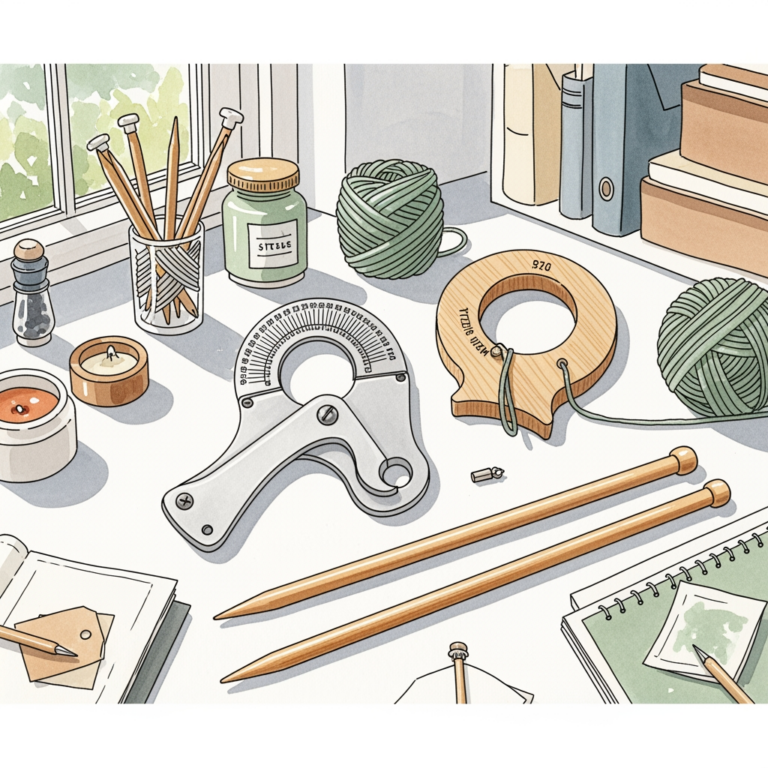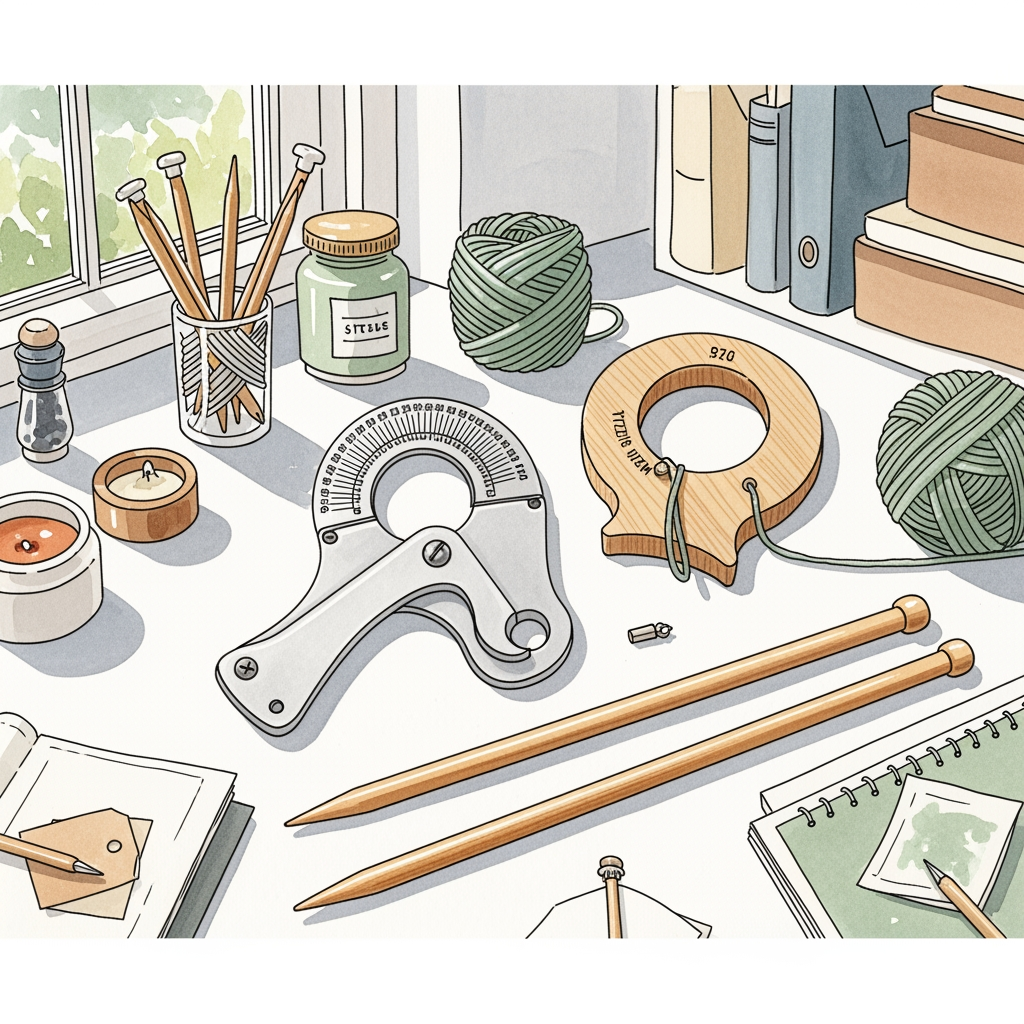
7 Best Measuring Gauges For Needle Sizing To Own
Find the perfect fit with our top 7 needle gauges. This guide compares essential tools to ensure accurate sizing for every knitting and sewing project.
Every knitter has experienced that sinking feeling of picking up an unlabeled needle and wondering if it’s a 3.5mm or a 3.75mm. Whether you are working on a delicate lace shawl or a sturdy wool sweater, mismatched needles can ruin your tension and your final fit. A reliable needle gauge is the most underrated tool in your knitting bag, acting as the final arbiter of your project’s success. Here are the seven best tools to ensure your needles are always exactly what you think they are.
ChiaoGoo Needle Gauge: The Precise Metal Standard
This tool is a favorite for those who value durability and no-nonsense utility. Made from sturdy, lightweight metal, it doesn’t bend or warp like plastic alternatives, ensuring the holes remain perfectly sized over years of use.
The markings are etched directly into the metal, meaning they won’t rub off after a few months in your project bag. It covers a wide range of sizes, which is essential if you switch between fine lace needles and bulky sweater needles.
Because it is metal, it has a distinct "click" when you slide a needle through, providing tactile feedback that you’ve found the right fit. It’s a tool built for the long haul, perfect for the knitter who wants to buy once and never worry about it again.
Knitter’s Pride Basix Gauge: Best Wooden Option


If you prefer the warmth and tactile experience of wood, the Basix gauge is a beautiful addition to your kit. It’s crafted from smooth, polished birch, which feels gentle in the hand and won’t snag your yarn if it happens to be sitting on your workspace.
Wooden gauges are particularly popular among knitters who use wooden needles, as they feel like a cohesive set. However, keep in mind that wood can be slightly more susceptible to wear than metal; ensure the edges of the holes stay smooth over time.
This gauge is lightweight and aesthetically pleasing, making it a great gift for a fellow maker. It is an excellent choice for those who want a tool that aligns with a more natural, traditional knitting aesthetic.
Susan Bates Knit Chek: The Classic Plastic Tool
The Knit Chek is the quintessential tool found in almost every grandmother’s sewing kit for a reason. It is incredibly affordable, lightweight, and combines a needle gauge with a ruler for measuring your stitch gauge.
Because it is made of plastic, it is prone to snapping if buried at the bottom of a heavy knitting bag. However, its classic design is intuitive, and the clearly printed numbers make it easy to read even in low light.
This is the perfect "starter" tool for a beginner who isn’t ready to invest in premium metal or wood. It gets the job done reliably, provided you treat it with a little bit of care.
Cocoknits Maker’s Keep: Magnetic Gauge Utility
This tool is a game-changer for knitters who struggle with losing their notions. It’s a small, magnetic gauge that can be attached to a wearable wrist cuff, keeping your needle sizing tool right at your fingertips while you work.
The clever design is perfect for those who knit on the go or have a tendency to misplace tools under a mountain of yarn. Having your gauge literally on your wrist means you never have to stop your rhythm to hunt for a measurement.
While it is a higher investment than a standard plastic gauge, the convenience factor is unmatched. It’s a professional-grade solution for the knitter who values efficiency and organization above all else.
Clover Knitting Needle Gauge: Durable and Clear
Clover is synonymous with consistency, and their needle gauge is no exception. It features clear, easy-to-read sizing for both metric and US standards, printed in high-contrast ink that stands up well to daily use.
The plastic is rigid and high-quality, striking a balance between the lightweight nature of the Susan Bates tool and the durability of metal. It also includes a built-in stitch counter, which adds an extra layer of utility for complex patterns.
If you want a reliable, middle-of-the-road tool that won’t let you down, this is it. It’s a staple for a reason and fits comfortably into any standard notions pouch.
Katrinkles Custom Gauge: Beautiful Wood Crafting
Katrinkles gauges are for the knitter who wants their tools to be as beautiful as their projects. These are laser-cut from high-quality wood and often feature whimsical shapes or personalized designs.
Beyond their looks, they are highly functional and accurate. Because they are laser-cut, the holes are precise, and the wood is sanded to a smooth finish that won’t damage your needles or your hands.
These tools are a joy to hold and make the process of checking your needle size feel like a treat rather than a chore. They are perfect for the knitter who wants to support independent makers while keeping their kit stylish.
Addi Needle Gauge: The Reliable German Essential

Addi is famous for their high-quality needles, and their dedicated gauge tool lives up to the brand’s reputation for precision. It is designed to be extremely accurate, which is vital for the fine-gauge knitting Addi is known for.
The markings are bold and permanent, designed to withstand years of heavy use. It’s a compact, no-nonsense tool that fits easily into any needle case or project bag.
If you are a fan of Addi needles, this tool is the perfect companion. It is engineered with the same German precision as their circular needles, ensuring your sizing is never a matter of guesswork.
Why Accurate Needle Sizing Matters for Your Gauge
Your needle size dictates the size of your stitches, which in turn determines the "gauge"—the number of stitches and rows per inch. Even a difference of 0.25mm can result in a garment that is inches too large or too small.
If you are knitting a fitted sweater, an incorrect needle size will throw off the entire schematic. Always verify your needle size before starting a project, especially if you have a collection of mixed-brand needles.
Remember that different materials—like slick nickel-plated needles versus grippy bamboo—can affect your tension. Using a gauge ensures that at least the physical tool size is consistent, allowing you to adjust your technique accordingly.

Understanding Metric vs US Needle Sizing Systems
The knitting world uses two primary systems: the Metric system (measured in millimeters) and the US system (measured in arbitrary numbers). Metric is universal and much more precise, which is why most modern patterns provide both.
- Metric: Directly corresponds to the diameter of the needle in millimeters (e.g., 4.0mm).
- US: A legacy system where higher numbers often mean larger needles, but the increments are not always logical.
Always rely on the metric measurement when possible to avoid confusion. Many vintage patterns use US sizes that don’t perfectly align with modern manufacturing, making a gauge tool with both systems essential for decoding older instructions.
How to Properly Use a Gauge Tool for Accuracy
To get an accurate reading, gently slide your needle into the hole until it stops. The needle should fit snugly without being forced; if you have to push, the hole is too small.
If the needle slips through the hole with significant wiggle room, the hole is too large. The correct size is the smallest hole the needle can pass through comfortably without friction.
Be aware that some needles, particularly hand-turned wood or vintage metal, may not be perfectly uniform. If you feel a "catch" or a slight bulge, trust the measurement that fits the majority of the needle shaft, not just the tip.
Investing in a quality needle gauge is a small step that yields massive results in your knitting consistency. By removing the guesswork from your needle collection, you free yourself to focus on the joy of the craft itself. Choose a tool that fits your personal style and keep it handy, because a well-measured needle is the secret to a perfectly fitted garment. Happy knitting!