7 Best Industrial Clips For Securing Fringe During Assembly
Discover the 7 best industrial clips for securing fringe during assembly. This guide evaluates durability and grip to streamline your manufacturing process.
Securing fringe is often the final hurdle in a long knitting project, yet it remains one of the most tedious tasks for makers. Using the wrong tools can lead to uneven lengths, stretched fibers, or even permanent damage to your hard work. Choosing the right industrial clip transforms this finishing step from a source of frustration into a precise, satisfying process. This guide breaks down the best clips to ensure your fringe looks professional and hangs perfectly every time.
Clover Wonder Clips: Best For Delicate Fibers
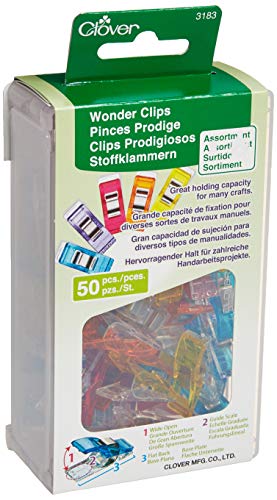

These clips are a staple in sewing rooms, but they are equally invaluable when working with fine-gauge lace or delicate silk blends. Because they feature a flat base and a smooth, plastic-toothed grip, they won’t leave unsightly indentations on your fabric.
If you are working with luxury fibers like cashmere or hand-dyed merino, traditional metal clips can snag or crush the delicate twist of the yarn. Clover Wonder Clips apply just enough pressure to hold your fringe segments in place without compromising the structural integrity of the fiber.
They are particularly useful when you need to "baste" fringe segments before securing them permanently. Their flat profile allows them to sit flush against your knitting table, keeping your work stable while you measure lengths.
Fiskars Heavy-Duty Spring Clamps: Best For Tension

When you are adding heavy, multi-ply wool fringe to a rug or a thick winter poncho, you need a clip that can handle significant weight. Fiskars spring clamps offer a powerful grip that prevents the fringe from sliding out of place mid-assembly.
The tension provided by these clamps is ideal for "tugging" your fringe into alignment. By clamping the base of your project to a table edge, you can keep the fabric taut, which ensures that every fringe loop is pulled to the exact same tension.
However, be mindful of the clamping surface. These are industrial tools, so it is wise to wrap the jaws in a bit of felt or scrap fabric to prevent the hard plastic from marring your finished knitting.
Binder Clips: Best Budget Option For Fringe Work
Every knitter has a stash of office supplies, and standard binder clips are the unsung heroes of the craft room. They are surprisingly effective for securing thick bundles of fringe to the edge of a shawl or blanket.
The beauty of the binder clip lies in its versatility; you can use the metal "arms" to hang your project vertically while you work. This is a game-changer for long fringe projects, as it allows you to see the drape and flow of the yarn in real-time.
Just be careful with the metal edges. If you are using a loose, airy mohair, the sharp corners of the clip can catch on the halo of the yarn, so always ensure the yarn is tucked safely inside the flat part of the clip.
Weller Industrial Alligator Clips: Best For Detail

If you are working with micro-fringe or intricate bead-embellished finishes, standard clips will feel far too clunky. Alligator clips provide the pinpoint accuracy needed to isolate individual strands without disturbing the surrounding work.
These are best used when you are "training" your fringe to lay in a specific direction. Because they are lightweight and small, you can attach dozens of them along an edge without adding so much weight that the fabric begins to sag or distort.
They are perfect for securing fringe while you apply a touch of fabric glue or perform a delicate knotting technique. Just remember that their grip is aggressive, so avoid using them on high-twist, fragile yarns that might snap under concentrated pressure.
Pony Plastic Sewing Clips: Best For Bulk Projects
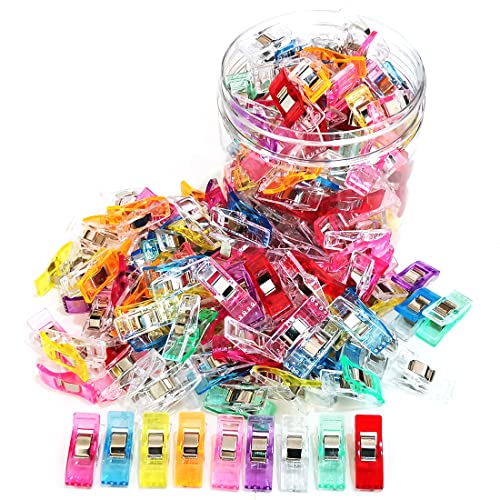
When you are mass-producing fringe for a large-scale project like a theater costume or a series of market stall items, efficiency is everything. Pony plastic clips are lightweight, easy to open, and designed for rapid-fire application.
These clips are generally less aggressive than metal options, making them a safer bet for beginners who might be prone to over-clamping. They allow you to hold large sections of yarn in place while you work down the line with a crochet hook or tapestry needle.
Because they are made of plastic, they are also very easy to keep clean. If you are working with sticky finishes or dyed fibers, you can simply wipe them down without worrying about rust or corrosion.
Grip-It Mini Spring Clamps: Best For Precision
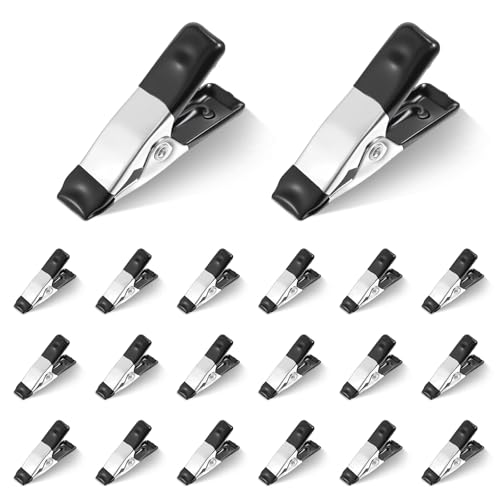
Precision is the difference between a professional finish and a homemade look. Grip-It mini clamps are small enough to stay out of your way while you work, yet strong enough to keep your fringe from shifting by even a millimeter.
They are especially useful when you are working on a curved edge, such as a circular shawl or a crescent-shaped scarf. Their compact size allows you to place them closer together, following the curve of the knitting to maintain consistent fringe length.
Always check the tension before you fully commit to a long row. If the clamp feels like it is biting too deeply into the yarn, place a small piece of cardstock between the clamp jaw and your knitting to distribute the pressure more evenly.
Bulldog Steel Clips: Best For Heavyweight Yarn

When you are working with chunky, super-bulky yarns or heavy cotton cords, plastic clips simply won’t cut it. Bulldog steel clips provide the industrial-strength hold required to keep thick, heavy fringe from sliding under its own weight.
These clips are rigid and unyielding, which is exactly what you want when you are trying to achieve a perfectly straight line across a heavy garment. The steel construction ensures they won’t bend or snap under the pressure of thick, dense yarn bundles.
Keep in mind that these are heavy tools. If you use too many, they can stretch out your knitting edge, so it is best to use them to secure the project to a stable surface rather than letting them hang directly off the fabric.
How To Secure Fringe Without Damaging Your Knits
The golden rule of fringe assembly is to never let the clip be the primary support for the weight of your project. Always use your work surface to bear the load, using the clips only to hold the fringe in the desired position.
- Pad the jaws: Use scraps of felt or moleskin to line the inside of metal clips.
- Avoid sharp angles: Never clamp directly onto a delicate yarn-over or a lace eyelet.
- Check for tension: If a clip leaves a mark, it is too tight; move it to a seam or a thicker part of the fabric.
By distributing the weight and padding your tools, you can ensure that your project remains pristine from the first knot to the last trim.
Essential Tips For Maintaining Even Fringe Length
Even the best clips can’t fix a poor cutting job. To get that perfectly crisp edge, use a rotary cutter and a self-healing mat rather than scissors, which can cause the yarn to bunch and shift.
It is also vital to let your fringe "rest" before you trim it. After you have knotted the fringe and removed the clips, hang the garment for 24 hours so the yarn can settle into its natural drape.
Only after the yarn has relaxed should you perform your final trim. This prevents the "spring-back" effect where fringe appears even while clipped but becomes uneven once it is released.
Troubleshooting Common Fringe Assembly Challenges
If your fringe keeps slipping out of the clips, your yarn might be too slick. In this case, try using a small piece of rubber shelf liner between the clip and the yarn to increase friction without increasing pressure.
If you find that your fringe is looking "frizzy" after assembly, you are likely handling the ends too much. Use a wide-tooth comb to gently detangle the fringe once it is secured, and avoid over-manipulating the fibers during the knotting process.
Finally, if the edge of your project is curling, add a temporary blocking pin at the start and end of your fringe row. This keeps the knitting flat and stable, making it much easier to apply your clips and achieve a consistent, professional-looking finish.
Securing fringe is a labor of love that requires as much patience as the knitting itself. By selecting the right industrial clips for your specific yarn weight and project goals, you can protect your fibers while achieving a clean, professional finish. Remember that the best tools are those that work with your yarn rather than against it, so take the time to test your clips on a swatch before diving into your final garment. Happy crafting, and may your fringe always hang straight and true.