6 Best Embroidery Stabilizers For Stretchy Knits
Mastering embroidery on stretchy knits requires the right stabilizer. Discover our top six picks to prevent puckering and ensure crisp, professional results.
Embroidering on stretchy knits is a delicate dance between maintaining the fabric’s natural drape and preventing the embroidery stitches from puckering the material. Without the right stabilizer, even the most carefully executed design can result in a distorted, wavy mess that ruins your hard-earned knitting. Choosing the correct backing is not just about convenience; it is about respecting the integrity of your fiber. This guide explores the best stabilizers to ensure your knit projects remain as beautiful as the day you cast them off.
Sulky Sticky Fabri-Solvy: Best Overall Choice
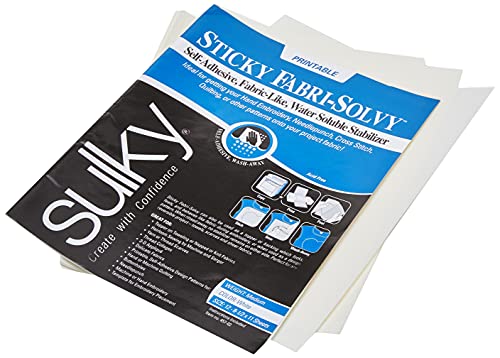

This pressure-sensitive, water-soluble stabilizer is a game-changer for knitters who struggle with the "hooping slide." Because it is sticky, you can adhere your fabric directly to the stabilizer without the need for traditional hooping, which often stretches out delicate stitches.
The primary advantage here is the prevention of distortion. By avoiding the tension of a hoop, you preserve the natural gauge of your knitting, ensuring your sweater or accessory keeps its intended shape after the embroidery is complete.
However, be mindful that the adhesive can sometimes leave a slight residue on needles if not handled correctly. Always wipe your needle with a bit of alcohol or a dedicated needle cleaner if you notice any gumminess during long sessions.
Pellon 541 Wash-N-Gone: Best Water-Soluble Pick

If you prefer a stabilizer that disappears completely without leaving a trace of film or stiffness, this is your go-to. It is a lightweight, non-woven material that dissolves cleanly in warm water, making it perfect for fine-gauge knits where you don’t want any residual bulk.
It provides just enough structure to keep your stitches crisp while you work. Because it is so thin, it is excellent for projects where you need to see through the material for precise placement, such as centering a motif on a hand-knitted hat.
The tradeoff is its lack of "heft." If you are working on a heavy, chunky-weight wool, this stabilizer might not offer enough support to prevent the embroidery from sinking into the fabric.
Madeira Avalon Film: Best for Delicate Knits

When you are working with lace weight or airy mohair blends, you need something that won’t weigh down the fabric. This transparent film is essentially a thin sheet of plastic that sits on top of your knitting to keep the stitches from sinking into the fluff.
It is particularly useful for "topping" your embroidery, preventing the needle from catching on fibers like angora or alpaca. It essentially creates a smooth surface for your needle to travel across, protecting the delicate halo of your yarn.
Be aware that once you remove it, you cannot get it back. Ensure your placement is perfect the first time, as the film is not reusable and can be slightly brittle if handled too roughly before stitching.
Floriani Stitch-N-Wash: Best Hybrid Stabilizer

This product is a clever combination of a tear-away and a wash-away stabilizer. You get the initial stability of a tear-away during the embroidery process, but you can wash away the remaining fibers that are trapped inside your stitches.
This is ideal for projects that require a lot of dense stitching, such as thick monograms on a dense wool-blend sweater. The hybrid nature ensures that your embroidery stays locked in place, but you aren’t left with itchy, stiff remnants against your skin.
The main consideration is the "tear" factor. You must tear it away carefully to avoid pulling on your knitted stitches, especially if you are working with a loose, rustic wool that is prone to pilling or snagging.
Sulky Totally Stable: Best Iron-On Option
Sometimes, the best way to handle a stretchy knit is to temporarily fuse it to a stable backing. This iron-on stabilizer provides a crisp, non-stretchy base that prevents the fabric from shifting even a millimeter while the machine or your needle is at work.
It is incredibly effective for beginners who find that their knit fabric "creeps" while they are trying to embroider. The heat-activated adhesive bonds the knit to the stabilizer, effectively turning your stretchy material into a stable, woven-like surface for the duration of the project.
Remember that heat can damage certain synthetic fibers or delicate superwash wools. Always test a swatch first to ensure your yarn can handle the temperature of your iron without losing its loft or texture.
Vilene Solufleece: Best for Heavy Embroidery

For those heavy-duty projects where you are adding significant weight to your knit, you need a stabilizer with substantial body. Vilene Solufleece is thick and felt-like, offering a sturdy foundation that won’t buckle under the pressure of dense, multi-layered embroidery designs.
Because it is water-soluble, you get the benefit of a heavy stabilizer during the process, but a clean, soft finish afterward. It effectively mimics the feel of a heavy woven fabric, which is exactly what you need when the embroidery is the focal point of the garment.
The downside is that it takes a bit more water and agitation to fully remove. You will need to submerge your project in a bowl of warm water and gently massage the area to ensure every bit of the fleece is dissolved.
Why Stabilizer Is Essential for Stretchy Knits
Knitted fabric is inherently dynamic; it moves, stretches, and recovers. When you add embroidery, you are introducing a static element that does not share those properties, which is why your work puckers if you try to embroider "naked" fabric.
Stabilizer acts as a temporary skeleton. It holds the knitted loops in their relaxed, unstretched state while you add your design. Without it, the tension of your thread will inevitably distort the knitted stitches, leading to a wavy, uneven surface that no amount of blocking can fully correct.
Think of it like blocking a lace shawl; you use pins to hold the shape while the fiber sets. Stabilizer is simply the internal version of those pins, keeping your fabric in its "blocked" state while the needle passes through.
How to Choose the Right Weight for Your Fabric
The rule of thumb is to match your stabilizer weight to your yarn weight. If you are working with a light fingering weight, use a thin, water-soluble film. If you are working with a bulky, heavy-weight wool, go for a thicker, more substantial stabilizer.
- Lace/Fingering: Use water-soluble film or thin wash-away stabilizers.
- Sport/DK: Use a medium-weight tear-away or a hybrid stabilizer.
- Worsted/Bulky: Use a firm iron-on or a heavy-duty wash-away fleece.
Always consider the density of your embroidery design as well. A light, delicate outline requires less support than a solid, filled-in block of color.
Proper Hooping Techniques to Prevent Distortion
Never, ever stretch your knitted fabric to fit the hoop. The goal of hooping is to hold the fabric taut, not to pull it thin; if you stretch it, the fabric will snap back to its original size once released, causing the embroidery to "bunch up."
Instead, hoop the stabilizer alone and adhere your knit to the surface using a temporary adhesive spray or a sticky stabilizer. This keeps the knit relaxed and prevents the hoop from crushing the texture of your yarn.
If you must use a hoop, use a "floating" technique. Hoop a piece of stabilizer, then place your knit on top and secure it with small pins or basting stitches around the perimeter of the design area.
Removing Stabilizer Without Damaging Your Yarn
Removing stabilizer is a delicate process that requires patience. If you are using a tear-away, hold the embroidery stitches down with your fingers as you pull the stabilizer away to prevent the stitches from pulling the yarn out of place.
For water-soluble stabilizers, use warm water and let the project soak until the stabilizer is completely dissolved. Do not scrub harshly, as this can felt your wool or cause unnecessary pilling.
After removal, lay your project flat on a towel to dry. This is your final "blocking" step, ensuring that the embroidery and the surrounding knitting settle into their final, permanent shape together.
Embroidering on knits is an art form that rewards careful preparation and the right choice of materials. By selecting the appropriate stabilizer, you protect the unique character and drape of your hand-knitted fabric. Take your time, test your choices on a swatch, and treat your fiber with the care it deserves. With these tools in your kit, your embroidered knits will be as durable as they are beautiful.