6 Best Knitting Needles For Gauge Swatches To Use
Find the perfect tools for your gauge swatches. We review the six best knitting needles to ensure accurate tension and professional results for every project.
Every knitter knows the sinking feeling of finishing a sweater only to find it fits like a tent or a tourniquet. Gauge swatches are the only way to guarantee your project matches the pattern’s intent before you invest dozens of hours. Choosing the right needle for your swatch is just as critical as the yarn itself, as the tool dictates the tension you naturally produce. Here are the six best needles to help you master your gauge and ensure your next project is a perfect fit.
ChiaoGoo Red Lace: Precision for Gauge Swatches


These needles are legendary for their surgical-grade stainless steel and incredibly fine, tapered tips. If you are working with complex lace or tightly plied yarns, the precision here is unmatched.
The signature feature is the flexible steel cable that never kinks, allowing your swatch to lay flat without the memory-coil interference of cheaper plastic cords. This is vital because a curled swatch will always provide an inaccurate measurement.
However, be warned: the tips are very sharp. If you are a "pusher" who uses your fingertips to move the needle, you might find them aggressive during long sessions.
HiyaHiya Sharp Needles for Consistent Tension

HiyaHiya Sharps offer a unique blend of a slick finish and a very acute point. They excel when you need to pick up stitches or work through dense, multi-ply wools where tip entry is everything.
Because the surface is highly polished, your yarn moves across the needle with almost zero friction. This allows for a very consistent flow, which is the secret ingredient to a uniform gauge swatch.
If you tend to have a tight grip, these needles will help you relax your tension. The slickness forces you to let the needle do the work rather than wrestling the yarn into place.
Addi Turbo Circulars for Smooth Stitch Flow
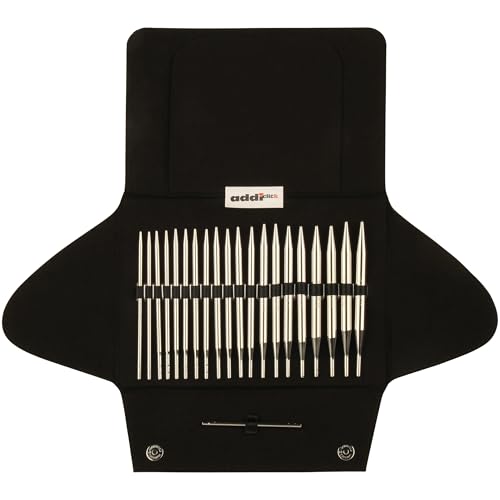
Addi Turbos are the workhorses of the knitting world, known for their nickel-plated finish and rounded, slightly blunt tips. They are the ideal choice for beginners who are still finding their rhythm.
The slightly blunter tip prevents you from splitting the yarn, which is a common issue when swatching with fuzzy mohair or loosely spun singles. You get a clean, even stitch every time.
The trade-off is that they are quite slippery. If you are using a smooth silk or bamboo yarn, you may find your stitches sliding off more easily than you’d like.
Knitter’s Pride Karbonz for Gauge Accuracy
Karbonz are crafted from carbon fiber, a material that is both incredibly lightweight and surprisingly warm to the touch. They provide a unique tactile experience that bridges the gap between metal and wood.
The tips are made of plated brass, offering the perfect amount of "grab" for the yarn. This combination ensures that your stitches stay put while you work, leading to a more stable and accurate gauge.
If you struggle with hand fatigue, these are an excellent choice. The carbon fiber absorbs some of the tension, making them a dream for long swatching sessions.
Lykke Driftwood Needles for Natural Grip
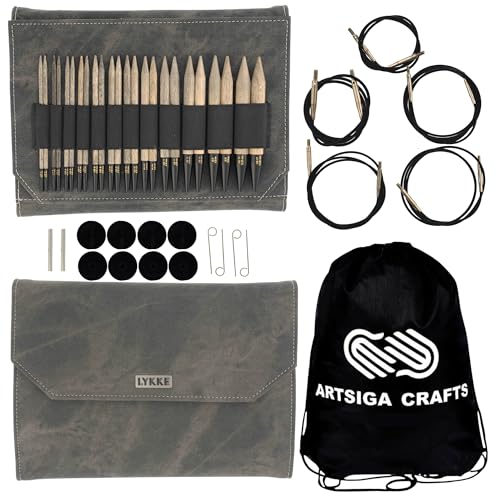
When you are working with slippery fibers like alpaca or silk, wood is your best friend. Lykke Driftwood needles offer a smooth, polished surface that provides just enough friction to keep your yarn under control.
The natural grip of the wood prevents the "stretching" effect that can occur with metal needles. This ensures your swatch reflects the true tension of the yarn, rather than the tension of the needle surface.
Keep in mind that wooden needles can be fragile in smaller sizes. Always handle them with care, as a snapped needle will ruin your momentum mid-swatch.
Signature Needle Arts for Premium Precision
Signature Needle Arts needles are a luxury investment, but they offer a level of manufacturing precision that is hard to replicate. They are machined to exact tolerances, ensuring that every needle is perfectly smooth and perfectly sized.
The weight and balance of these needles are exceptional, providing a sense of stability in your hands. When you are swatching for a high-stakes project, this consistency provides peace of mind.
They are certainly an investment piece, not a necessity. However, for the knitter who demands the highest quality tools, they offer a tactile experience that is truly second to none.
Why Gauge Swatches Require Fixed Circulars

Many knitters try to swatch using straight needles, but this is a mistake. Straight needles change the weight distribution of your work, which can alter your tension as the swatch grows.
Fixed circulars allow the weight of the fabric to rest in your lap rather than on your wrists. This keeps your hands relaxed, which is essential for achieving a "true" gauge that reflects your actual knitting style.
Furthermore, circulars allow you to slide your stitches back and forth easily. This makes it simple to measure your stitches while they are still on the needle, which is a great way to check your progress.
How Needle Material Affects Your Gauge Result
The material of your needle dictates how much "drag" the yarn experiences. Metal needles are fast and slick, while wood and bamboo provide more resistance.
- Metal: Best for fast, consistent knitting; can be too slippery for beginners.
- Wood: Best for slippery fibers; provides a natural grip that helps regulate tension.
- Carbon Fiber: A middle-ground option; offers the strength of metal with a warmer, slightly grippier feel.
If you are a loose knitter, move toward a grippier material like wood to help tighten your stitches. If you are a tight knitter, choose a slick metal needle to encourage a looser, more relaxed fabric.
Matching Needle Surface to Your Yarn Texture
Not every yarn plays well with every needle. A fuzzy mohair yarn will "stick" to a wooden needle, making it difficult to move your stitches, while a silk yarn might slide right off a polished metal needle.
When choosing your needle for a swatch, consider the "tooth" of the yarn. A high-twist, smooth wool yarn works well on almost anything, but a rustic, sticky wool needs a slicker needle to keep the knitting process enjoyable.
Always test your yarn against the needle surface before you cast on. If the yarn feels like it is dragging, switch to a smoother needle; if it feels like it is escaping, switch to something with more grip.
Tips for Measuring Swatches for Perfect Fit
Always block your swatch exactly as you intend to block your finished garment. A swatch that hasn’t been washed and dried will lie to you about its true size.
Use a dedicated gauge ruler and measure over at least four inches of fabric. Measuring a single inch is rarely accurate, as it doesn’t account for the subtle variations in tension across a larger area.
- Avoid stretching: Do not pull on the swatch while measuring.
- Count the half-stitches: If your gauge is 18.5 stitches, don’t round up to 19.
- Measure in multiple spots: Take an average of three different areas to get the most accurate result.
Mastering the art of the gauge swatch is the single most important step toward professional-looking knitwear. By matching your needle material and tip shape to both your yarn and your personal tension, you remove the guesswork from your projects. Take the time to swatch properly, and your finished garments will reward you with years of perfect wear. Happy knitting, and may your gauge always be spot on.