6 Best Tailor Chalks For Placement Marking To Try
Find the best tailor chalks for precise fabric marking. Our guide reviews six top-rated options to help you achieve clean, accurate lines for every project.
Precision in knitting often extends beyond the needles, especially when you are mapping out complex construction details like buttonhole placements or dart shaping in a cardigan. Choosing the right tailor’s chalk can save you hours of frustration during the finishing stages of your project. While many knitters rely on scrap yarn markers, professional marking tools offer a level of accuracy that is essential for high-end garment assembly. This guide explores the best marking tools to help you achieve a polished, professional finish on every piece you craft.
Clover Chaco Liner: Best Overall Marking Tool
The Clover Chaco Liner is a staple in many sewing kits for a reason: it functions like a pen but delivers the soft, erasable pigment of traditional chalk. The fine-toothed wheel dispenses a consistent, thin line of powder that sits right on top of your stitches without snagging or pulling at the yarn fibers.
This tool is particularly useful when you need to mark a long, straight line for a seam or a gusset placement on a sweater. Because the powder is contained, you won’t end up with chalk dust all over your knitting bag or your favorite wool blend.
The primary tradeoff is that the powder can be a bit too light on very dark, fuzzy mohair or brushed alpaca fibers. If you are working with high-halo yarns, you might find the line disappears into the fuzz before you reach the assembly stage.
Dritz Tailor’s Chalk: The Classic Choice


If you prefer a tactile, old-school approach, the Dritz Tailor’s Chalk is the standard. These flat, rectangular blocks are perfect for marking large areas or creating quick guides on your fabric pieces before you begin the seaming process.
They are incredibly cost-effective and last through countless projects. However, because they are solid blocks, they can sometimes feel a bit blunt when you need to mark a precise stitch count or a specific needle position.
You will need to keep these sharpened with a blade to maintain a fine edge. If you don’t keep the edge crisp, you risk marking a wider area than intended, which can lead to slight asymmetries in your final garment.
Sewline Fabric Pencil: Best for Precision

When you are working on intricate colorwork or lace where every single stitch counts, the Sewline Fabric Pencil is your best friend. It operates exactly like a mechanical pencil, allowing you to mark a single, pinpoint spot on your knitting.
This is the tool I reach for when I’m marking the exact point where a sleeve cap meets the armhole. The lead is ceramic and designed to be easily removed with a gentle rub or a light steam press during the final blocking.
Be careful with the pressure you apply, though. If you press too hard on delicate, thin-ply yarns, you could potentially distort the stitch or cause the lead to break inside the barrel.
Bohin Extra Thin Chalk: Best for Fine Lines

Bohin’s extra-thin chalk pencils are designed for those who demand absolute accuracy. The lead is much thinner than standard marking pencils, making it ideal for marking complex charts or tiny increases and decreases directly onto the fabric.
These are excellent for knitters working with fine-gauge yarn, such as lace-weight silk or light fingering-weight wool. The lines are crisp, clean, and remarkably easy to follow, even when you are working in low light.
The downside is that the thin lead is fragile. If you drop the pencil on a hard floor, the internal core is likely to shatter, rendering the tool useless for fine work.
Prym Ergonomic Chalk Wheel: Best for Comfort

If you suffer from hand fatigue after long sessions of knitting, the Prym Ergonomic Chalk Wheel is designed with your comfort in mind. The shape fits naturally in the palm, reducing the strain on your knuckles while you mark your pieces.
The wheel mechanism is smooth and requires very little pressure to dispense the chalk. It’s a great choice if you are marking multiple garments at once and need a tool that won’t leave your hand feeling cramped.
Just keep in mind that the ergonomic handle makes it slightly bulkier to store in a crowded notions tin. It is a tool designed for the workstation rather than the portable project bag.
Tailor’s Wax Chalk: Best for Heavy Fabrics
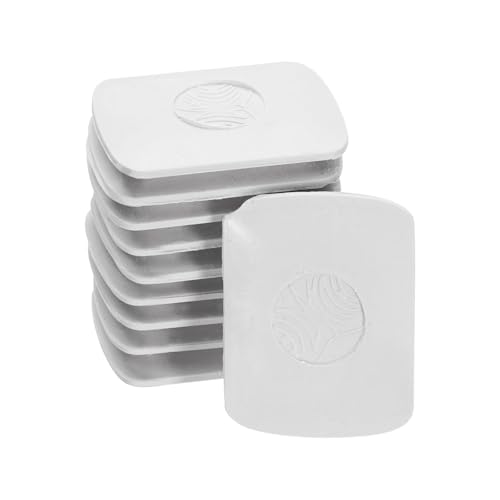
Tailor’s wax chalk is a unique beast; it is formulated with a bit of wax, which helps the mark adhere better to heavier, more textured fabrics like dense, felted wool or thick, cable-knit sweaters. It doesn’t flake off as easily as pure powder chalk.
This is the ideal choice if you are working on a project that requires a lot of handling and manipulation before the final assembly. The marks will stay put until you are ready to remove them with heat.
Because these contain wax, you must be careful not to apply them to delicate, light-colored yarns that might be sensitive to heat or residue. Always ensure your iron is set to the correct temperature for your fiber content to melt the wax away during the final pressing.
How to Choose the Right Chalk for Your Fabric
Choosing the right chalk depends largely on the fiber content and the texture of your yarn. For smooth, high-twist yarns, a standard powder-based chalk works perfectly.
For fuzzy, loosely spun, or "hairy" yarns, you need a tool that can penetrate the halo without getting lost. In these cases, a firmer wax-based chalk or a very pigmented pencil will provide the visibility you need.
- Smooth/Cotton/Linen: Use powder wheels for easy removal.
- Fuzzy/Mohair/Alpaca: Use wax-based or high-pigment pencils.
- Dense/Felted: Use wax chalk for better adherence.
Understanding Chalk Removal and Safety Tips
Most modern tailor’s chalks are designed to be removed with a simple brush or a quick steam press. However, you should never assume a product is safe for your specific yarn without testing it first.
Always check the manufacturer’s instructions regarding heat and water. Some wax-based chalks require a specific temperature to melt, while others might be sensitive to the moisture in a steam iron.
If you are working with high-end, hand-dyed yarns, be extra cautious. The chemicals in some chalks can occasionally react with the pH of certain dyes, leading to unexpected color changes on your beautiful handiwork.
Why Testing Your Chalk on Swatches Matters
Never mark your main project without testing your chosen chalk on a spare swatch first. This is a rule I have learned the hard way after seeing a "removable" mark leave a permanent shadow on a white silk-blend sweater.
Use a swatch that you have already washed and blocked, as the surface of the yarn changes significantly after it has been exposed to water and agitation. This will give you a true indication of how the chalk will behave on your finished garment.
If the chalk doesn’t brush off easily or leaves a faint line even after a gentle scrub, keep looking. Your time and effort in knitting the garment are too valuable to risk a permanent stain from a marking tool.
Essential Marking Techniques for Knitters
When marking your knitting, always work on a flat, stable surface. A blocking mat is ideal, as it provides a slightly grippy surface that prevents your fabric from sliding around while you are trying to make a precise mark.
Use light, short strokes rather than one long, heavy line. This makes it easier to remove the chalk later and prevents you from stretching the fabric as you mark.
Finally, try to mark on the wrong side of the fabric whenever possible. Even the best chalk can sometimes leave a trace, and hiding your marks on the interior ensures your final garment looks as pristine as a store-bought piece.
Investing in quality marking tools is a small but significant step toward elevating your knitting practice. By matching the right tool to your fiber type and project needs, you can eliminate guesswork and ensure your seams and details are perfectly aligned. Take the time to test your tools on swatches, keep your hands steady, and enjoy the process of bringing your knitted vision to life. Happy crafting!