6 Best Ergonomic Handles For Needle Felting To Try
Needle felting can strain your hands. Discover our top 6 ergonomic handle picks to improve comfort, reduce fatigue, and enhance your crafting precision today.
Needle felting is a meditative craft, but hours of repetitive stabbing can quickly lead to cramping and joint fatigue. Much like choosing the right needle size for a complex lace project, selecting the correct felting handle is about matching the tool to your specific physical needs. These ergonomic solutions transform your workspace, allowing you to focus on sculpting rather than managing hand pain. Here are the top tools to keep your hands comfortable and your creativity flowing.
Clover Pen Style Needle Felting Tool: Best Overall


The Clover Pen Style tool is a staple in many fiber artist kits for a reason. Its slim, balanced design mimics the feel of a high-quality fountain pen, making it incredibly intuitive for those of us used to holding writing instruments.
This tool is particularly effective for those who switch between fine-tuning small details and blocking out larger shapes. The pen-like grip encourages a relaxed hold, which is vital when you are working on a project for several hours at a time.
The trade-off here is that it is primarily designed for a smaller number of needles. If you are looking for massive, rapid coverage, you might find this tool slightly limiting compared to multi-needle blocks.
Hamanaka Felt Punch Tool With Grip: Best for Detail

When you are working on the intricate features of a needle-felted animal—like the bridge of a nose or a tiny eye socket—precision is everything. The Hamanaka Felt Punch Tool offers a specialized grip that allows for extreme control.
The handle is shaped to nestle into the palm while providing a stable anchor for your fingers. This stability prevents the "wobble" that often occurs when using a single, loose needle, ensuring your strikes are clean and deliberate.
Be aware that this tool is best suited for fine-gauge needles. Attempting to force heavy-duty needles into this specific handle can sometimes lead to an awkward balance, so stick to the recommended needle sizes for the best experience.
Ashford Wooden Multi-Needle Tool: Best for Coverage
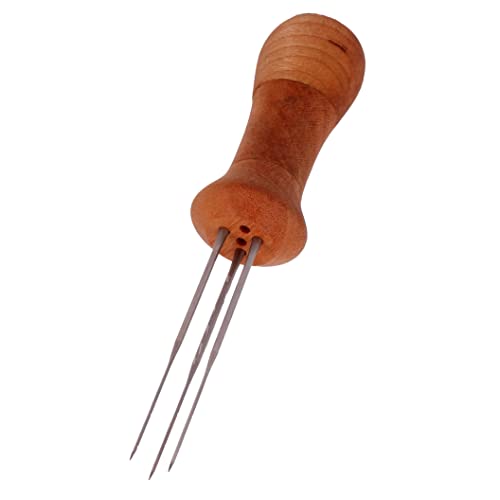
Sometimes you need to felt a large surface area quickly, such as creating a flat piece of wool felt for a bag or a sweater patch. The Ashford Wooden Multi-Needle Tool is the workhorse of the felting world.
The wide, wooden handle provides a substantial surface to push against, which significantly reduces the strain on your knuckles. Because it holds multiple needles, you are essentially "knitting" the fibers together much faster than you could with a single point.
The downside is the weight and size; it is not meant for delicate sculpting. If you try to use this for fine detail work, you will likely over-felt and distort your project, so keep it for your heavy lifting.
Bear Creek Felting Ergonomic Handle: Best Comfort

If you suffer from arthritis or general hand stiffness, the Bear Creek handle is a game-changer. Its design prioritizes a thick, cushioned grip that requires less "pinching" force to hold securely.
In the knitting world, we often talk about the importance of a relaxed grip to maintain even tension; the same applies here. By reducing the amount of force your fingers exert, you can felt for longer sessions without the onset of inflammation.
Because the handle is thicker, it may feel strange at first if you are used to thin needles. Give yourself a few hours of practice to adjust to the wider diameter, as the long-term benefit for your joints is well worth the transition.
Dimensions Needle Felting Tool: Best for Beginners

If you are just starting your journey into fiber arts, you don’t need a professional-grade, multi-hundred-dollar setup. The Dimensions tool is accessible, affordable, and provides a decent ergonomic shape for those learning the ropes.
It features a simple, molded handle that is easy to grip and hard to break. It is the perfect entry point for someone who isn’t sure how much they will enjoy the craft and wants to test the waters without a significant investment.
Just keep in mind that as your skills grow, you may find the plastic construction less durable than wood or metal. It is an excellent "learner" tool that will serve you well while you master the basics of tension and wool density.
Schacht Spindle Company Felting Tool: Best Quality

Schacht is a name synonymous with quality in the spinning and weaving community, and their felting tools follow that same standard. This tool is built to last, featuring high-quality materials that feel substantial and professional in the hand.
The ergonomics here are subtle but effective, favoring a balanced weight distribution that makes the tool feel like an extension of your hand. It is a fantastic choice for the dedicated artist who wants a tool that will last for years of heavy use.
The price point reflects the quality, which is an honest trade-off for the durability you receive. If you are committed to needle felting as a long-term hobby, investing in a piece of equipment this well-engineered is a smart move.
Why Ergonomic Handles Prevent Hand Strain and Fatigue
Repetitive motion is the enemy of any fiber artist, whether you are casting on a thousand stitches or stabbing wool for a sculpture. When you use a thin, bare needle, your hand is forced into a "pinch grip," which is the leading cause of carpal tunnel symptoms.
Ergonomic handles increase the diameter of the tool, which allows your hand to remain in a more neutral, relaxed position. This simple change distributes the pressure across your entire palm rather than focusing it on your thumb and forefinger.
Think of it like choosing a thicker wooden circular needle over a thin, slick metal one for a long project. The increased surface area allows your muscles to stay loose, preventing the fatigue that leads to poor technique and potential injury.
Essential Features to Look for in Felting Tool Grips
When shopping for a handle, look for a material that provides a bit of "tack" or friction. A handle that is too slick will require you to squeeze harder to keep it from slipping, which defeats the purpose of an ergonomic design.
Consider the weight of the tool as well. While some prefer a heavy, solid feel, others find that a lighter tool is easier on the wrists over time. Your choice should depend on your specific project—heavy for large, fast-felted items, and light for intricate, slow-paced work.
- Shape: Look for contoured grips that fit the natural curve of your palm.
- Material: Wood or rubberized coatings offer better grip than hard, smooth plastic.
- Balance: The tool should feel weighted toward the head, helping the needle drive into the wool with minimal effort.
Needle Compatibility: Matching Tools to Your Needles
Not all handles accept all needles, and this is a common point of frustration for beginners. Before purchasing, verify whether the tool uses a universal chuck or if it is proprietary to a specific brand of needle.
If you enjoy experimenting with different needle gauges—such as using a coarse needle for initial shaping and a fine needle for finishing—ensure your handle allows for quick and easy swaps. A tool that makes changing needles a chore will eventually sit in your drawer unused.
Always remember that the needle gauge is what determines the density of your work, while the handle determines your comfort. Don’t sacrifice the quality of your finish just because a handle is easier to use; find a tool that accommodates the specific needle size your project requires.
How to Properly Maintain Your Felting Tool Handles
Treat your felting tools with the same care you give your favorite pair of knitting needles. If you have a wooden handle, an occasional light sanding or a rub with a bit of wood wax will keep it smooth and prevent splintering.
For rubberized or plastic handles, a simple wipe-down with a damp cloth is usually sufficient to remove the natural oils and wool fibers that accumulate during a project. Avoid using harsh chemicals that could degrade the grip material over time.
Finally, keep your needles clean and rust-free. If a needle snaps inside the handle, ensure you have the proper tools to extract the broken shank safely, as a loose needle tip inside a handle can cause unexpected wobbles that ruin your ergonomic setup.
Finding the right felting handle is a personal process that depends entirely on your hand size, project type, and physical comfort levels. By choosing a tool that encourages a relaxed grip, you protect your body from the strain of long hours at the felting mat. Take your time to test different designs, and remember that the best tool is the one that lets you create without pain. Happy felting, and may your projects always turn out exactly as you envisioned.