7 Best Yarn Ball Winders For Scrap Yarn To Own
Organizing scrap yarn is effortless with the right tools. Discover the 7 best yarn winders to keep your leftovers tangle-free and ready for your next project.
Every knitter eventually faces the "yarn barf" nightmare that comes from pulling from the center of a loose, tangled hank. Transforming those chaotic scraps into organized, center-pull cakes is the secret to keeping your stash accessible and your stress levels low. A quality yarn winder is an investment that pays for itself the first time you avoid a three-hour detangling session. Here are the tools that actually hold up under the pressure of a serious fiber habit.
Stanwood Needlecraft Large Metal Yarn Winder


This is the gold standard for knitters who treat their stash like a serious collection. Its heavy-duty metal gears offer a level of durability that plastic models simply cannot match, especially when you are winding heavy-weight wools or large yardage cakes.
The large capacity is a game-changer for those of us who buy 400-yard hanks of fingering weight yarn for lace shawls. You won’t have to stop halfway through to start a second cake, which prevents those annoying mid-project joins.
Just be aware that this unit is heavy and requires a sturdy table edge to clamp onto securely. If you have a flimsy card table, the vibration during high-speed winding might be an issue.
Knit Picks Knitter’s Pride Yarn Ball Winder
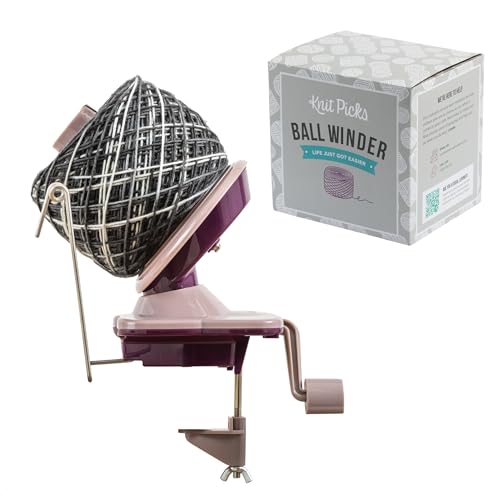
If you are just starting to build your stash, this winder is the perfect entry point. It is reliable, compact, and produces a consistent, neat cake that sits perfectly flat on your knitting table.
It handles standard-sized hanks with ease, making it ideal for the occasional project knitter. While it is made primarily of plastic, the internal mechanism is surprisingly smooth and quiet.
Don’t expect it to handle massive, 200-gram super-bulky skeins without a bit of manual help. It is designed for the average 50g to 100g hank that most of us use for sweater sleeves or hats.
U-nitt Wool Yarn Winder for Large Skeins
When you find yourself working with those massive, "economical" skeins of acrylic or cotton, you need a winder that can take the bulk. The U-nitt is specifically designed with a wider base and a sturdy flyer to accommodate large volumes of fiber.
The extra-large capacity means you can wind an entire 200-gram skein without it slipping off the spindle. This saves you the frustration of having your yarn slide off mid-wind, which is a common problem with smaller, budget-friendly models.
The tradeoff here is the footprint; it takes up more space in your craft room than a standard unit. Make sure you have a dedicated corner of your desk where this can live permanently.
Nancy’s Knit Knacks Heavy Duty Yarn Winder
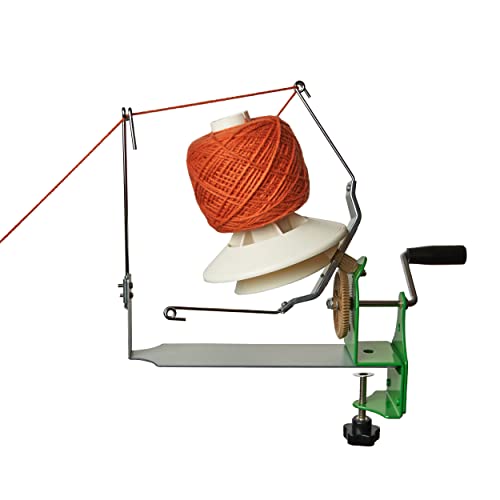
This is the winder for the knitter who has reached "serious hobbyist" status and needs a tool that won’t quit. It is built to withstand years of daily use, making it a favorite for those who wind yarn for friends or local knitting circles.
The design emphasizes mechanical efficiency, meaning you can wind faster without the gears skipping. It is particularly good at maintaining consistent tension, which is vital for delicate fibers like silk or alpaca that can stretch if pulled too hard.
It is an investment piece, certainly, but the quality of the nylon gears ensures long-term performance. If you are tired of replacing cheap winders every two years, this is the upgrade you need.
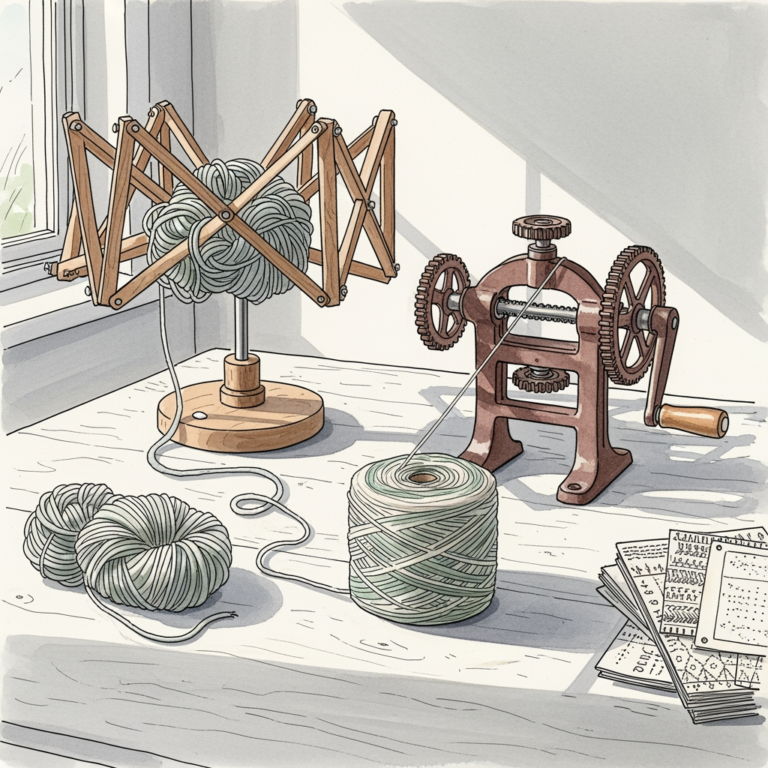
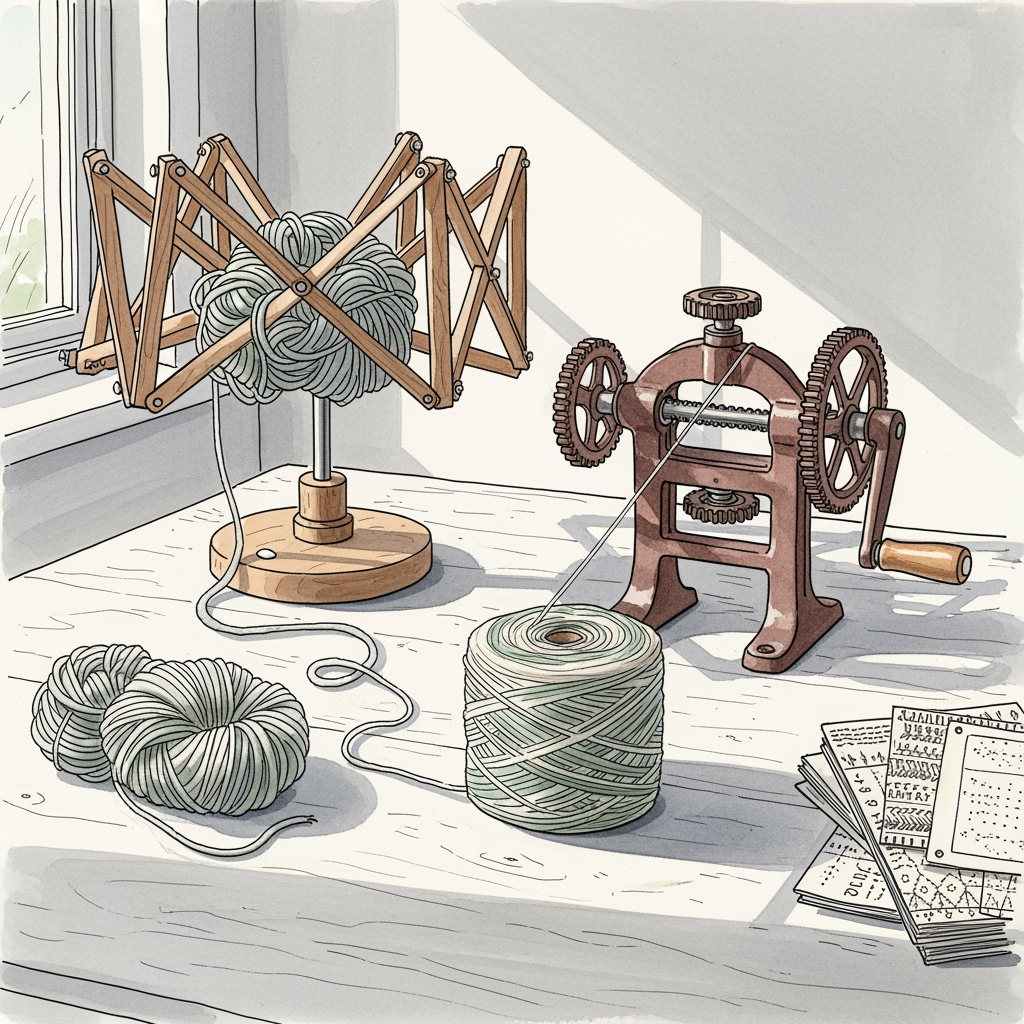
Amish Style Wooden Yarn Swift and Winder
While a winder creates the cake, the swift holds the hank; pairing a wooden Amish-style swift with a quality winder is the ultimate setup. The wooden construction is not just aesthetic—it is functional, providing a smooth rotation that prevents snagging.
The Amish style is preferred by many because it is collapsible and easy to store. When you aren’t using it, it folds down into a slim profile that can slide behind a bookshelf or into a closet.
Using a wooden swift prevents the "thumping" sound that plastic models often make. It creates a gentle, rhythmic experience that makes the winding process feel more like a ritual than a chore.
Lacis Wooden Hand Operated Yarn Winder

There is something undeniably satisfying about the tactile feel of a wooden winder. The Lacis model offers a vintage aesthetic combined with a surprisingly smooth hand-crank mechanism that feels substantial in your grip.
Because it is hand-operated, you have total control over the speed. This is a massive advantage when working with hand-dyed yarns that might have slight variations in twist, as it allows you to slow down if you spot a potential tangle.
It is a beautiful tool, but it requires a bit of maintenance. A tiny drop of sewing machine oil on the gears once a year will keep it running like a dream for decades.
Boye Electric Yarn Winder for Quick Projects

Sometimes, you just want the job done so you can get to the knitting. An electric winder takes the physical labor out of the equation, which is a lifesaver if you have arthritis or tend to suffer from wrist fatigue.
The speed is consistent, which helps in creating a uniform cake. However, you must be careful; electric winders can be too powerful for delicate, single-ply yarns.
Use this for sturdy, plied wools or cottons where tension isn’t as critical. Always keep a hand on the yarn strand to guide it, ensuring the winder doesn’t pull too aggressively on a snagged loop.
How to Choose the Best Winder for Your Stash
Selecting the right tool comes down to the types of yarn you use most often. If you exclusively knit with bulky, hand-spun wool, you need a heavy-duty model with a wide spindle.
- Capacity: Do you use 50g hanks or 200g cakes?
- Material: Plastic is fine for light use, but metal or wood lasts longer.
- Space: Do you have a permanent station, or do you need something portable?
Don’t be swayed by bells and whistles. A winder is a mechanical tool; prioritize gear quality and base stability over extra features.
Proper Winding Techniques to Protect Your Fiber
The most common mistake is winding the yarn too tightly. A cake that is wound with high tension can stretch the fibers, particularly with elastic yarns like superwash wool or nylon blends, leading to a loss of "bounce" in your finished fabric.
- Tension: Let the yarn flow loosely through your fingers before it hits the winder.
- Speed: Go slow, especially when you reach the end of the hank where tangles are most likely.
- Storage: Don’t leave your yarn in cake form for years; store it loosely if you aren’t planning to knit with it soon.
Treat your yarn with care, and it will reward you with beautiful, even stitches. If you feel the yarn pulling against your hand, stop and adjust your tension immediately.
Maintenance Tips for Long Lasting Yarn Tools
Your winder is a machine, and machines need care to function correctly. Keep the area around the gears free of stray fibers, as they can get caught and cause the mechanism to seize up.
Every few months, check the clamp and the spindle. If the winder starts to sound "gritty," it is time for a deep clean and a small amount of lubricant.
Store your winder in a dust-free environment when not in use. A simple cloth cover will keep debris out of the gears, ensuring your next winding session is just as smooth as your first.
Investing in a quality yarn winder is the mark of a knitter who values their time and their fiber. Whether you choose a robust metal model or a beautiful wooden classic, the goal is to make the transition from hank to needles as seamless as possible. Pick the tool that matches your stash habits, and you will find that your knitting time becomes much more productive and peaceful. Happy winding, and may your cakes always pull from the center without a hitch.