7 Best Wool Core Batts for Structural Shapes
Discover the top 7 wool core batts for structural shapes. This guide evaluates performance, density, and durability to help you choose the best material today.
Achieving a professional finish in 3D needle felting starts long before you reach for the surface wool. Choosing the right core wool is the secret foundation that determines whether your sculpture stays firm or sags over time. By selecting a high-quality batt, you save hours of labor and ensure your structural shapes hold their integrity. This guide breaks down the best options to help you build a solid base for every project.
Living Felt Core Wool: Best Overall Performance


When you need a reliable workhorse for varied projects, Living Felt is often the first choice for a reason. It strikes a balanced chord between ease of felting and structural stability.
The fibers are processed to catch and lock together quickly, which is essential if you are working on a tight deadline or a complex armature. It doesn’t fight you when you’re trying to build volume, making it an excellent choice for both beginners and seasoned pros.
Ultimately, this is the "gold standard" for general sculpting. If you want a product that performs consistently across different shapes without requiring a steep learning curve, start here.
Bear Creek Felting Core Batts: Best Firmness

If you find that your sculptures tend to squish or lose their shape after a few weeks, you likely need a firmer core. Bear Creek provides a dense, sturdy batt that resists deformation.
This wool is particularly effective for structural elements that need to support weight, such as the legs of a felted animal or the base of a decorative bowl. Because the fibers are coarser and more aggressive in their grip, you spend less time stabbing to reach a hard-packed state.
The tradeoff is that it can be slightly harder on your wrists if you are working on a very large piece. However, the structural security it provides is well worth the extra effort during the initial build.
WoolBuddy Needle Felting Core: Best for Shapes

WoolBuddy is designed with the sculptor in mind, focusing on how quickly a batt can be manipulated into basic geometric forms. It is incredibly pliable, allowing you to fold and roll it into spheres or cylinders with minimal resistance.
Many beginners struggle with "lumpy" cores because they can’t get the wool to compress evenly. WoolBuddy solves this by offering a consistent texture that responds predictably to your needle strokes.
It is the ideal choice for someone building intricate, multi-part sculptures. When you need to join multiple shapes together, this wool creates a seamless, stable transition point.
Sarafina Fiber Art Core Wool: Best Structure
Sarafina Fiber Art understands that a core is only as good as its ability to hold a detail. This wool is engineered to maintain crisp edges, which is vital if you are sculpting architectural shapes or sharp-featured characters.
While softer wools might blur your lines, this core remains rigid once you’ve achieved your desired density. It acts like an internal skeleton, preventing the "mushy" feel that often plagues poorly constructed felted items.
If your project requires high-definition shaping, this is your go-to. It allows you to focus on the surface artistry rather than worrying about the structural base collapsing.
Felted Sky Premium Core Wool: Best Density
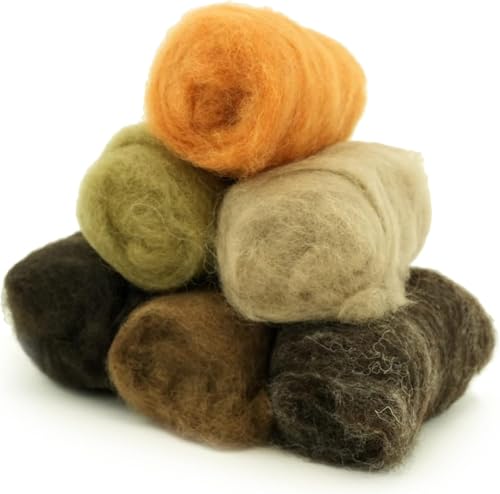
Density is the primary factor in preventing your needle felting from becoming "fuzzy" or misshapen over time. Felted Sky offers a premium, high-density batt that feels substantial in the hand from the moment you start.
This density means you use less material to achieve the same size shape compared to fluffier, cheaper alternatives. It is a cost-effective approach for larger sculptures where material weight can become a concern.
Keep in mind that high-density wool requires a slightly stronger needle to penetrate effectively. Ensure you are using a sturdy gauge needle to avoid snapping your tools while working with this firm fiber.
Divine Wool Needle Felting Core: Best Value
Budget-conscious makers shouldn’t have to sacrifice quality, and Divine Wool offers a fantastic balance for those working on high-volume projects. It is a clean, reliable fiber that felts at a moderate speed.
It’s perfect for practicing new techniques or creating "filler" shapes that will eventually be covered by expensive, high-end wool tops. You get a significant amount of material that performs reliably without any hidden debris or uneven processing.
While it may not have the extreme density of premium boutique brands, it is more than sufficient for most standard 3D applications. It is the best choice for stocking up your fiber stash.
Howard Brush Co. Core Wool: Best Consistency

Consistency is the hallmark of a professional-grade tool, and Howard Brush Co. delivers a product that feels identical from one bag to the next. For a knitter or felter, there is nothing more frustrating than a material that changes texture midway through a project.
This predictability allows you to develop a "muscle memory" for your felting speed and needle depth. You won’t have to adjust your technique every time you open a new batch of wool.
This is the professional’s choice for repeatability. If you are creating a series of items and need them to look and feel identical, this consistency is an invaluable asset.
How to Choose the Right Core Wool for Sculpting
Selecting the right core wool depends heavily on the project’s end use. If you are making a display piece, you can prioritize ease of use, but for functional items like pincushions or soft sculptures for children, you need maximum density.
Consider the "stab-to-shape" ratio. If you find yourself stabbing for hours with no change in size, your wool is likely too coarse or too loosely packed.
Always check the fiber length and cleanliness. A clean, well-carded batt will save you from the frustration of picking out vegetable matter or dealing with uneven, knotty sections that ruin the symmetry of your sculpture.
Why Core Wool Density Matters for 3D Projects
Density is the difference between a sculpture that stands tall and one that slumps under its own weight. A dense core provides the necessary internal pressure to keep the surface wool smooth and taut.
When you don’t pack your core tightly enough, the surface wool tends to sink into the gaps over time. This leads to a textured, uneven appearance that is difficult to correct once the project is finished.
Think of your core as the foundation of a house. If the foundation is loose or shifting, the walls above it will inevitably crack or sag regardless of how beautiful the exterior finish might be.
Essential Techniques for Shaping Wool Batts
To get the most out of your core wool, start by tightly rolling or folding the batt before you ever touch it with a needle. This "pre-shaping" reduces the amount of work the needle needs to do.
Use a multi-needle tool for the initial bulk-shaping phase to cover more surface area quickly. Once the shape is established, switch to a single, finer-gauge needle to refine the contours and smooth out any deep indentations.
Always rotate your piece constantly while felting. If you focus too much on one side, you will end up with a flat, distorted shape that is nearly impossible to round out later.
Mastering the internal structure of your felting projects is the hallmark of an advanced maker. By choosing a core wool that matches the specific needs of your sculpture, you ensure longevity and professional results. Don’t be afraid to experiment with different densities until you find the perfect match for your personal needle felting style. With the right foundation, your creativity can take any shape you desire.