
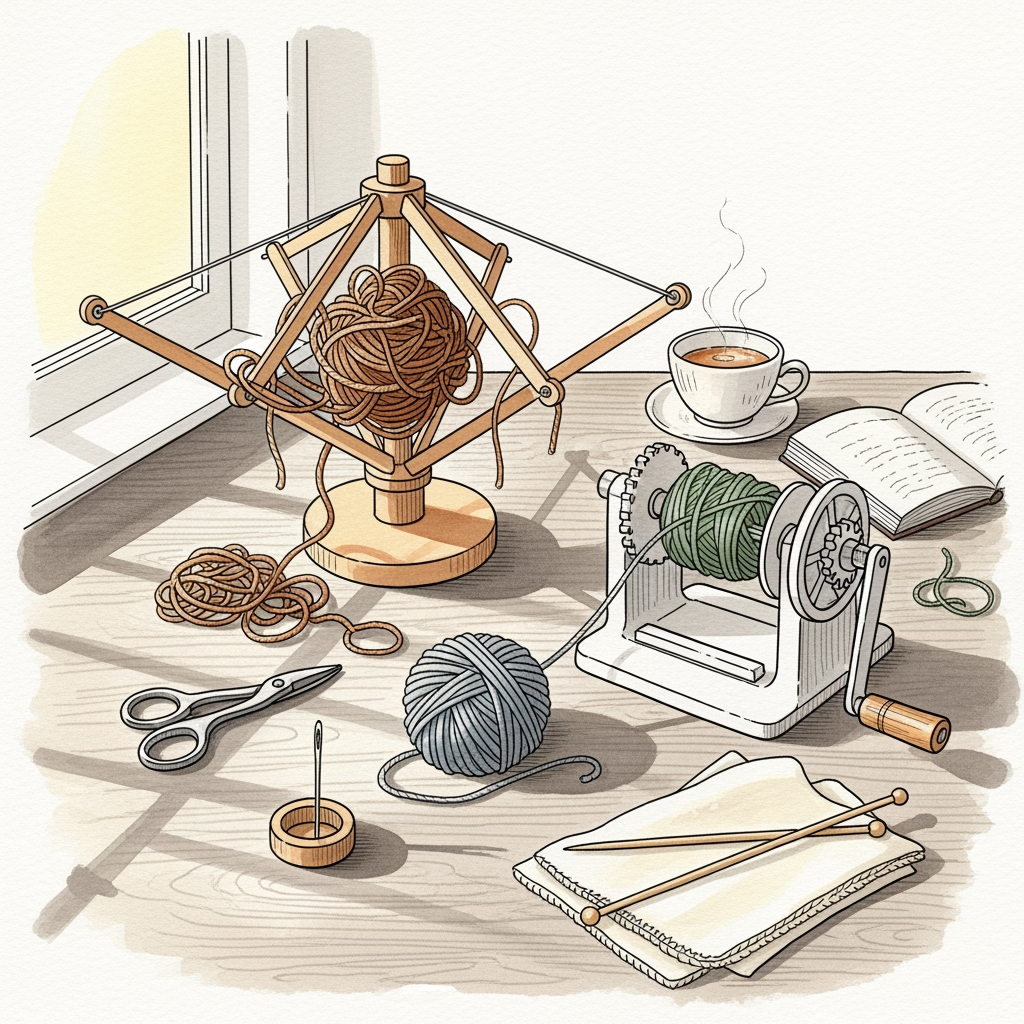
6 Best Swift Stands For Tabletop Winding Worth Using
Discover the 6 best tabletop swift stands for efficient yarn winding. We evaluate stability, material quality, and ease of use to streamline your projects.
Converting a twisted hank of luxury hand-dyed yarn into a tidy, usable cake is a rite of passage for every knitter. A quality tabletop swift acts as the third hand you never knew you needed, preventing the dreaded tangle that can ruin an afternoon of crafting. Choosing the right tool depends on your yarn stash size and the frequency of your winding sessions. This guide breaks down the best options to ensure your fiber prep is as smooth as your stockinette stitch.
Stanwood Needlecraft Tabletop Swift: Best Overall
When you need a workhorse that handles everything from delicate lace-weight mohair to chunky wool, the Stanwood is the industry gold standard. Its metal hardware and polished wood construction offer a level of stability that cheaper models simply cannot match.
The standout feature here is the smooth, silent rotation. Because the friction is kept to an absolute minimum, you won’t find yourself fighting against the swift when winding high-twist yarns that tend to snap back.
It is an investment, certainly, but it is one that pays for itself in saved time and reduced frustration. If you frequently work with expensive, hand-dyed skeins, this is the tool that protects your investment from accidental snags and uneven tension.
Amish Style Wooden Swift: Best Value Choice
The Amish-style swift is a brilliant study in simple, effective engineering. Unlike umbrella swifts that collapse, this stationary wooden cross design relies on adjustable pegs to accommodate different skein circumferences.


Its primary strength lies in its durability and lack of moving parts. Without complex gears or metal screws, there is very little that can break or wear out over years of heavy use.
However, keep in mind that it requires a bit more footprint on your table. It is perfect for the knitter who has a dedicated craft corner and wants a reliable, no-nonsense tool that will last a lifetime.
Lacis Wooden Umbrella Swift: Best Compact Design
If your knitting space is limited to a small desk or even a kitchen table, the Lacis umbrella swift is a lifesaver. It folds down into a slim profile that can easily slide into a project bag or a narrow drawer.
Despite its small size, it remains remarkably stable during operation. The umbrella mechanism allows you to quickly dial in the exact tension needed for your yarn, which is crucial when dealing with slippery fibers like silk or bamboo blends.
The only trade-off is the setup time; you must ensure it is securely clamped to your table edge to prevent wobbling. For the urban knitter or those with minimalist workspaces, it hits the perfect balance of form and function.
KnitPicks Yarn Swift: Best For Budget Knitters
KnitPicks has long been the go-to for knitters looking for accessible tools that don’t compromise on basic utility. This swift is lightweight and highly portable, making it an excellent choice for knitting retreats or travel.
It functions perfectly for standard-sized skeins and provides a consistent spin. While it may not feel as "hefty" as a premium wooden model, it performs the essential task of preventing tangles with ease.
It is an ideal entry point for a new knitter building their initial tool kit. You get a functional, reliable piece of equipment that allows you to start winding your own yarn without breaking the bank.
Strauch Jumbo Swift: Best For Large Skein Loads
Those who work with massive 200-gram hanks or bulky, hand-spun art yarns know the struggle of a standard swift that is simply too small. The Strauch Jumbo is built specifically to accommodate these oversized loads without sagging or tipping.
The construction is incredibly robust, featuring heavy-duty components that handle the weight of large skeins effortlessly. It is designed to maintain perfect balance even when the yarn is being pulled off at high speeds.
If you are a prolific knitter who buys large quantities of yarn at once, this is the ultimate upgrade. It eliminates the need to break down massive skeins into smaller segments before winding.
Nancy’s Knit Knacks Swift: Best Sturdy Option
Nancy’s Knit Knacks is legendary for creating tools that are built to withstand professional-level use. Their swift is widely regarded as one of the most stable and well-engineered options on the market.
What sets this model apart is the precision of the movement. Every rotation feels deliberate and controlled, which is a massive help when you are trying to maintain even tension while winding a center-pull cake.
While it comes at a higher price point, the quality of the wood and the integrity of the hardware are unmatched. For the knitter who demands professional precision, this is the final swift you will ever need to purchase.
Key Factors When Choosing Your Tabletop Swift
When shopping, consider your most common yarn weight and the size of your typical skeins. A small, lightweight swift might struggle with the weight of heavy, wool-filled jumbo hanks, leading to uneven cakes.
Think about your table surface and clamping mechanism. Ensure the swift has a clamp that fits your specific table thickness; a loose clamp is the leading cause of "swift-tipping" accidents.
Finally, consider the material. While plastic is portable and easy to clean, wood provides a natural grip that prevents yarn from sliding off the arms. Your choice should reflect your storage space and your long-term knitting volume.
How To Properly Set Up A Skein For Winding
Always untwist your skein completely before placing it on the swift. If you skip this step, you are essentially inviting the yarn to knot itself as soon as the winding begins.
Find the two "tie" threads that hold the skein together and ensure they are removed only after the skein is securely on the swift. Place the yarn gently over the arms, ensuring it is centered so the tension remains uniform as the swift spins.
Before you start winding, give the swift a slow, manual test spin. If you hear any clicking or see the yarn catching on a screw or joint, adjust the umbrella width or the position of the skein immediately.
Maintaining Your Swift For Smooth Rotation
Wood swifts benefit from an occasional wipe-down with a soft cloth to remove dust and fiber debris. If your swift starts to feel "sticky" or slow, a tiny drop of furniture wax on the pivot points can restore its glide.
Avoid storing your swift in areas with high humidity, as wood can warp and affect the alignment of the arms. Always collapse or disassemble it when not in use to prevent accidental damage.
Check the screws and bolts periodically to ensure they haven’t loosened over time. A quick tighten before a long winding session prevents the wobbling that leads to uneven, sloppy yarn cakes.

Troubleshooting Common Yarn Tangling Issues
If your yarn is constantly tangling, check your winding speed. Beginners often wind too quickly, which causes the yarn to jump off the swift arms rather than feeding smoothly.
Ensure your yarn winder is positioned correctly in relation to the swift. They should be far enough apart that the yarn has a clear path, but close enough that you can easily guide it with your hand to ensure even distribution on the cake.
If you are working with a very slippery fiber like silk or rayon, keep a light finger on the yarn as it feeds. This manual tensioning prevents the yarn from ballooning off the swift and creating a "yarn barf" mess.
Investing in a quality tabletop swift is one of the most practical decisions you can make for your fiber arts journey. By choosing a tool that matches your specific knitting habits, you turn a tedious chore into a satisfying, meditative part of your process. Take your time with your setup, keep your gear maintained, and enjoy the peace of mind that comes with a perfectly wound cake of yarn. Your future self, sitting down to knit that next project, will thank you for the effort.
