6 Best Blocking Boards For Flower Motifs To Try
Discover the 6 best blocking boards for flower motifs. Learn how these essential tools ensure uniform shapes and professional finishes for your crochet projects.
Blocking is the secret bridge between a pile of yarn and a professional-looking finished garment. When working with flower motifs, the difference between a puckered, uneven square and a crisp, blooming lace piece lies entirely in your blocking surface. Choosing the right tool ensures your hard work retains its intended shape and drape. Here is how to navigate the best boards on the market to elevate your craft.
KnitIQ Blocking Mats: Best Overall for Motifs
These mats are the industry standard for a reason: they are thick, dense, and feature a highly visible grid. When you are blocking delicate lace motifs, you need a surface that holds pins firmly without bowing or shifting under tension.
The thickness is the real winner here, as it allows you to pin your motifs vertically or at deep angles without the pins poking through the bottom. If you are working with a project that requires significant stretching, like a mohair-blend motif, the stability of these mats prevents the dreaded "leaning" effect.
The bottom line: if you want a reliable, long-term investment that handles everything from heavy wool to fine lace, this is the gold standard.
Knitter’s Pride Lace Blocking Mats: Best Value
If you are just starting your journey into motif work, you don’t need to break the bank to get professional results. These mats offer a reliable, lightweight surface that gets the job done without the premium price tag of heavier sets.
They are particularly effective for smaller projects where you aren’t pinning down a massive blanket all at once. Because they are slightly softer than the heavy-duty options, they are very easy to store, making them perfect for knitters with limited craft room space.
Just keep in mind that they may show wear faster if you use thick, heavy T-pins repeatedly in the same spots. Treat them gently, and they will serve you well for years.
Cocoknits Blocking Tiles: Best for Precision
Precision is everything when you are trying to match up twenty identical flower motifs for a cardigan. These tiles are made from a firmer, more durable material that doesn’t compress as easily as standard foam, ensuring your edges stay perfectly straight.
The standout feature is the subtle, non-intrusive grid that helps you align your work without distracting from the color of your yarn. This is essential when you are blocking dark-colored motifs where a bright, neon grid might make it hard to see your stitch definition.
If you are a perfectionist who needs every corner to hit the exact same measurement, these tiles are worth the extra cost. They turn a tedious task into a geometric exercise.
Boye Grid-Patterned Blocking Board: Best Basic


Sometimes you don’t need a modular system; you just need a sturdy, flat surface that fits on your kitchen table. The Boye board is a classic for a reason—it’s simple, portable, and gets the job done without any fuss.
It’s ideal for beginners who are only blocking a few motifs at a time and don’t want to manage a dozen interlocking puzzle pieces. Because it is a single, solid unit, there is no risk of the mats separating while your wet project is drying.
While it lacks the modular flexibility of larger systems, it is the perfect "grab and go" tool for small-scale motif projects. It’s a no-nonsense solution for the practical knitter.
Clover Flower Motif Blocking Board: Best Small

This specialized tool is designed specifically for the person who loves making small, intricate motifs. It usually comes with pegs rather than pins, which is a game-changer for tensioning delicate lace or crochet flowers.
Instead of wrestling with pins, you simply slide your motif over the pegs to hold it in place. This is much kinder to your yarn, especially if you are working with fragile fibers like silk or high-twist merino that might snag on a sharp pin.
If your project involves dozens of tiny, identical flowers, this board will save you hours of alignment time. It is a niche tool, but for the right project, it is indispensable.
Darice Foam Blocking Mats: Best for Bulk Work
When you are blocking a massive project—like a full-sized bedspread made of hundreds of motifs—you need a lot of surface area for a low price. These foam mats are the budget-friendly solution for covering your entire floor space.
They are utilitarian and functional, designed to be used in large configurations. Because they are inexpensive, you won’t feel guilty about trimming them to fit a specific corner or using them for heavy-duty blocking projects that might stain the surface.
They aren’t as dense as the premium mats, but for bulk work, they provide the necessary coverage. Just be prepared to use a few extra pins to compensate for the softer foam density.
How to Choose the Best Board for Motif Shapes
The shape of your motif dictates the type of board you need. Square motifs benefit from rigid grids, while circular or hexagonal motifs often require a board that allows for radial pinning.
Always consider the weight of your fiber. If you are blocking heavy, superwash wool (which tends to grow significantly when wet), you need a mat that won’t buckle under the weight of the damp material.
- Rigid/Dense: Best for heavy wools and large items.
- Soft/Lightweight: Best for small, delicate lace motifs.
- Peg-based: Best for repetitive, identical shapes.
Why Grid Lines Are Essential for Motif Blocking
Grid lines aren’t just for decoration; they are your primary tool for ensuring symmetry. Without a grid, it is incredibly easy to accidentally block one motif slightly larger than the next, which becomes a nightmare when it’s time to sew them together.
I always recommend lining up your motif’s center point with the center of a grid square. From there, you can measure outward to ensure each corner of your motif is equidistant from the center.
Consistency is the hallmark of professional work. If your motifs are all blocked to the exact same dimensions, your final garment will hang evenly and look intentional.
Steam vs. Wet Blocking: Choosing Your Method
Wet blocking involves soaking your motif in water and wool wash before pinning it out to dry. This is the best method for "resetting" the fibers and fixing significant tension issues in your stitches.
Steam blocking, on the other hand, uses the moisture and heat from an iron or steamer to relax the fibers. This is faster and great for final touch-ups, but it doesn’t provide the same deep-cleaning or structural reset as wet blocking.
- Wet Blocking: Essential for natural fibers like wool and alpaca that need to bloom.
- Steam Blocking: Perfect for synthetic blends or delicate items that shouldn’t be fully submerged.
Essential Blocking Pins for Delicate Motifs
Never use standard sewing pins for blocking; they are too thin and will likely bend under the tension of the yarn. Instead, look for stainless steel T-pins, which are designed to stay straight and resist rusting when exposed to wet yarn.
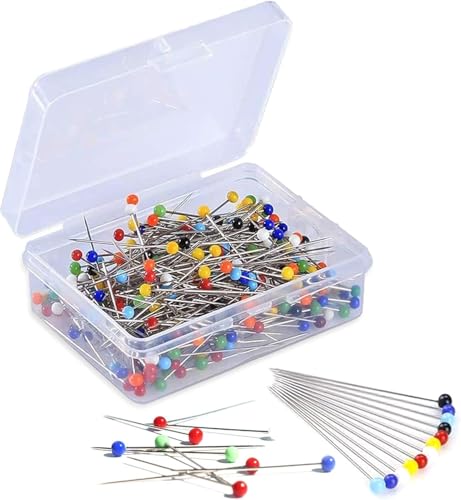
If you are worried about snagging, consider using blocking wires. You thread these through the edges of your motif and then pin the wires down, which creates a perfectly straight, smooth edge that looks much cleaner than individual pin points.
For the most delicate lace, T-pins are fine, but always ensure they are rust-proof. Nothing ruins a beautiful project faster than a rust stain from a cheap pin.
Mastering the art of blocking is what elevates a project from "homemade" to "heirloom." By selecting the right board for your specific motif and fiber, you ensure that your hard work is showcased in the best possible light. Take your time, trust your grid, and enjoy the transformative process of seeing your motifs come to life. Happy knitting!