6 Best Sewing Pins For Fabric Alignment To Try
Achieve perfect fabric alignment with our top six sewing pin picks. Discover the best tools to ensure precision, stability, and ease for every sewing project.
Achieving perfect seams in your sewing projects begins long before the needle hits the fabric. Much like choosing the right needle size for a delicate lace shawl, selecting the correct sewing pin is fundamental to maintaining alignment and preventing distortion. Using the wrong tool can lead to snagged fibers or shifting layers that ruin your hard work. This guide explores the best pins available to ensure your fabric stays exactly where you need it.
Clover Patchwork Pins: The Gold Standard Choice
Clover Patchwork Pins are widely considered the gold standard for a reason. They feature a thin, flexible shaft that glides through cottons and blends without leaving gaping holes.
When you are piecing together intricate quilt blocks, you need a pin that won’t distort the grain of your fabric. These pins are remarkably resistant to bending, which is a common frustration with cheaper, softer steel alternatives.
If you have ever struggled with pins that snap or dull after a single project, these are your remedy. They offer the perfect balance of rigidity and finesse, making them a staple in any serious sewing kit.
Dritz Extra Fine Glass Head Pins for Precision


Dritz Extra Fine Glass Head pins are my go-to recommendation for projects where visibility is key. The glass heads are heat-resistant, meaning you can iron right over them without worrying about the plastic melting onto your fabric or your soleplate.
The "extra fine" designation is not just marketing; it is a functional necessity for modern fabrics. These pins are thin enough to slide through tight weaves without causing the fabric to "pucker" or shift as you feed it under the presser foot.
Because they are so slender, they are ideal for lightweight materials like lawn or voile. Just be mindful that because they are thin, they can bend if you try to force them through heavy-duty upholstery fabric or thick denim.
Bohin Extra Fine Steel Pins for Delicate Work

Bohin pins are renowned for their nickel-plated steel construction and superior sharpness. When you are working with high-end silks or fine linens, you cannot afford to have a blunt tip snagging the delicate warp and weft threads.
These pins are incredibly smooth, which reduces the friction as you push them through multiple layers. They feel almost like they are melting into the fabric, providing a secure hold without the bulkiness that often leads to shifting.
They are a bit of an investment, but for heirloom-quality sewing, they are worth every penny. If you treat them well, they will remain sharp for years, far outlasting the generic pins found in big-box stores.
Tulip Hiroshima Quilt Pins for Smooth Piercing
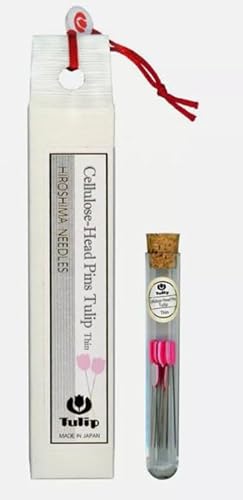
Tulip Hiroshima pins are a marvel of Japanese engineering. They are manufactured with a focus on polished steel that pierces fabric with almost zero resistance.
If you have ever felt your fabric "bunch up" as you pin, it is usually because the pin is dull or the surface is slightly rough. These pins eliminate that issue, allowing for precise alignment that stays put until you are ready to sew.
They are exceptionally straight and hold their shape beautifully. They are particularly useful when you are pinning long seams where even a slight deviation in the pin’s path can lead to a twisted hem or an uneven finish.
Collins Silk Pins for Fine Fabric Alignment

Collins Silk Pins are specifically designed for—you guessed it—silk and other slippery, high-maintenance fabrics. These are usually very long and extremely thin, designed to hold layers together without adding weight or causing the fabric to drape awkwardly.
When you are working with slippery synthetics or charmeuse, gravity is your enemy. These pins provide the extra length needed to capture all the layers without the pin head sliding through the fabric or causing the layers to separate.
They are delicate tools, so handle them with care. They are not intended for pinning heavy wools or canvases; they are precision instruments for the most temperamental fabrics in your stash.
Singer Ball Point Pins for Knits and Jerseys

If you spend your time sewing with knits, you must use ball point pins. Just as you choose a ball point needle for your sewing machine to slide between fibers rather than piercing them, you need a ball point pin for the same reason.
Standard sharp pins will often pierce the yarn of a knit fabric, causing runs or permanent holes that look unsightly. Ball point pins have a rounded tip that pushes the fibers aside, preserving the integrity of the knit structure.
Using these is a game-changer for jersey, interlock, and spandex blends. It prevents the dreaded "laddering" effect that can happen when a sharp pin breaks a fiber in a tightly knit garment.
Why Pin Type Matters for Your Sewing Projects
The relationship between your pin and your fabric is just as important as the relationship between your yarn and your knitting needles. Using a heavy-duty pin on a lightweight fabric is like using 8mm needles for fingering weight yarn—it creates gaps and structural issues.

A pin that is too thick will leave permanent holes in fine fabrics. Conversely, a pin that is too short will fail to hold multiple layers of thick fleece or wool coating together.
Think of your pins as an extension of your hands. They are there to stabilize the work so your machine can do the heavy lifting. Choosing the right tool ensures that your seam lines remain straight and your pattern pieces stay perfectly aligned.
Understanding Gauge and Length in Sewing Pins
Gauge refers to the thickness of the pin shaft, while length refers to the distance from the head to the tip. A lower gauge number usually indicates a thinner pin, which is safer for delicate fabrics.
Length is about control and capacity. If you are joining several layers of fabric, you need a longer pin to traverse the entire stack. If you are just pinning a single hem, a shorter pin is less likely to get in the way of your hands or your machine.
Always check the packaging for these specifications. If a pin is labeled "extra fine," assume it is for lightweight fabrics; if it is labeled "quilting" or "heavy duty," it is meant for bulkier projects.
How to Properly Store and Organize Your Pins
Pins should be stored in a way that protects their tips and keeps them accessible. A magnetic pin cushion is excellent for quick access, but it can magnetize your pins, which sometimes attracts tiny bits of metal debris that can scratch your fabric.
A classic tomato pincushion filled with emery is the best way to keep your pins sharp. The emery grit acts as a gentle abrasive that polishes the pin every time you push it in and out, removing burrs and rust.
Keep your pins away from moisture to prevent oxidation. If you find a pin that has become dull or slightly bent, discard it immediately; a damaged pin is a liability that can damage your fabric beyond repair.
Essential Tips for Securing Fabric Layers
When pinning, always insert the pin at a slight angle to "lock" the layers together. This prevents the fabric from sliding as you move it toward the sewing machine.
Avoid pinning directly over the path where your presser foot will travel if you are a beginner. It is safer to pin perpendicular to the seam edge so you can easily pull them out as you approach the needle.
Finally, remember that pinning is not a substitute for proper pressing. Use your pins to hold the fabric in place, but use your iron to set the seam, which will make your final stitching much more professional and accurate.
Selecting the right sewing pin is a small detail that yields massive improvements in your finished garments. Just as you would never use a blunt needle for a delicate lace project, never settle for generic pins that can damage your beautiful fabric. Take the time to match your pin type to your project’s specific needs, and you will find your sewing experience becomes far more enjoyable and precise. Happy stitching, and may your seams always align perfectly.