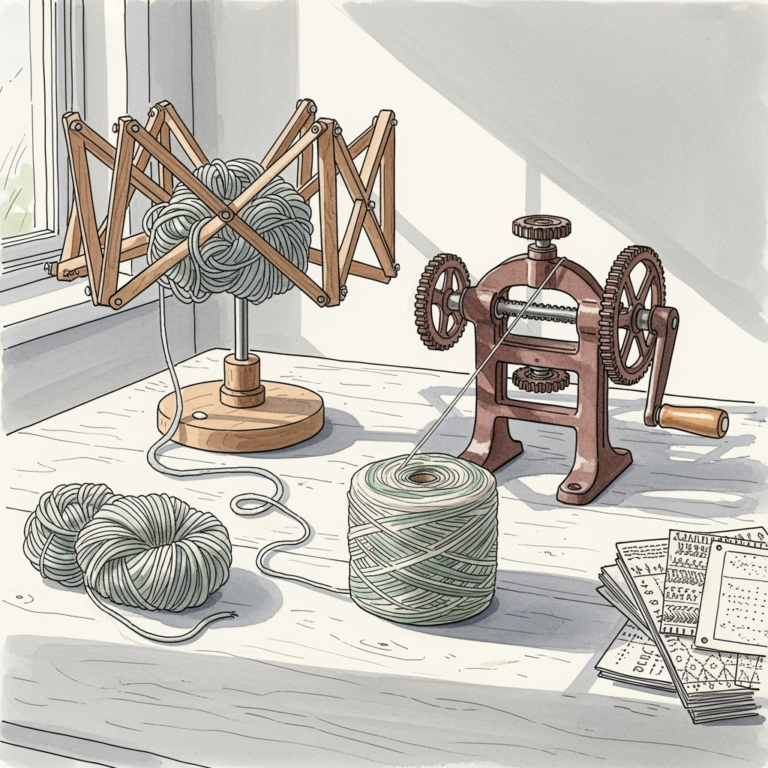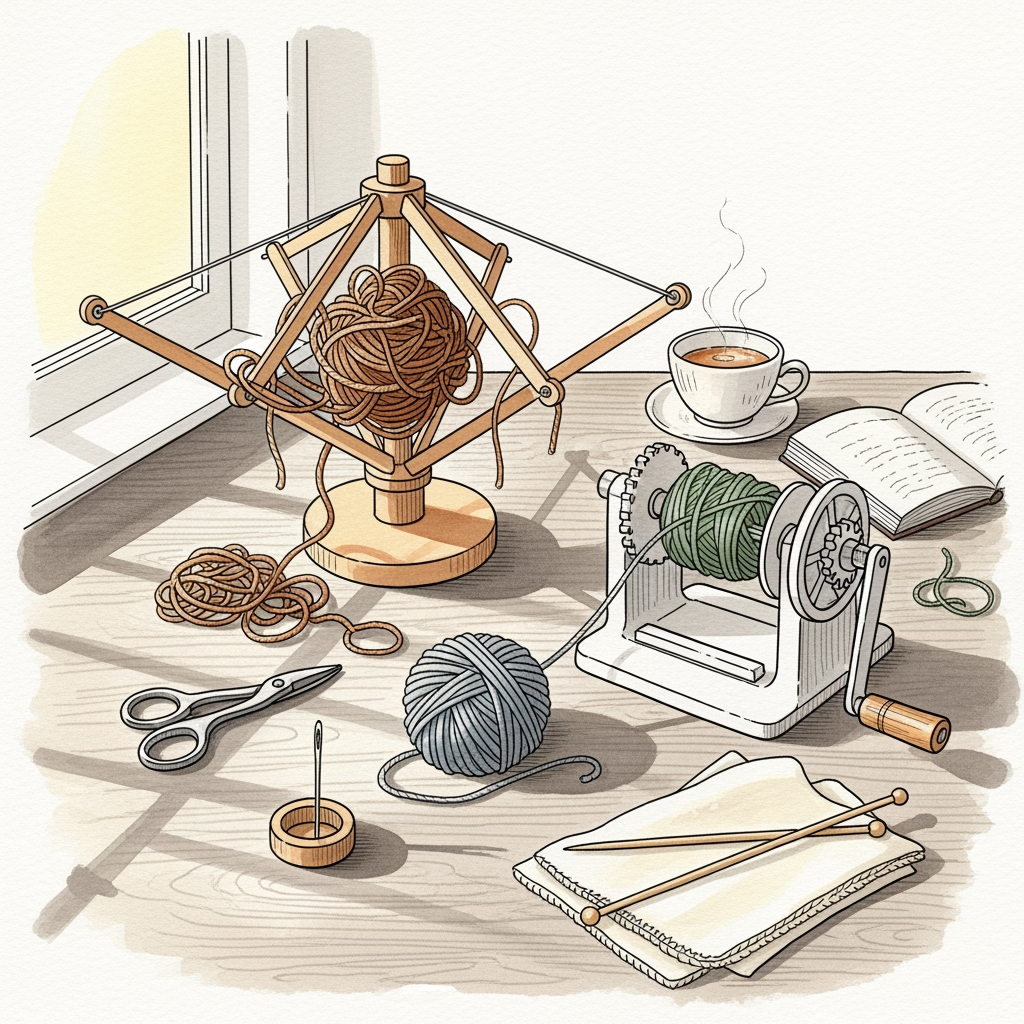
6 Best Yarn Swift Hand Cranks For Manual Winding
Find the best yarn swift hand cranks for easy winding. Our guide reviews 6 top-rated models, focusing on durability, ease of use, and efficiency for knitters.
Transforming a tangled, hand-wound hank of yarn into a neat, center-pull cake is one of the most satisfying rituals in a knitter’s studio. While electric winders offer speed, manual hand-crank models provide a tactile connection to your stash that helps you spot knots or thin spots before they reach your needles. Choosing the right winder is an investment in your sanity, ensuring your yarn remains tangle-free and ready for your next project. This guide explores the best manual options to help you find the perfect tool for your workspace.


Stanwood Needlecraft Tabletop Yarn Winder Review

The Stanwood tabletop winder is widely considered the gold standard for home knitters who prioritize consistency and durability. Its heavy-duty metal gears provide a smooth, rhythmic cranking motion that feels substantial rather than flimsy.
When you are winding a delicate, hand-dyed lace weight yarn, you need a machine that won’t jerk or snag. The Stanwood’s tension control system is remarkably precise, allowing you to wind even the most slippery silk-mohair blends without creating a bird’s nest.
However, it is a larger piece of equipment that requires a sturdy table edge. If you are working in a tight corner of your craft room, ensure you have enough clearance for the yarn swift to rotate freely alongside the winder.
Knit Picks Yarn Ball Winder: Best Budget Option
If you are just beginning your journey into purchasing hanks instead of skeins, the Knit Picks winder is an excellent entry point. It is lightweight, portable, and gets the job done without requiring a significant financial commitment.
This model is ideal for the occasional knitter who doesn’t mind a slightly more "plastic" feel in exchange for high utility. It handles worsted and DK weight yarns with ease, making it a perfect companion for your standard sweater projects.
Keep in mind that with budget models, the gears can be sensitive to aggressive cranking. Use a steady, moderate pace to ensure the plastic components remain intact over the long term.
Nancy’s Knit Knacks Heavy Duty Winder Analysis

For those who treat their fiber arts as a serious profession or a high-volume hobby, Nancy’s Knit Knacks offers an engineering-forward approach. These winders are designed to handle large yardage, such as 400-gram cakes of bulky wool.
The build quality is exceptional, featuring internal parts that resist the wear and tear of daily use. If you frequently wind yarns for complex colorwork projects where you need multiple balls of the same color, this machine provides the reliability you need.
The tradeoff here is the price point and the learning curve. It is a more complex machine, but for the dedicated maker, the investment pays off in the longevity and the perfection of the resulting yarn cakes.

Lacis Wooden Yarn Ball Winder: Premium Choice
The Lacis wooden winder is a beautiful marriage of form and function that appeals to the traditionalist. Unlike plastic winders, the wooden construction offers a weighted stability that feels grounded and professional on your workstation.

Beyond aesthetics, the wooden build often results in a quieter winding experience. If you enjoy listening to podcasts or audiobooks while you prepare your yarn for a long session of stockinette, you will appreciate the lower mechanical volume.
Be aware that wood requires a bit more care. Keep it in a climate-controlled environment to prevent warping, and occasionally check that the wooden components remain tight and aligned for the best performance.
U-nitt Hand-Operated Yarn Winder Performance
The U-nitt winder is a workhorse that bridges the gap between budget-friendly and professional-grade tools. It features a robust design that can handle a variety of yarn weights, from fine lace to chunky, single-ply roving.
One standout feature is the ease of setup. It clamps securely to most table thicknesses, providing a stable base that minimizes vibration during the winding process. This stability is crucial when you are winding high-yardage hanks.
If you find yourself frequently switching between different yarn bases—like switching from a grippy Highland wool to a slick bamboo blend—the U-nitt offers the versatility to handle those texture changes without constant adjustment.
Cowgirl Yarn Ball Winder: Compact Design Review
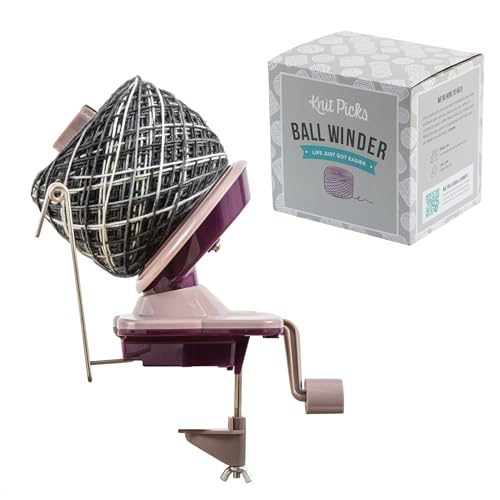
If your "studio" is a small desk or a kitchen table, the Cowgirl Yarn Ball Winder is a masterclass in space-saving design. It is compact enough to tuck away in a drawer when not in use, yet sturdy enough to hold its own during a winding session.
This model is particularly well-suited for knitters who travel to workshops or knitting retreats. It is lightweight without feeling fragile, making it easy to pack alongside your current project bag.
While it lacks the massive capacity of the heavy-duty models, it is perfectly adequate for standard 100-gram hanks. It is a reliable, no-nonsense tool that respects the limited space of an urban crafter.
How to Choose the Best Manual Yarn Ball Winder
Selecting a winder depends entirely on the volume of yarn you process and the types of fibers you use. A knitter working primarily with lace-weight mohair needs a different tension mechanism than someone who only uses heavy, rustic wool.
Consider these factors before purchasing:
- Table Clearance: Ensure your chosen winder fits your specific table thickness.
- Yarn Capacity: Check the maximum weight capacity (e.g., 100g vs. 400g).
- Gear Material: Metal gears generally offer smoother operation than plastic.
- Portability: Will this stay on a permanent desk or move with you?
Always prioritize a machine that offers adjustable tension. A winder that is too tight will stretch your yarn, which can permanently alter your gauge and ruin the drape of your final garment.
Essential Features for Smooth Yarn Winding
Smooth winding isn’t just about the machine; it’s about the interaction between the winder and the swift. A high-quality winder should have a smooth yarn guide that prevents the fiber from snagging or fraying as it moves.
Look for a wide, ergonomic handle that makes cranking comfortable for your wrist. If you are winding several hanks in one sitting, a poorly designed handle can lead to fatigue or repetitive strain.
Finally, ensure the bobbin (the part that spins) has a smooth, tapered shape. This ensures the yarn cake slides off easily once finished, preventing the frustration of a stuck cake that collapses when you pull it off the machine.
Maintaining Your Winder for Long-Term Use
Treat your winder like any other precision tool in your knitting kit. After every few uses, take a moment to clear away any stray fibers or dust that may have accumulated around the gears or the central spindle.
If your winder begins to squeak or feels resistant, a tiny drop of sewing machine oil on the moving parts can work wonders. Avoid using heavy household oils, which can attract dust and eventually gum up the mechanism.
When not in use, store your winder in a clean, dry place. If it is a clamp-style model, don’t leave it clamped to your table for months on end, as this can compress the rubber pads and reduce its grip over time.
Troubleshooting Common Yarn Winding Problems
If your yarn cake is collapsing, the most likely culprit is that you are winding too loosely or the yarn is slipping on the bobbin. Try adding a small piece of painter’s tape to the bobbin to give the yarn a bit more "grip" as it starts to build.
If the yarn is tangling, check your swift setup. The swift should be positioned far enough away from the winder to allow the yarn to flow freely, but close enough that it doesn’t catch on other furniture.
Lastly, if your yarn feels "stretched" after winding, you are likely applying too much tension. Let the yarn flow naturally from the swift; the winder’s job is to shape the cake, not to pull the yarn tight.
Finding the right yarn winder is a personal process that balances your budget, your space, and the specific demands of your knitting style. Whether you choose a compact model for travel or a heavy-duty workhorse for your home studio, these tools are designed to make your craft more efficient and enjoyable. Take your time to select the one that feels right in your hands, and you will find that the winding process becomes a meditative part of your creative workflow. Happy knitting, and may your yarn cakes always pull from the center without a single tangle.