6 Best Fringe Twisters For Decorative Finishing
Elevate your textile projects with these six top-rated fringe twisters. Discover the best tools for achieving consistent, professional-grade decorative ends.
Every beautiful hand-knitted shawl or woven throw deserves a professional finish that highlights the quality of the yarn. Fringe twisters are the unsung heroes of fiber arts, transforming simple yarn ends into sophisticated, spiraled tassels that won’t unravel. Choosing the right tool can turn a tedious finishing task into a meditative, satisfying part of your creative process. Let’s explore the best options available to help you achieve that polished, boutique-quality look.
Clover Fringe Twister: The Gold Standard Choice


The Clover Fringe Twister is the most recognizable tool in the industry for a reason: its mechanical consistency is unmatched. It operates with a simple push-and-release motion that creates uniform twists every single time.
For knitters working with delicate fingering weight yarns, this tool is a lifesaver. It provides enough tension to keep the twist tight without snapping the fibers, which is a common frustration with cheaper plastic alternatives.

The main tradeoff here is the learning curve regarding the spring mechanism. If you are used to manual twisting, the speed of this tool might feel overwhelming at first. Practice on scrap yarn before applying it to your finished project to get a feel for the rhythm.
Lacis Fringe Twister: Best for Heavy Projects
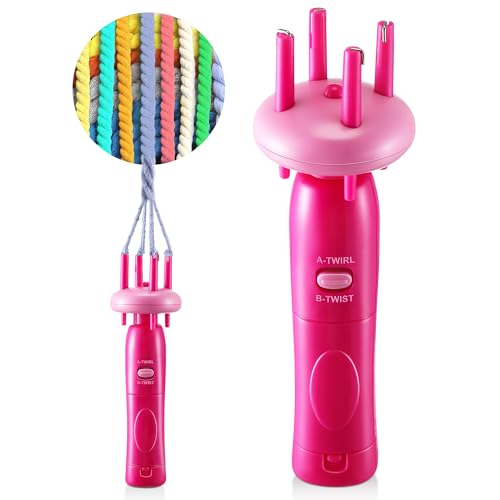
When you are finishing a chunky wool blanket or a heavy rug, standard lightweight twisters often struggle to maintain tension. The Lacis Fringe Twister is built with a more robust construction that handles thicker, multi-ply yarns with ease.
This tool is designed for makers who prioritize durability over portability. Because it is heavier, it feels substantial in the hand, which helps keep your movements steady when working on long, dense fringes.
Be aware that because of its weight and design, it may be overkill for fine lace projects. If your yarn is very thin, the Lacis might actually twist too aggressively, potentially compromising the integrity of the fiber.
Ashford Wool Twister: Best for Large Batches

If you are a production knitter or finishing a large-scale project like a floor throw, the Ashford Wool Twister is your best friend. It is designed to handle high volumes of fringe without causing hand fatigue.
This tool excels because it allows for a very consistent, repeatable process. You can set up an assembly line of tassels, and the tool’s mechanics ensure that the 50th tassel looks exactly like the first one.
However, it is a larger tool that requires a dedicated space to operate comfortably. It isn’t the kind of thing you toss into your project bag for knitting group; it is a permanent fixture for your studio workspace.
Knitter’s Pride Fringe Twister: Best Value Tool

The Knitter’s Pride option is an excellent entry point for knitters who want to upgrade from manual twisting without spending a fortune. It offers a smooth operation that performs reliably across most standard yarn weights.
This is the perfect tool for the adventurous knitter who likes to experiment with different fiber blends. It handles acrylics, wools, and cottons with equal competence, making it a versatile addition to your tool kit.
While it lacks the heavy-duty feel of professional-grade equipment, it is perfectly adequate for the occasional shawl or scarf. It is a "workhorse" tool that prioritizes function over fancy aesthetics.
Schacht Fringe Twister: Precision Engineering
Schacht is known for high-quality weaving equipment, and their fringe twister lives up to that reputation. It is a precision-engineered tool that offers a level of control that other twisters simply cannot match.
This tool is ideal for the perfectionist knitter who obsesses over the "lay" of the yarn. If you are working with expensive, hand-dyed yarns where every detail matters, the Schacht provides the refined control needed to ensure the twist is perfectly balanced.

The tradeoff is the price point, which is significantly higher than other options. You are paying for the engineering and the longevity of the materials, which makes it an investment piece rather than a casual purchase.
Hand-Cranked Fringe Twister: Best for Beginners
Before jumping into spring-loaded devices, many knitters find success with simple, hand-cranked models. These tools provide the most tactile feedback, allowing you to feel exactly how much tension you are applying to the yarn.
These are excellent for beginners because they are impossible to "over-twist" by accident. You control the speed entirely, which helps you learn how different fibers react to being coiled.
The downside is that they are slow. If you have a long row of fringe, you will spend significantly more time finishing your project compared to using an automatic device.
How to Choose the Right Twister for Your Yarn
The weight of your yarn is the most critical factor in your selection. Fine, high-twist yarns require a tool that offers subtle control, while bulky, low-twist yarns need a tool with more "bite" to hold the spiral in place.
- Fingering/Sock Yarn: Use a lightweight, spring-loaded tool for precision.
- Worsted/DK Yarn: Most standard tools will perform well here.
- Bulky/Chunky Yarn: Look for heavy-duty tools with wider hooks to accommodate the thickness.
Always consider the "memory" of the yarn. Superwash wools, for instance, tend to be bouncier and may require a tighter initial twist to ensure the fringe stays coiled after it relaxes.
Essential Tips for Perfect, Even Tassel Ends
Consistency is the secret to a professional finish. Before you begin, measure your fringe lengths exactly using a piece of cardboard as a guide so every tassel starts at the same length.
When twisting, always twist in the direction of the yarn’s original ply. If you twist against the ply, the yarn will look fuzzy and may start to unravel over time.
Finally, knot the ends of your tassels immediately after twisting. This secures the tension and prevents the fringe from "unwinding" while you are working on the next one.
Natural vs. Synthetic Fibers for Fringe Work
Natural fibers like wool, alpaca, and silk have a natural "grip" that makes them ideal for twisting. They hold a shape beautifully and are less likely to spring back once the tool is released.
Synthetic fibers, particularly slippery acrylics, can be stubborn. They often lack the friction needed to hold a tight twist, meaning you may need to twist them slightly more than you would a natural fiber.
- Wool/Alpaca: Excellent for holding twists; easy to work with.
- Cotton: Can be stiff; requires a firm, consistent hand.
- Acrylic: Slippery; might require a knot at the very end to hold the shape.
Troubleshooting Common Fringe Twisting Mistakes
The most common mistake is uneven twisting, usually caused by inconsistent pressure on the tool. If your tassels look lopsided, slow down your rhythm and count the rotations for each tassel to ensure they are identical.
If your fringe is fraying, you are likely over-twisting or using a tool with a hook that is too sharp. Check your hook for burrs or rough edges that might be snagging the yarn fibers during the process.
Lastly, if your fringe won’t stay twisted, you are likely not twisting enough. Remember that the yarn will lose about 20% of its twist once you release the tension, so always go a few rotations past what looks "perfect."
Mastering the fringe twister is a small investment that pays massive dividends in the look of your finished work. By matching your tool to your yarn weight and practicing consistent technique, you can elevate any project from handmade to heirloom quality. Take your time, enjoy the rhythmic process, and let your fringe be the final, elegant signature on your knitting.