6 Best Spinning Hooks For Plying Multiple Strands
Plying multiple strands requires precision. Discover the six best spinning hooks designed to improve tension, consistency, and efficiency in your yarn work.
Plying is the moment your hand-spun singles transform into a balanced, durable yarn ready for your next heirloom sweater. Choosing the right spinning hook can make the difference between a meditative, rhythmic plying session and a frustrating afternoon of tangles. Whether you are creating a lofty three-ply or a complex cable, the hardware on your flyer dictates how your yarn builds on the bobbin. This guide breaks down the best spinning hooks available to help you find the perfect match for your wheel and your fiber goals.
Ashford Sliding Hook Flyer: Best Overall Choice
The Ashford Sliding Hook Flyer is a staple for a reason, offering a balance of simplicity and versatility that suits almost any spinner. Its sliding mechanism allows you to distribute yarn evenly across the bobbin without stopping to manually move the yarn from hook to hook.
This is particularly useful when you are plying long yardage for a large project like a worsted-weight afghan. By keeping the tension consistent, you avoid the dreaded "mound" in the center of the bobbin that can cause your yarn to rub against the flyer arm.
The tradeoff here is that the sliding mechanism requires occasional cleaning to prevent fiber dust from gumming up the works. Keep a small brush handy to ensure the slider moves smoothly during your plying sessions.
Kromski Jumbo Flyer Hook: Best for Art Yarns
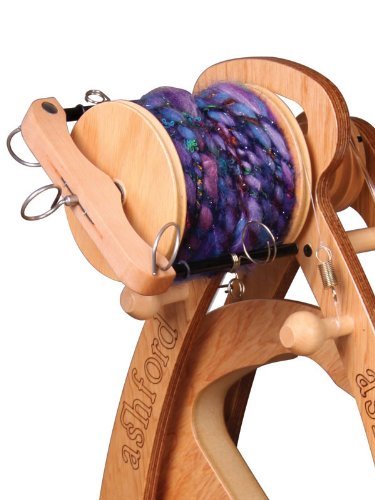

If you love spinning high-texture art yarns with inclusions like silk cocoons, locks, or beads, the Kromski Jumbo Flyer is your best friend. The oversized hooks provide the necessary clearance for bulky, uneven singles to pass through without snagging.
Plying art yarns is notoriously tricky because the varying thickness of the yarn can cause uneven take-up. The wide aperture of these hooks ensures that your yarn travels smoothly onto the bobbin, preserving the intentional "lumps and bumps" you worked so hard to create.
Be aware that these hooks are heavier than standard versions, which may affect the momentum of your wheel. You might find you need to adjust your drive ratio to compensate for the extra weight during high-speed plying.
Schacht Matchless Flyer Hook: Best Precision
Schacht is renowned for its engineering, and their flyer hooks reflect a level of precision that serious spinners appreciate. These hooks are designed to stay exactly where you put them, preventing the yarn from "creeping" during long plying sessions.
This stability is vital when you are working with fine-gauge singles, such as lace-weight mohair or silk blends. Even a slight shift in hook position can introduce unwanted twist variations, which become painfully obvious once the yarn is blocked.
Because the hooks are so secure, they can be slightly stiffer to move than sliding versions. If you prefer to adjust your yarn distribution constantly, you may find the Schacht system requires a bit more deliberate effort.
SpinOlution Sliding Hook: Best for High Volume
SpinOlution wheels are built for production spinners, and their sliding hook system is designed to handle massive bobbins without breaking a sweat. If you are plying enough yarn for a full-sized adult sweater, this is the hardware that will keep you moving.
The sliding mechanism is exceptionally robust, allowing you to fill a large bobbin from end to end without ever touching the yarn. This is a game-changer for maintaining consistent plying tension, which is the secret to a balanced, non-skewing fabric.
The downside is that the sheer size of the flyer can feel intimidating if you are accustomed to a smaller, more compact wheel. Ensure your wheel frame can handle the increased torque of a high-volume flyer before making the switch.
Majacraft Delta Flyer Hook: Best for Stability
The Majacraft Delta flyer uses a unique triangular orifice and hook system that provides incredible control over the yarn path. By guiding the yarn through a set trajectory, it minimizes the vibration that can occur when plying at high speeds.
This design is excellent for spinners who struggle with "pigtails" or uneven twist in their plying. The fixed points ensure that your yarn is always entering the bobbin at the same angle, creating a uniform wrap that is essential for balanced yarn.
While you lose the flexibility of a sliding hook, you gain a level of predictability that is hard to beat. If you find your yarn often jumps off standard hooks, the Delta system is the perfect solution.
Louet Sliding Hook Flyer: Best for Beginners

Louet’s sliding hook design is celebrated for its intuitive, user-friendly nature, making it ideal for those just starting their plying journey. The hooks are easy to move, and the flyer is balanced to provide a smooth, consistent spin right out of the box.
For a beginner, the biggest challenge is keeping the yarn tension even as the bobbin fills up. The sliding hook removes the guesswork, allowing you to focus on your treadling rhythm and the feel of the yarn in your hands.
Keep in mind that these hooks are designed for specific Louet models and may not be compatible with other brands. Always check your flyer arm diameter before investing in an upgrade.
Understanding Plying Ratios and Hook Design
The relationship between your flyer hook and your plying ratio is often overlooked but critical for yarn consistency. A hook that is positioned too close to the orifice can cause the yarn to wrap too tightly, while one too far away may lead to inconsistent twist.
- Fast Ratios: Require smooth, snag-free hooks to prevent the yarn from catching.
- Slow Ratios: Allow for more control but require consistent hook positioning to avoid uneven build-up.
- Hook Shape: Rounded hooks are generally gentler on delicate fibers like cashmere or angora.
Always aim to keep your yarn path as straight as possible from the orifice to the hook. A sharp angle at the hook can cause the yarn to "grab," leading to thin spots in your finished ply.
How to Maintain Your Spinning Wheel Hooks
Your hooks are the primary contact point between your wheel and your yarn, making them a magnet for fiber oils and debris. A simple wipe-down with a soft cloth after every plying session will prevent buildup that can snag fine fibers.
If you use a sliding hook, apply a tiny drop of light machine oil to the slider track occasionally. This ensures the mechanism moves freely, preventing the physical strain that can lead to uneven plying tension.
Inspect your hooks regularly for burrs or nicks that could damage your yarn. If you find a rough spot, a very fine-grit emery cloth can smooth it out, but proceed with caution to avoid altering the hook’s shape.

Essential Tips for Plying Multiple Strands
When plying three or more strands, the risk of tangling increases exponentially. Use a lazy kate with tension control to ensure each strand feeds at the same rate, preventing one strand from becoming "lazy" and looping around the others.
Always ply with the same amount of tension on each strand. If one strand is tighter than the others, your finished yarn will have a spiral look that can distort your knitting gauge.
Consider the "twist-to-ply" ratio based on your intended project. A tighter ply is excellent for durable socks, while a lighter ply results in a softer, airier fabric for shawls and scarves.
Troubleshooting Common Plying Hook Issues
If your yarn is constantly jumping off the hook, check your flyer speed and your tension settings. Often, the issue isn’t the hook itself, but the fact that the yarn is being pulled onto the bobbin too aggressively.
If you notice your yarn is "humping" in the middle of the bobbin, you aren’t moving your hook frequently enough. Try to move the hook every time you notice the yarn starting to build up in a single spot.
Finally, if your yarn feels "grabby" or is breaking, check for microscopic snags on the hook. Even a small piece of dried lanolin or a stray fiber can create friction that ruins a perfectly good batch of hand-spun.
Plying is an art form that rewards patience, rhythm, and the right equipment. By choosing a hook that complements your spinning style and maintaining it with care, you set yourself up for professional-quality results every time you sit at your wheel. Remember that the best tool is the one that allows you to lose yourself in the process, turning fiber into the foundation of your next favorite project. Happy spinning, and may your bobbins always be full of perfectly balanced yarn.