6 Best Cutting Mats For Bag Pattern Pieces To Use
Choosing the right cutting mat is vital for precise bag making. We review the 6 top mats that offer durability, self-healing surfaces, and accurate grids.
Moving from knitting sweaters to crafting custom bags requires a shift in how you handle your workspace. While your circular needles are for shaping fabric, your cutting mat is the foundation for structural accuracy. Investing in the right surface ensures your pattern pieces align perfectly before a single stitch is placed. Here are the top mats to help you achieve that professional finish.
Fiskars Self-Healing Rotating Mat: Best Overall
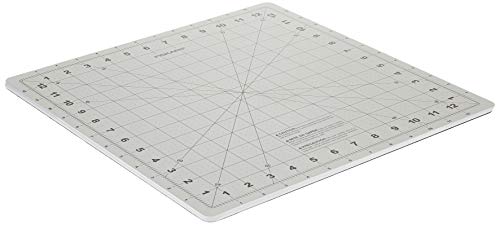

When you’re cutting complex bag gussets or curved pocket flaps, the ability to turn the work rather than your body is a game-changer. This mat allows you to rotate the piece while keeping your fabric grain perfectly aligned.
For anyone who has struggled to reach across a large pattern piece, this design removes the strain. It’s particularly useful when you’re working with heavy-duty canvas or waxed cotton that doesn’t like to be bunched up.
The rotating base is smooth, but it does mean the mat is slightly thicker than a standard board. Just remember to keep your workspace clear of stray yarn scraps or notions, as debris can interfere with the rotation mechanism.
Olfa Double-Sided Rotary Mat: Most Durable Pick

Olfa is the gold standard for a reason, offering a surface that stands up to the constant pressure of a sharp rotary blade. If you are cutting through multiple layers of interfacing or stabilizer, you need a surface that won’t develop deep, distracting grooves.
The double-sided feature is brilliant for extending the life of your mat. When one side starts to show signs of wear, simply flip it over to get a fresh, smooth surface for your next project.
Be mindful that these mats are sensitive to extreme heat. Never leave them in a sun-drenched craft room or near a space heater, as they can warp, which will ruin your ability to get a clean, straight edge on your fabric.
Dahle Vantage Self-Healing Mat: Best Heavy Duty
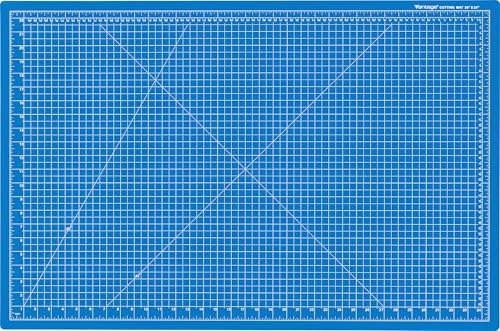
If your bag-making involves heavy-duty materials like thick leather or multiple layers of stiffening buckram, the Dahle Vantage is your best ally. It features a five-layer construction that is specifically designed to resist deep cuts.
While it is heavier than other options, that weight provides excellent stability. It won’t slide around your table while you’re applying pressure to cut through thick fabric, which is a common frustration with lighter mats.
The surface is slightly textured, which provides a bit of "grip" for your fabric. This is helpful for preventing slippery linings from shifting while you are trying to trace your pattern pieces.
Arteza Self-Healing Cutting Mat: Best Value Buy

You don’t always need to break the bank to get a reliable surface for your pattern cutting. The Arteza mat offers a high-quality self-healing surface that performs exceptionally well for beginners or those working on smaller bag projects.
The grid lines are crisp and easy to read, which is vital when you are measuring seam allowances. If you are used to reading knitting patterns, you will appreciate the clear, high-contrast markings that eliminate guesswork.
Keep in mind that while it is durable, it may show wear faster than the premium, heavy-duty options if you use a very sharp blade with heavy pressure. It is a fantastic entry-level choice that gets the job done without unnecessary bells and whistles.
Alvin Professional Cutting Mat: Best Large Scale
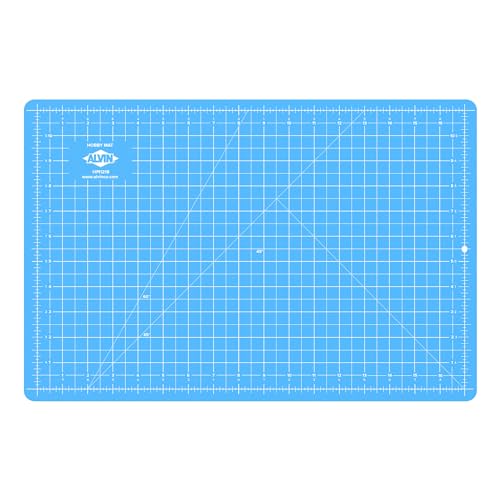
Bag making often requires cutting long, continuous strips for straps or large panels for totes. The Alvin Professional mat offers a generous size that accommodates these larger pieces without needing to reposition your fabric halfway through.
The consistency of the surface is its strongest asset. You get the same level of self-healing performance from the center all the way to the edges, ensuring your long cuts remain perfectly straight.
Because of its size, you will need a dedicated space to keep it flat. Rolling it up for storage is possible, but it’s best to keep it lying flat to prevent the edges from curling over time.
Westcott Self-Healing Mat: Best for Precision

Precision is the difference between a bag that looks handmade and one that looks professional. The Westcott mat features highly accurate grid lines that are perfect for those who like to measure twice and cut once.
The material feels slightly softer than other mats, which allows your blade to sink in just enough to prevent slipping. This is ideal for intricate pattern pieces where you need to navigate tight corners or small notches.
While it is excellent for precision, it may not be the best choice for extremely heavy-duty industrial cutting. Treat it as a precision tool, much like your favorite set of high-quality stainless steel knitting needles.
How to Choose the Right Mat Size for Bag Making
When selecting a mat, always measure your workspace first. A mat that is too large for your table will bow at the edges, which makes accurate cutting impossible.
For bag making, I recommend a minimum size of 24×36 inches. This allows you to lay out your largest pattern pieces, such as bag bodies or bottom panels, without having to fold your fabric.
Remember that you can always rotate your mat, but you cannot easily expand it. If you have the table space, go as large as your room allows to keep your workflow efficient.
Why Self-Healing Technology Matters for Accuracy
Self-healing mats aren’t actually "healing" in the biological sense; they are made of a dense, multi-layered material that closes the gap after a blade passes through. This prevents the blade from catching on previous cut lines.
If you use a mat that has deep, permanent grooves, your blade will naturally fall into those old tracks. This leads to "wobbly" cuts that ruin your fabric and make sewing your seams together a nightmare.
Think of it like working with a set of wooden needles that have become splintered; the surface quality directly affects the output of your work. A smooth, self-healing surface ensures every cut is as clean as the first.
Essential Rotary Cutter Maintenance for Crafters
Your rotary cutter is only as good as its blade. A dull blade requires more pressure, which is both dangerous and hard on your cutting mat.
Change your blade as soon as you notice you have to "saw" through the fabric rather than slicing it. Keep a small container for old blades, as they remain sharp enough to cut fingers long after they are too dull for fabric.
Regularly wipe down your mat with a damp cloth to remove lint and fabric dust. A clean mat lasts longer and keeps your fabric from picking up unwanted debris during the cutting process.
Tips for Safely Cutting Heavyweight Bag Fabrics
When cutting thick materials, always use a weighted ruler to keep the fabric from shifting. Never try to cut through more layers than your blade and mat can comfortably handle.
If the fabric is too thick, make two light passes instead of one heavy, forced pass. This preserves your mat surface and keeps your blade from skipping, which is a common cause of accidents.
Always keep your non-cutting hand well away from the path of the blade. It is easy to get distracted when focusing on the grid lines, so maintain a steady, conscious rhythm throughout your cutting session.
Choosing the right cutting mat is just as critical as selecting the perfect yarn for a complex cable pattern. By prioritizing a stable, self-healing surface, you set yourself up for structural success in every bag you create. Take your time, keep your blades sharp, and enjoy the process of building something beautiful from scratch.