
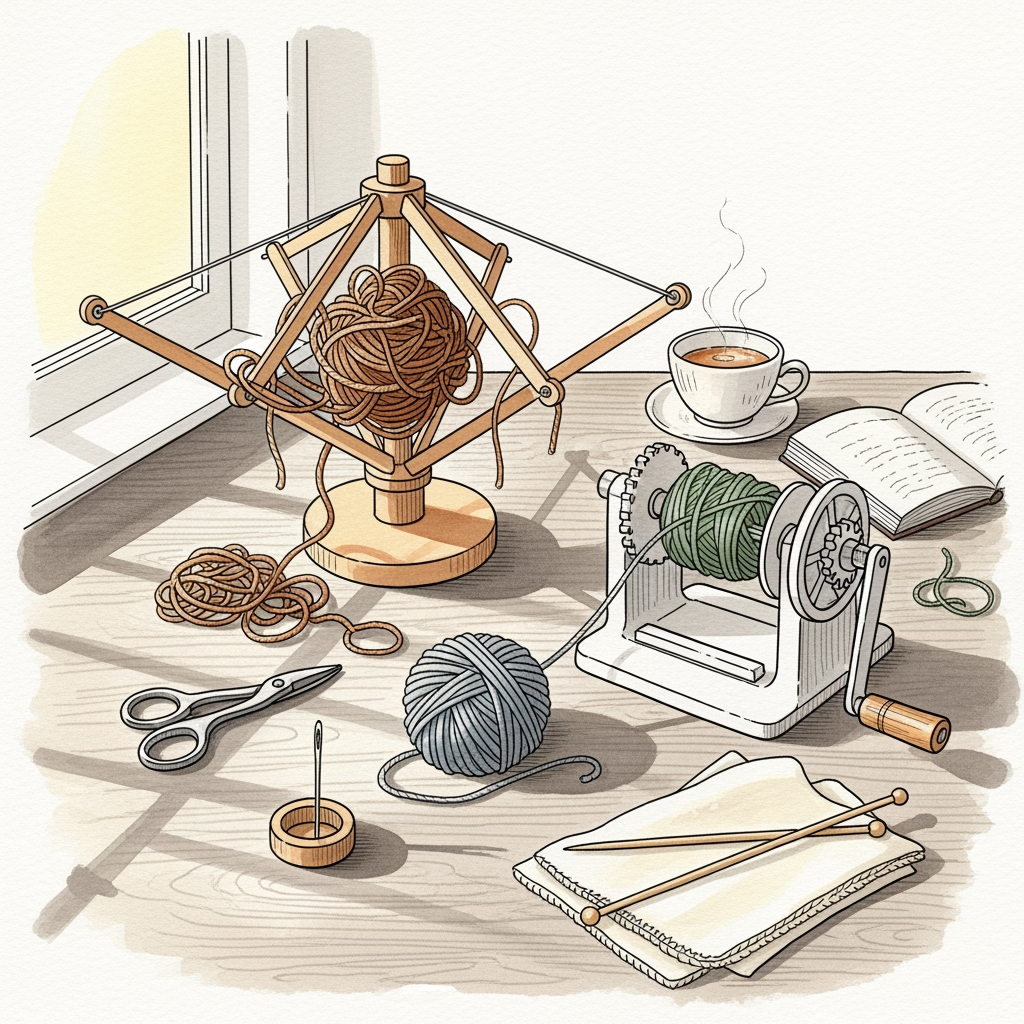
6 Best Swift Umbrellas For Lace Weight Yarn
Discover the 6 best swift umbrellas for lace weight yarn. Learn how these essential tools prevent tangles and ensure smooth winding for your delicate fibers.
Working with lace weight yarn is a delicate dance that begins long before your needles touch the fiber. A high-quality swift is the essential partner that prevents your ethereal hanks from becoming a tangled, heartbreaking mess. Choosing the right tool ensures your yarn maintains its structural integrity and loft throughout the winding process. These six options represent the gold standard for protecting your most precious, fine-gauge materials.
Stanwood Needlecraft Tabletop Swift: Best Overall
The Stanwood Tabletop Swift is a staple in many serious fiber studios for a reason: it is remarkably consistent. Its heavy-duty construction provides a stable base that doesn’t wobble, even when you are winding a large, heavy skein of lace weight silk or mohair blend.


The umbrella-style mechanism opens smoothly, allowing for precise tension control. Because lace weight yarn is prone to snapping if caught on a snag, the smooth, polished finish of the wooden slats is a critical feature. You won’t find any rough edges here to catch on delicate fibers.
If you find yourself winding yarn several times a week, this is the investment piece you want. It balances weight, ease of use, and durability better than almost anything else on the market.
Amish Style Wooden Yarn Swift: Best Budget Pick
Amish-style swifts are unique because they don’t use the traditional umbrella mechanism. Instead, they consist of two interlocking wooden arms that rotate around a central pivot point.

This design is incredibly simple, which makes it virtually foolproof. There are no gears or screws to lose or jam, and it breaks down into a completely flat profile for storage. It is the perfect choice for the knitter who has limited space or travels to knitting retreats.
However, keep in mind that these swifts require a bit more manual adjustment to fit different skein sizes. If you are winding a very large, loose hank, you will need to manually space the pegs to ensure the yarn stays taut enough to wind without sagging.
Knit Picks Yarn Swift: Best Compact Design
For those who view their knitting space as a sanctuary, the Knit Picks umbrella swift is a masterclass in efficiency. It is lightweight and folds down into a remarkably slim profile, making it easy to tuck into a project bag or a small drawer.
Despite its smaller footprint, it handles lace weight yarn with surprising grace. It spins freely, which is vital when working with fragile fibers that could break under the sudden resistance of a sticky or stiff swift.
One minor trade-off is that it is lighter than professional-grade models, so it may require a steady hand or a clamp to keep it anchored on slick surfaces. It is an excellent choice for the hobbyist who winds yarn occasionally but doesn’t want a permanent fixture on their table.
Lacis Wooden Umbrella Swift: Best for Large Skeins
If you frequently purchase hand-dyed lace weight yarn in massive, oversized hanks, the Lacis Wooden Umbrella Swift is your best friend. It features a wider circumference capability than most standard swifts, preventing the yarn from being stretched too tightly.
When you stretch a lace weight yarn too far, you risk compromising the twist of the fiber. The Lacis model allows you to maintain a gentle, natural tension, which is crucial for preserving the bounce and drape of fibers like alpaca or cashmere.
The construction is robust, designed to hold up under the weight of larger quantities of fiber. While it takes up more desk space, the peace of mind it provides when handling a 100-gram skein of fine cobweb yarn is well worth the footprint.
Ashford Tabletop Swift: Best Professional Grade
Ashford is a name synonymous with quality in the weaving and spinning world, and their tabletop swift lives up to that reputation. It is engineered with precision, offering a silky-smooth rotation that is almost entirely silent.
This swift is designed for the knitter who demands perfection. If you are preparing yarn for a complex project, like a multi-month lace shawl, you want a tool that won’t introduce any unnecessary stress to the yarn. The Ashford provides that level of reliability.
Because it is built from high-quality wood, it is an heirloom piece. With proper care, this swift will likely outlive your current collection of needles and hooks.
Nancy’s Knit Knacks Swift: Best Durable Choice
Nancy’s Knit Knacks is known for over-engineering their tools, and their swift is no exception. It is built to withstand the rigors of heavy, daily use, making it an ideal choice for shop owners or prolific knitters who wind dozens of skeins a month.
The materials used are top-tier, ensuring that the mechanism remains fluid over years of operation. If you have ever had a plastic gear snap on you, you will appreciate the sturdy, deliberate construction of this model.
While it sits at a higher price point, the durability is unmatched. It is a "buy it once" tool that removes the frustration of gear failure during the middle of a winding session.
Why Lace Weight Yarn Requires a Gentle Swift
Lace weight yarn is defined by its low yardage-to-weight ratio and its delicate structure. Because the strands are so thin, they are highly susceptible to friction and tension damage.
A swift that spins unevenly or catches on the skein can cause the yarn to stretch or, worse, snap. When a strand of lace weight yarn snaps, you often lose the integrity of the entire ply, leading to thin spots in your finished fabric.
- Avoid sudden jerks: A smooth-spinning swift prevents the "tug-of-war" that causes breakage.
- Maintain tension: Too much tension can permanently deform the yarn, affecting your gauge later.
- Protect the twist: Excessive pulling can untwist your yarn, changing how it behaves on the needles.
Essential Tips for Winding Delicate Lace Fibers
Always take your time when setting up your swift. Ensure the skein is centered and that the pegs are adjusted so the yarn is taut but not stretched.
When winding into a ball or cake, use the lowest speed possible. Even if you are eager to get to the knitting, rushing the winding process is the primary cause of tangled messes and "yarn barf."
- Check for knots: Inspect the skein for manufacturer knots before you start winding.
- Use a yarn winder: A ball winder is a great companion to a swift, but keep an eye on the feed to ensure it doesn’t tangle.
- Stop frequently: If you feel the yarn catching, stop immediately and clear the obstruction rather than pulling through it.
How to Properly Maintain Your Wooden Yarn Swift
Wooden tools are living objects that respond to their environment. To keep your swift in top condition, store it in a climate-controlled room away from direct sunlight or extreme humidity.
If your swift begins to feel stiff, you can lightly buff the joints with a dry, soft cloth. Avoid using heavy oils or waxes unless they are specifically recommended for wooden knitting tools, as these can transfer to your yarn and potentially stain it.
Check the screws or tension bolts periodically to ensure they haven’t loosened over time. A quick tighten with a screwdriver is often all it takes to restore your swift to its original, smooth-spinning self.
Preventing Tangled Skeins During the Winding Process
The secret to a tangle-free experience is preparation. Before you place the skein on the swift, ensure the ties are loose enough to allow the yarn to expand as it spins.
Never leave a partially wound skein on the swift unattended. If you have to step away, secure the yarn so it doesn’t slip off the pegs and create a bird’s nest that will take hours to untangle.
- Cut the ties carefully: Use blunt-tipped scissors to avoid nicking the yarn.
- Shake it out: Give the skein a gentle shake before placing it on the swift to settle the strands.
- Watch the feed: Always keep your hand near the yarn as it travels from the swift to the winder to guide it gently.
Investing in a quality swift is one of the most practical decisions you can make to protect your fiber stash. By choosing a tool that offers smooth rotation and gentle tension, you ensure that your lace projects begin with perfectly wound yarn. Remember that the best swift is the one that fits your space and your specific winding habits. With the right equipment, you can focus entirely on the joy of creating beautiful, intricate lace.
