6 Best Soda Ash Supplies For Fiber Reactive Dyeing
Discover the top 6 soda ash supplies for fiber reactive dyeing. We compare quality, purity, and value to help you achieve vibrant, long-lasting color results.
Achieving vibrant, wash-fast colors on your hand-dyed yarns requires more than just high-quality pigments; it demands the right chemical environment. Soda ash acts as the essential catalyst that shifts the pH of your dye bath, allowing fiber-reactive dyes to form a permanent covalent bond with cellulose fibers. Without this crucial step, your hard-earned colorways will simply rinse away in the first wash. Understanding which soda ash supply fits your studio workflow is the difference between a masterpiece and a muddy, faded disappointment.


Dharma Trading Co. Soda Ash Fixer: Best Overall
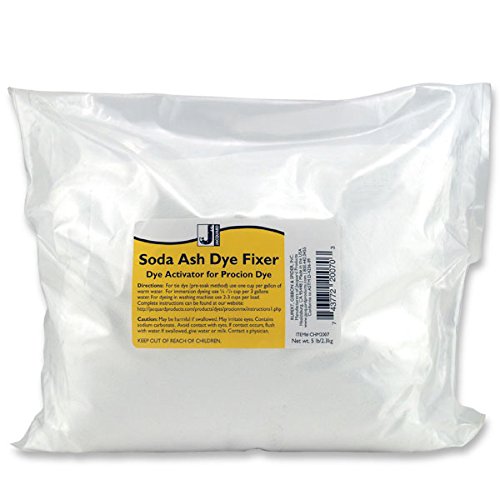
Dharma Trading Co. has long been the gold standard for fiber artists who take their dyeing seriously. Their soda ash is consistently pure, finely milled, and dissolves without leaving gritty residue that could potentially spot your delicate silk or cotton hanks.
When you are prepping a large batch of cotton yarn for a summer lace project, consistency is your best friend. Dharma’s product behaves predictably every single time, meaning you don’t have to worry about batch-to-batch variations affecting your color depth.
If you are scaling up from small kitchen-sink experiments to dyeing multiple pounds of fiber, this is the reliable workhorse you want in your pantry. It is the most cost-effective and dependable choice for those who have moved past the "trial and error" phase of their dyeing journey.
Jacquard Products Soda Ash: The Pro Standard
Jacquard is a name you likely recognize if you have ever browsed the aisles of a professional art supply store. Their soda ash is packaged with the precision that professional textile designers demand, making it an excellent choice for those who need absolute reliability.
The fine powder consistency is particularly helpful when you are working with high-twist yarns that might trap undissolved particles. If you’ve ever found a tiny, stubborn spot of unreacted dye on your finished garment, you know why a high-purity, fast-dissolving powder is worth the investment.
While it carries a slight premium in price compared to bulk generic options, you are paying for the peace of mind that comes with a trusted brand. It is an ideal choice for high-stakes projects, like dyeing the yarn for a complex, multi-colored heirloom sweater where you cannot afford a single color bleed.
PRO Chemical & Dye Soda Ash: Reliable Purity
PRO Chemical & Dye is a staple for the serious fiber enthusiast who wants to understand the chemistry behind their craft. Their soda ash is exceptionally clean, which is vital when you are working with high-absorbency fibers like bamboo or rayon.
Because these fibers are so sensitive to impurities, using a lower-grade soda ash can sometimes lead to uneven "striking" of the dye. PRO’s product ensures that your pH levels remain stable throughout the entire soak, resulting in deep, saturated, and uniform colors.
Think of this like choosing the right needle material for a specific yarn; you wouldn’t use slick metal needles for slippery mohair, and you shouldn’t use questionable chemicals on your premium fibers. PRO Chemical & Dye provides the technical purity required for professional-grade results.
Grateful Dyes Soda Ash: Bulk Value Choice
If you are the type of knitter who spends their weekends dyeing enough yarn to stock a small shop, you need to buy in bulk. Grateful Dyes offers a fantastic value proposition for the high-volume dyer who doesn’t want to pay for fancy retail packaging.
Buying in larger quantities isn’t just about saving money; it’s about having the supplies on hand when inspiration strikes. There is nothing worse than being mid-process, with your yarn soaking, only to realize you’ve run out of fixer.
This product is perfect for guilds or knitting circles looking to pool their resources for a group dyeing event. It performs exactly as expected, providing the necessary alkalinity without any unnecessary additives or hidden costs.
Rit ColorStay Dye Fixative: Beginner Friendly
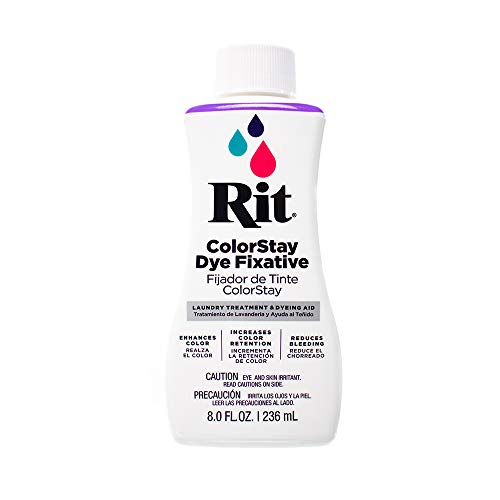
It is important to clarify that Rit ColorStay is technically a different chemical compound than traditional soda ash, but it serves a similar purpose for the casual crafter. It is widely available at local big-box stores, making it the most accessible option for someone just starting out.
If you are simply looking to dip-dye a pair of cotton socks or experiment with a small skein of yarn, this is a low-barrier entry point. It is formulated to be user-friendly, removing the need to manage precise dry-powder measurements.
However, keep in mind that this is not a direct substitute for soda ash when using professional fiber-reactive dyes. It is best suited for all-purpose dyes and quick, low-stress projects where professional-level colorfastness isn’t the primary goal.
Tulip Soda Ash Activator: Best for Small Kits

Tulip is the brand that likely introduced many of us to the joy of tie-dyeing in our youth. Their soda ash activator is sold in convenient, pre-portioned packets, which eliminates the guesswork for someone who hasn’t yet invested in a kitchen scale.
This is the perfect choice for a one-off project, like dyeing a single skein of cotton yarn to add a pop of color to a neutral-toned shawl. You don’t have to worry about storage issues or moisture getting into a large, open container.
While it isn’t the most economical choice for long-term hobbyists, its convenience factor is unmatched. It’s a great way to "test the waters" before committing to a larger supply of professional-grade chemicals.
Why Soda Ash Is Essential for Fiber Reactive Dye
Fiber-reactive dyes are essentially "lazy" until you wake them up with an alkaline environment. Without soda ash, the dye molecules will sit on the surface of the fiber, waiting for a chemical bond that will never happen.
When you add soda ash to your water, it raises the pH, which forces the cellulose fibers (like cotton, linen, or bamboo) to open up their molecular structure. This allows the dye to move from the bath into the fiber, forming a permanent covalent bond that is resistant to washing, light, and friction.
If you skip this step, your beautiful, saturated yarn will turn into a pale, washed-out shadow of itself as soon as it hits the rinse bucket. Think of soda ash as the "glue" that keeps your color vibrant for the lifetime of the garment.
How to Calculate Proper Soda Ash Concentrations
Precision is the hallmark of a skilled dyer, just as it is for a knitter who swatches to ensure their gauge matches the pattern. Most fiber-reactive dye recipes call for a standard concentration of about 1/2 cup of soda ash per gallon of water.
However, always check the specific instructions provided by your dye manufacturer, as some pigments are more "thirsty" than others. If you are working with a particularly dense yarn, you might need a slightly longer soak time to ensure the soda ash penetrates to the core of the twist.
Always dissolve your powder in a small amount of warm water before adding it to your main dye bath. This prevents "hot spots" where a concentrated clump of soda ash could cause uneven color penetration or, in extreme cases, minor fiber damage.
Safety Protocols for Handling Soda Ash Powders
Soda ash is a base, not an acid, but it is still a chemical that demands respect. It can be quite drying to the skin, and the fine dust can be an irritant if inhaled while you are measuring it out.
Always wear a dust mask or respirator when pouring your soda ash, especially if you are working in a small, poorly ventilated space. A pair of rubber gloves is also non-negotiable; your hands will thank you after a long day of handling wet, dye-soaked fiber.

Store your soda ash in a cool, dry, airtight container, away from the reach of curious children or pets. Treat it with the same care you would your best pair of sharp circular needles—it’s a powerful tool, but it needs to be managed safely.
Troubleshooting Common Dye Fixation Issues
If you find that your colors are bleeding excessively during the rinse, your soda ash concentration might have been too low. This is a common issue when dyers eyeball their measurements rather than using a scale or a standardized measuring cup.
Another culprit is water temperature; soda ash works best in warm water. If you are dyeing in a cold basement during the winter, the chemical reaction may be sluggish, leading to poor fixation and muddy, muted colors.
Finally, ensure your yarn is thoroughly pre-soaked. If there are air pockets trapped inside your skein, the soda ash cannot reach those fibers, resulting in "white spots" or uneven patches. Consistency in your process is the only way to ensure consistency in your results.
Mastering the use of soda ash is a rite of passage for any fiber artist looking to take control of their color palette. By selecting the right product for your specific volume and project needs, you ensure that your hand-dyed yarns remain as vibrant as the day they left the dye bath. Remember that the best results come from a balance of chemical precision and creative experimentation. Happy dyeing, and may your colors always stay fast and true.