7 Best Art Mats For Workspace Protection To Consider
Protect your desk from spills and scratches with these 7 best art mats for workspace protection. Discover our top-rated picks and upgrade your studio setup today.
An effective workspace setup does more than keep a table pristine; it creates a dedicated sanctuary for fiber arts projects. Whether measuring lace weight yarn for a delicate shawl or precision-cutting fabric for a quilt lining, the right surface prevents damage to both tools and tabletops. Investing in a high-quality mat ensures that sharp blades remain functional longer and that delicate work stays organized. The following selection focuses on durability, utility, and the specific needs of makers who handle everything from heavy wools to slippery silks.
OLFA Rotary Cutter Mat: The Gold Standard


The OLFA mat remains the industry benchmark for a reason. Its unique self-healing property allows blade grooves to close back up, ensuring that rotary cutters glide smoothly without hitting resistance or catching on stray fiber bits.
For those who frequently cut fabric for project bags or backing, this mat provides a consistent, reliable surface. It resists warping under the varied temperatures of a craft room, which is crucial when steam-blocking nearby finished pieces.
While the surface is firm, it possesses enough give to protect the razor-sharp edges of rotary blades. Bottom line: This is the investment piece for makers who prioritize tool longevity.
Fiskars Self-Healing Mat: Best for All-Around Use

Fiskars mats are ubiquitous for a reason, offering a balance between accessibility and performance. They feature easy-to-read grid lines that help maintain straight lines when squaring up knitted swatches or cutting fabric for patchwork.
The dual-sided nature of these mats often features a light side for dark fabrics and a dark side for light materials. This contrast is highly beneficial when gauging the drape of thin, single-ply yarns against a backing fabric.
While not as dense as professional-grade industrial mats, they handle general cutting tasks with ease. Bottom line: An excellent entry-level choice that performs consistently for occasional projects.
Cricut Self-Healing Mat: For Precision Fabric Cuts

Designed specifically for those who integrate digital cutting machines with traditional hand-sewing, these mats are exceptionally resilient. They are engineered to withstand the specific pressure and repetitive motions of mechanical blades.
The thickness of the mat provides a rigid base, which is ideal if the workspace is slightly uneven. If a project requires cutting intricate appliqué or precise bias tape, the surface stability here is hard to beat.
Because these mats are often used in high-precision settings, the markings are incredibly accurate. Bottom line: Select this mat if precision cutting is a primary component of the creative process.
Dahle Vantage Mat: The Pro’s Choice for Durability
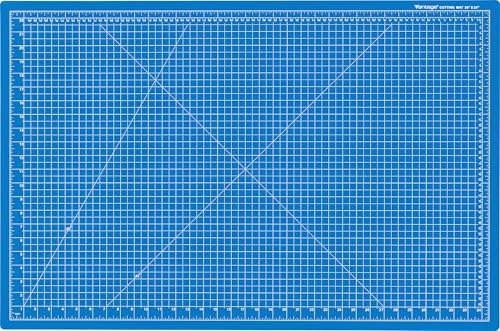
The Dahle Vantage mat is constructed with a multi-layered design that emphasizes structural integrity. It is significantly heavier than standard alternatives, which prevents it from shifting during active cutting sessions.
Its self-healing capabilities are top-tier, effectively sealing cuts even after extensive use with heavy-duty rotary cutters. The matte finish also reduces glare, making it easier to read markings under bright desk lamps during long, late-night knitting marathons.
This durability comes at the cost of being less portable than thinner options. Bottom line: Ideal for a permanent, dedicated studio space where heavy-duty work happens daily.
US Art Supply Mat: Best Budget-Friendly Option

For makers who are just beginning to organize their workspace, this mat offers essential protection without a premium price tag. It covers the basics well: a grid, a non-slip backing, and a surface that protects table finishes.
While the healing properties are not as advanced as higher-priced counterparts, it serves perfectly well for occasional cutting needs. It is lightweight, making it easy to tuck away behind a bookshelf when the table needs to be reclaimed for dinner.
Keep in mind that it may show wear faster under heavy, constant use. Bottom line: The most practical choice for beginners on a budget.
Litemogo Silicone Mat: Best for Wet & Messy Crafts
Knitting involves a fair amount of moisture, particularly during the blocking process where wet garments are pinned and left to dry. Unlike hard cutting mats, silicone mats are heat-resistant and completely waterproof.
These mats are incredibly easy to clean; spilled dye, blocking solution, or glue wipes right off. They are also flexible and grippy, which prevents small accessories like circular needles or stitch markers from sliding off the desk.
They do not “heal” from blade cuts, so they should not be used as a cutting surface. Bottom line: Use this as a dedicated surface for blocking, dyeing, or messy finishing work.
Gorilla Grip Desk Pad: Best Large Surface Protector
Sometimes the goal is simply to cover a large work area to prevent scratches from metal needles or heavy yarn swifts. The Gorilla Grip desk pad offers a vast, non-slip footprint that anchors the entire workstation.
It is particularly effective at protecting wooden furniture from the occasional drop of a metal DPN (Double Pointed Needle) or the weight of a heavy project bag. While not meant for cutting, it creates a clean, uniform environment.
The surface is usually textured to be mouse-friendly, which also helps keep notions from rolling away. Bottom line: The best solution for protecting an entire desk area from general wear and tear.
How to Choose the Right Size Mat for Your Space
Selecting the right size is entirely dependent on the largest project typically undertaken. If the focus is on small items like mittens or hats, a 12×18 inch mat is usually sufficient for cutting lining or measuring gauge.
For those who quilt or assemble larger garments, a 24×36 inch mat is standard. Always measure the available workspace surface area first, leaving at least a few inches on the sides to prevent the mat from hanging over the edge.
Remember that a mat that is too large for the table can become a liability, as the edges may curl if not fully supported. Bottom line: Measure twice, and err on the side of a mat that fits comfortably within the desk perimeter.
Self-Healing vs. Silicone: Which Mat Do You Need?
The choice between a self-healing mat and a silicone mat depends on the primary activity performed at the station. Self-healing mats are made of multiple layers of vinyl and are strictly for blade work.
Silicone mats are inert, heat-resistant, and essentially indestructible when it comes to liquids. If the workspace is used primarily for pinning wet projects or applying finishes, silicone is the superior choice.
For a professional-grade setup, many makers utilize both: a large self-healing mat for cutting and a secondary silicone mat for blocking and notions organization. Bottom line: Use self-healing for cutting blades and silicone for liquid and heat-based tasks.
How to Clean and Store Your Mat for a Longer Life
Mats should be kept away from direct sunlight, as UV rays can make the material brittle and cause the self-healing properties to fail. Storing a mat flat is always preferred; if it must be leaned against a wall, ensure it is supported so it does not develop a permanent curve.
To clean, use mild soap and water with a soft cloth to remove dust and fiber debris that can clog the surface. Avoid using harsh chemicals or alcohol-based cleaners, as these can dry out the material and ruin the healing mechanism.
If the mat starts to look dull, a quick wipe with a damp cloth often restores its appearance and grip. Bottom line: Keep the mat flat, out of the sun, and clean of debris to maximize its utility for years of making.
Proper workspace protection is the hallmark of a seasoned maker. By choosing the right mat based on the specific requirements of knitting, blocking, and construction, you preserve both the quality of your tools and the longevity of your furniture. Choose wisely, keep the surface clean, and enjoy a workspace that supports, rather than hinders, the creative process.