7 Best Steaming Irons For Blocking Wool Worth Owning
Achieve professional finishes with our top 7 steaming irons for blocking wool. Discover reliable tools that offer precise heat and steam for perfect results.
Blocking is the final, transformative step that turns a collection of loops into a professional-looking garment. While many knitters focus on their needles and yarn, the quality of your steam iron is the true secret to achieving crisp lace points and perfectly sized sweaters. Choosing the right tool ensures you can manipulate natural fibers without damaging their delicate structure. These seven irons are selected specifically for the unique demands of wool and fiber arts.
Rowenta Focus Excel: Best Overall for Wool Blocking


The Rowenta Focus Excel is a workhorse that strikes the perfect balance between heat stability and steam volume. When you are blocking a large wool sweater, you need an iron that maintains a consistent temperature without fluctuating, which could otherwise lead to uneven fiber relaxation.
Its precision tip is a standout feature for knitters, allowing you to get into the tight corners of a shawl or the complex cabling of a sweater yoke. The stainless steel soleplate glides smoothly over wool without catching on delicate purl bumps or textured stitches.
If you are working with high-twist yarns or intricate lace, the steam distribution on this model is exceptionally even. It prevents the "wet spots" that can occur with lesser irons, ensuring your blocking board stays damp but not overly saturated.
Reliable Velocity 230IR: Best Steam Performance

If you frequently block large-scale projects like blankets or heavy wool coats, the Reliable Velocity 230IR is a game-changer. It utilizes a unique technology that creates steam inside the iron rather than through a drip system, which eliminates the risk of water spotting on your finished fabric.
This constant, high-pressure steam is essential when you need to "kill" or aggressively shape stubborn wool fibers. It allows you to hover the iron just above the fabric, letting the steam do the heavy lifting without the soleplate ever touching your knitting.
The trade-off here is the size; it is a bulkier unit that requires a dedicated space in your craft room. However, for the serious knitter who demands professional-grade steam output, the performance is unmatched.
Oliso M3Pro Project Iron: Best for Small Spaces

The Oliso M3Pro is a favorite among knitters who attend retreats or have limited space in their home studios. Its compact size doesn’t mean it lacks power, as it produces a surprising amount of steam for such a small footprint.
The defining feature is the "iTouch" technology, which lifts the iron automatically when you let go of the handle. This prevents the iron from scorching your knitting if you get distracted by a pattern chart or a dropped stitch.
It is ideal for blocking smaller items like socks, mittens, or swatches. While it might struggle with a massive, heavy-weight wool afghan, it is the perfect companion for the standard garment knitter.
Panasonic NI-WL600 Cordless: Best for Maneuver
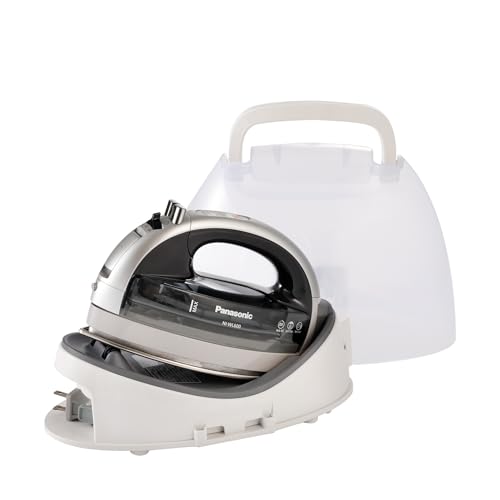
Working on a large blocking mat often means fighting with a tangled power cord that threatens to snag your pins or pull your work out of alignment. The Panasonic NI-WL600 removes the cord entirely, offering total freedom of movement as you navigate around your pins.
The double-headed soleplate allows you to move the iron in any direction without catching on the fabric. This is particularly helpful when you are blocking complex shapes like circular shawls where you need to change angles frequently.
Because it is battery-charged on a base, you will need to return it to the station every few minutes to reheat. It requires a bit of patience, but the ease of movement makes it worth the trade-off for intricate blocking layouts.
Black+Decker D3030: Best Budget Blocking Iron
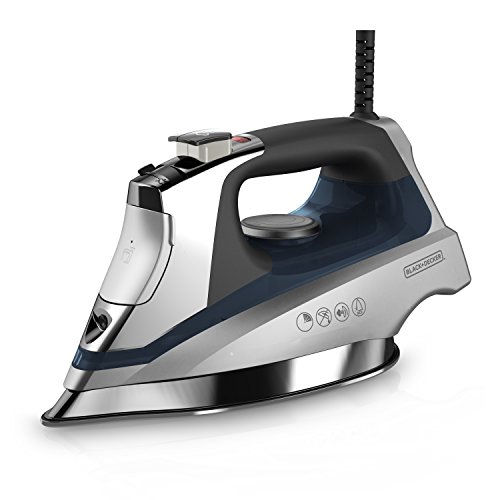
You don’t need to spend a fortune to get a reliable tool for your knitting room. The Black+Decker D3030 provides consistent, reliable steam at a price point that leaves more room in your budget for high-quality wool yarns.
It features a simple, intuitive interface that makes it easy to adjust heat settings for different fibers. Whether you are blocking a delicate merino-silk blend or a sturdy Highland wool, this iron handles the job with minimal fuss.
It is a straightforward, no-nonsense tool that does exactly what a knitter needs. While it may lack the advanced features of professional-grade steamers, it is a sturdy and dependable choice for the everyday maker.
Laurastar Lift Plus: Best Professional Steamer

The Laurastar Lift Plus is an investment piece designed for the knitter who treats their craft with the same reverence as a tailor. This is a portable steam station that provides a "dry" steam, which is the gold standard for protecting natural fibers from moisture damage.
It is exceptionally lightweight and easy to carry, yet it delivers a level of steam pressure that can reshape even the most stubborn, felted, or heavy wool garments. It is the closest you will get to a professional dry-cleaning finish in your own home.
While the price is significant, the longevity and quality of the steam output are superior. If you knit expensive, hand-dyed yarns that you want to last for decades, this is the tool that will help you maintain them.
Singer SteamLogic: Best for Delicate Knitwear
The Singer SteamLogic is designed with a focus on precision and gentle steam delivery. This makes it an excellent choice for knitters who work primarily with fine-gauge lace, mohair, or delicate alpaca blends that can be easily ruined by too much heat or pressure.
The digital temperature control allows for micro-adjustments, ensuring you stay well within the safe zone for your specific yarn type. It gives you the confidence to block delicate items without the fear of "cooking" the fibers.
It is reliable and easy to clean, which is a major plus for those who use blocking sprays or starch-based solutions. If your knitting style leans toward the airy and the fragile, this iron is a very safe and effective bet.
Understanding Steam Settings for Natural Fibers
- Wool: Requires medium-high heat and a consistent flow of steam to relax the fibers.
- Alpaca/Mohair: Needs low heat and a light touch; avoid pressing the iron directly onto the fabric to prevent flattening the halo.
- Silk Blends: Use the lowest steam setting and ensure your iron is clean to prevent water spots.
- Superwash Wool: Highly reactive to heat; be careful not to over-stretch, as steam can cause these fibers to grow significantly.
Always start with a test swatch before steaming your full garment. The way a fiber reacts to steam can change the drape and size of your work permanently, so precision is key.
Essential Safety Tips for Blocking Wool Projects
Never leave a hot iron unattended, especially when working with blocking pins. It is incredibly easy to catch a cord or a sleeve on a pin, leading to accidents that can damage both your iron and your hard-earned knitting.
Always use a dedicated pressing cloth—such as a piece of clean cotton or muslin—between the iron and your wool. This acts as a protective barrier, preventing the soleplate from leaving shiny marks or singeing the yarn.
Ensure your workspace is well-ventilated. Steaming wool releases natural oils and lanolin into the air, which can be intense in a small, enclosed room.
How to Properly Use Steam to Shape Your Knits
The most important rule of steaming is to use the "hover" method whenever possible. By holding the iron one to two inches above the fabric, you allow the steam to penetrate the fibers and relax them without the physical weight of the iron crushing your stitch definition.
If you must touch the iron to the fabric, do so with a light, lifting motion rather than dragging it across the surface. Dragging can distort your stitch gauge and cause the fabric to stretch unevenly, which is especially problematic for colorwork or cables.
After steaming, allow the garment to rest completely on the blocking mat until it is cool and dry to the touch. Moving a piece while it is still warm and damp will undo all the shaping you just achieved.
Investing in a quality steam iron is an investment in the longevity and beauty of your hand-knit garments. By understanding how your specific fibers react to moisture and heat, you can elevate your finished projects from "homemade" to "heirloom." Choose the tool that fits your space and your knitting habits, and remember that patience is just as important as the equipment. Happy blocking, and may your stitches always lay exactly as you intended.