7 Best Bamboo Needles For Slippery Fibers To Try
Slippery yarns can be tricky. We explore 7 bamboo needles that offer the perfect grip and control to help you knit smoother, more consistent projects with ease.
Working with slippery fibers like silk, angora, or high-twist superwash wool can often feel like wrestling an eel across your needles. These luxurious yarns have a tendency to slide off metal surfaces before you can even secure your next stitch. Bamboo needles provide the necessary friction to keep your tension consistent and your stitches firmly in place. Choosing the right pair can transform a frustrating project into a meditative, smooth knitting experience.
Takumi Bamboo Needles: The Gold Standard Choice
Clover Takumi needles are the first tool most knitters reach for when they want to tame a wild, slick yarn. They are crafted from high-quality Japanese bamboo, which offers a unique balance of warmth and grip.


The surface finish is neither too sticky nor too polished, providing just enough resistance for silk-mohair blends. If you find your stitches slipping off the tips of metal needles, the slight texture of Takumi bamboo acts as a natural brake.
These needles are particularly excellent for beginners who are still developing their muscle memory. Because they aren’t overly slick, they give you an extra fraction of a second to control the yarn during each stitch transfer.
ChiaoGoo Bamboo Circulars: Smooth Join Quality

ChiaoGoo is often associated with their stainless steel needles, but their bamboo circulars are a hidden gem for those who prefer natural materials. The primary advantage here is the seamless join between the needle and the cable.
When you are knitting with slippery fibers, any snag at the join can cause the yarn to fray or split. ChiaoGoo’s precision manufacturing ensures a smooth transition, allowing your stitches to glide over the join without catching.
The bamboo used in these needles is slightly denser and harder than other brands. This makes them more durable over time, preventing the tips from splintering even after hours of intense lace knitting.
HiyaHiya Bamboo Needles: Precision Tip Design

If you enjoy working with complex cable patterns or intricate lace, you know the value of a sharp tip. HiyaHiya bamboo needles are renowned for their tapered, precise points that make picking up stitches a breeze.
Many bamboo needles have blunt tips that can make it difficult to enter a stitch, especially when working with thin, slippery alpaca. HiyaHiya manages to maintain the grip of wood while providing a tip sharp enough for precision work.
They are an ideal choice for the knitter who wants the tactile benefits of bamboo but refuses to sacrifice the ability to manipulate individual loops. They bridge the gap between "woody" friction and "metal" agility.
Brittany Birch Needles: Sustainable Crafting

Brittany needles are made from sustainably harvested birch, which offers a different feel than traditional bamboo. Birch is slightly harder and smoother, making it a fantastic middle-ground for yarns that are only moderately slippery.
These needles are handcrafted in the USA and have a beautiful, consistent grain that feels wonderful in the hands. The finish is achieved through a light oiling process rather than a thick synthetic coating.
Because they are not coated in plastic or heavy varnish, they maintain their grip throughout the life of the needle. This is a great investment for the knitter who prefers natural, eco-friendly tools that improve with age.
Lykke Grove Bamboo Needles: Aesthetic Luxury

Lykke Grove needles are made from strong, smooth bamboo and feature a distinct grey finish that looks as good as it feels. Beyond the aesthetics, the surface is incredibly consistent, which is vital for maintaining even tension.
If you are a knitter who struggles with inconsistent gauge, the uniformity of these needles can help. Because the surface texture is so predictable, your hands don’t have to adjust their tension to compensate for "sticky" or "slick" spots on the needle.
They are an excellent choice for long-term projects like sweaters or blankets. The ergonomic feel of the bamboo reduces hand fatigue, allowing you to knit for longer sessions without the cramping that often comes with metal needles.
Knitter’s Pride Ginger Needles: A Unique Blend
Knitter’s Pride Ginger needles are technically made from laminated birch, but they behave like the finest bamboo in terms of grip and warmth. They are stained a rich, deep brown that makes it easy to see light-colored, slippery yarns against the needle.
One standout feature is the polished surface that is just slick enough to be fast, but grippy enough to keep your stitches safe. This makes them a versatile "all-rounder" for a variety of fiber types.
They offer a slightly heavier feel in the hand, which some knitters find helps with rhythm and consistency. If you find bamboo too lightweight, this is the perfect alternative to bridge the gap toward a more substantial tool.
Clover Takumi DPNs: Essential for Small Knits

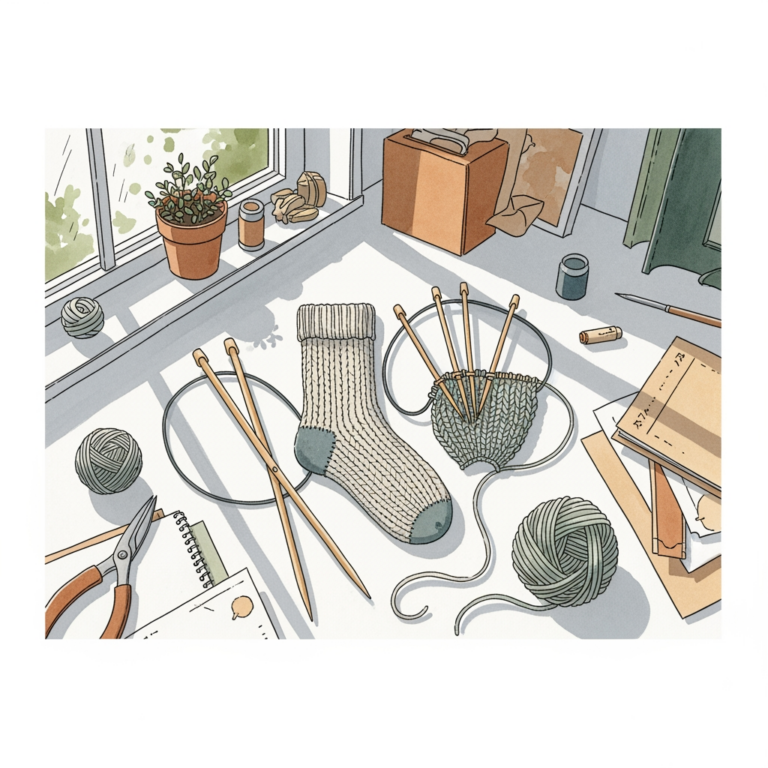
When knitting socks or mittens with slippery silk, double-pointed needles (DPNs) can become a liability if the needles are too slick. Clover Takumi DPNs are the industry standard for this specific application.
The bamboo provides the perfect amount of drag to keep the stitches from sliding off the ends of the needles when you aren’t actively working them. This is crucial for avoiding the dreaded "dropped stitch" panic that often occurs with DPNs.
They are lightweight and flexible, which is a major benefit when you are maneuvering four or five needles at once. The tips are rounded enough to prevent splitting your yarn, yet pointed enough to work comfortably with fingering-weight wool.
Why Bamboo Is Best for Slippery Silk and Alpaca
- Natural Friction: Unlike metal, which has a low coefficient of friction, bamboo’s cellular structure provides microscopic resistance.
- Temperature Regulation: Bamboo stays at room temperature, whereas metal can feel cold or become slippery with hand oils.
- Yarn Protection: The softer surface of bamboo is less likely to snag delicate, single-ply yarns compared to the sharp edges of some metal needles.
- Tension Control: The grip allows you to relax your hands, which prevents the overly tight knitting that often happens when you are subconsciously fighting to keep stitches on a slick needle.
How to Maintain Your Bamboo Needle Surface Finish
Over time, the natural oils from your hands and the fibers of your yarn can cause bamboo needles to become slightly tacky or, conversely, too worn. A quick buffing with a soft, dry cloth can remove surface debris and restore the original feel.
If your needles start to feel "grabby," a tiny amount of wax or a light rub with a piece of waxed paper can smooth them out. Avoid using harsh chemicals or abrasive cleaners, as these can strip the wood and lead to splintering.
Always store your needles in a case that prevents them from bending or warping. Bamboo is a natural material that reacts to humidity, so keeping them in a stable environment will ensure they last for decades of knitting.
Choosing Between Fixed and Interchangeable Sets
Fixed circular needles are often more affordable and feature a very smooth, uninterrupted transition from the needle to the cord. They are perfect if you have a "go-to" needle size for your favorite sock patterns.
Interchangeable sets offer more versatility, allowing you to swap cable lengths and needle sizes on the fly. However, you must be diligent about checking your connections; a loose join can create a snag that catches slippery fibers.
If you are just starting out, buy a few fixed needles in your most-used sizes to see which brand’s "grip" you prefer. Once you find your favorite, investing in an interchangeable set becomes a much safer and more informed purchase.
Selecting the right bamboo needle is about finding the perfect balance between control and speed for your specific project. Whether you choose the reliable Takumi or the precise HiyaHiya, the goal is to let the tool support your hands rather than fight against your yarn. Remember that your choice of needle is a personal one, so don’t be afraid to experiment until you find the perfect match for your unique knitting style. Happy making, and may your stitches always stay exactly where you want them.