6 Best Stitch Holders For Drop-Shoulder Projects
Keep your stitches secure with our top 6 holders for drop-shoulder projects. Discover the best tools to maintain tension and ensure a perfect, easy fit.
Achieving the perfect drape in a drop-shoulder sweater requires careful management of your live stitches when you reach the shoulder seams. Whether you are holding stitches for a three-needle bind-off or setting them aside to pick up for a neckband, the right tool is essential. Using the wrong holder can lead to distorted yarn, dropped loops, or frustrating snagging. Here are the best stitch holders to ensure your garment construction remains as pristine as your tension.
Cocoknits Stitch Markers: Best for Secure Holding


These are not your traditional safety-pin style holders, but rather flexible nylon cords that attach directly to your needle tips. They allow you to move stitches from your working needles onto the cord without ever sliding them off into the open air.
For drop-shoulder sweaters, where you might have fifty or more stitches sitting idle, the flexibility of these cords is a game changer. They don’t weigh down the fabric or pull on the shoulder seam, which helps maintain the structural integrity of your knitting.
The bottom line: If you are worried about losing stitches or dealing with heavy wool that stretches under its own weight, these cords provide the most secure, stress-free transfer method available.
Clover Jumbo Stitch Holders: Best for Bulky Knits
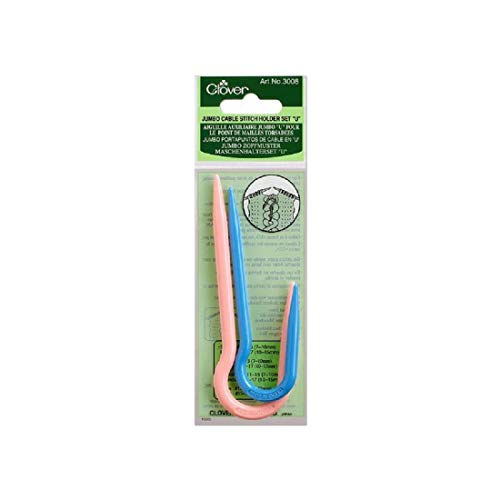
When you are working with chunky, super-bulky yarns, standard metal holders often feel cramped and difficult to close. Clover’s jumbo aluminum holders offer a wide berth that accommodates thick yarn without crushing the fiber.
The aluminum construction is lightweight, ensuring that your heavy-gauge project doesn’t become cumbersome to handle while you work on other sections. The locking mechanism is robust, providing a satisfying "click" that keeps your stitches safe during long periods of storage.
However, be mindful that the metal can sometimes snag delicate fibers like mohair or single-ply wool. Use these primarily for sturdy, plied yarns where the smooth metal surface will glide easily through the stitches.
Brittany Birch Stitch Holders: Best Wood Option
There is a distinct tactile pleasure in using birch tools that plastic or metal simply cannot replicate. Brittany birch holders are smooth, warm to the touch, and surprisingly strong, making them a favorite for those who prefer natural materials.
Because wood has a subtle "grip" compared to slick metal, your stitches are less likely to slide around accidentally while the holder is stowed in your project bag. This is particularly helpful if you are working with slippery fibers like silk or bamboo blends.
While they are beautiful, they are not as flexible as cord-style holders. Use these when you need to hold a straight line of stitches for a firm, structured shoulder seam.
Susan Bates Aluminum Holders: Best Budget Choice

You likely have a few of these in your notions tin already, and for good reason—they are the workhorses of the knitting world. The U-shape design is a classic for a reason, allowing you to hold a large number of stitches securely with a simple sliding lock.
They are incredibly durable and won’t warp or break, even if you accidentally sit on them or pack them tightly in a travel bag. They are the definition of "set it and forget it" tool management.
The trade-off is the lack of flexibility; these holders are rigid. If you are trying to try on your sweater to check the drop-shoulder fit, these holders will poke out and create bulk, so take them out before checking your progress.
Knitter’s Pride Mindful Holders: Best Ergonomics

The Mindful collection is designed with a focus on smooth transitions and user comfort. These holders feature a polished finish that prevents yarn snagging, which is vital when you are transferring a large number of stitches for a shoulder bind-off.
The ergonomics of the locking mechanism are superior, requiring less manual dexterity to open and close. If you suffer from hand fatigue or have trouble with stiff clasps, these are a thoughtful upgrade that makes the knitting process feel more intentional.
They are an investment, but for a knitter who values a seamless experience from cast-on to bind-off, the quality of the finish is well worth the cost.
Chiaogoo Flexible Stitch Holders: Best for Ease
Chiaogoo is famous for their cables, and their stitch holders utilize that same high-quality, memory-free material. You simply slide the holder onto your needle tip and transfer the stitches directly onto the cord.
This method is arguably the safest way to hold stitches for a drop-shoulder project because it eliminates the risk of the stitches "popping" off a metal pin. Once the stitches are on the cord, you can tie the ends together to create a secure loop.
If you are a knitter who frequently sets projects aside for weeks at a time, this is the most reliable way to ensure your stitches stay exactly where they belong.
Why Stitch Holders Matter for Drop-Shoulder Fits
A drop-shoulder sweater relies on the shoulder seam sitting lower than the natural shoulder point. If your stitches are held on a tool that is too small or too rigid, you risk stretching the fabric at the seam line.
Stretched stitches lead to "gapping" or a wavy edge, which can ruin the professional look of your finished garment. Choosing a holder that allows the fabric to relax naturally is just as important as your choice of yarn.
Always consider the weight of your fabric; heavy wool requires a holder that distributes that weight evenly across the cord or pin.
How to Prevent Stretched Stitches During Transfer
When moving stitches from your needle to a holder, keep your tension consistent. Avoid pulling the yarn taut as you slide the stitches over, as this creates a "ladder" effect that is difficult to fix during blocking.
If you are using a rigid holder, ensure it is long enough to hold the stitches comfortably without compressing them. Compressed stitches can lead to uneven gauge when you eventually pick them up to knit the collar or sleeve.
Pro tip: Use a slightly smaller needle to pick up the stitches from the holder if you find the yarn has relaxed too much.
Essential Tips for Managing Large Shoulder Widths
Drop-shoulder designs often involve a wide back and front panel that can feel unwieldy. When you have a large number of stitches, consider using two separate holders—one for the front and one for the back—rather than cramming them all onto one.
This makes it much easier to manage the garment when you are ready to join the shoulders. It also prevents the weight of the fabric from pulling the stitches toward the center of a single, over-burdened holder.
Always double-check your stitch count before putting the stitches on the holder. It is much easier to recount on the needle than it is to fix a dropped stitch buried in a holder.
Choosing Between Metal and Wood Stitching Tools
Metal tools are generally slicker, which is excellent for speed but can be risky with slippery fibers. If you are working with superwash wool or silk, metal might cause your stitches to slide off if the holder isn’t perfectly closed.
Wood tools provide a bit more friction, holding the stitches in place more securely. However, they can be thicker, which might distort the gauge of very fine, delicate yarns.
Ultimately, match your tool to your fiber: use slick metal for grippy, rustic wools and wood or plastic for smooth, slippery fibers.

Selecting the right stitch holder is a small but vital step in the construction of a beautiful drop-shoulder sweater. By prioritizing the needs of your specific fiber and the weight of your project, you can prevent common pitfalls like distorted seams and dropped stitches. Remember that the best tool is one that allows your knitting to rest safely until you are ready to finish your masterpiece. Happy knitting, and may your shoulder seams be as smooth as your stockinette.