6 Best Row Counters For Monitoring Repeat Sequences
Master your knitting patterns with our top 6 row counters. Discover reliable tools to track repeat sequences effortlessly and improve your project accuracy.
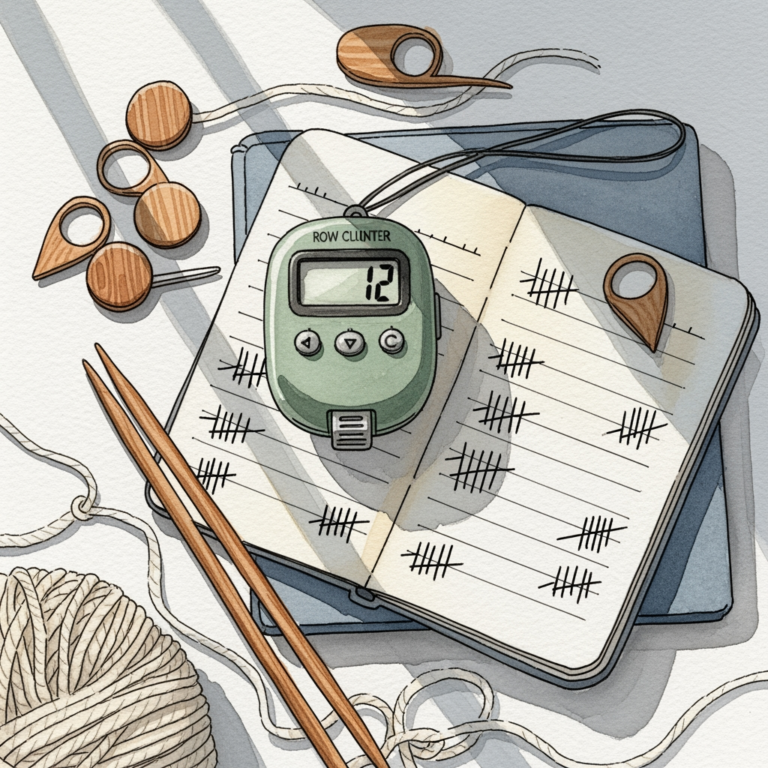
Keeping track of row counts is the difference between a perfectly symmetrical pair of socks and a frustrating evening spent ripping back your work. Even the most seasoned knitters lose their place when life interrupts a meditative knitting session. Choosing the right tool for your specific workflow can turn a chore into a seamless part of your rhythm. Here are the best counters to ensure your patterns remain consistent from start to finish.
Knitter’s Pride Mindful Collection Row Counter
This counter is designed for those who appreciate aesthetic cohesion alongside functional utility. It features a smooth, tactile interface that fits comfortably in the palm, making it an excellent companion for long sessions of stockinette.
The standout feature here is the deliberate resistance in the click mechanism. It prevents accidental advances, which is a common annoyance with cheaper, loose-springed counters. If you are working on a complex lace chart, you need that reliability to ensure your "increase" and "decrease" rows stay perfectly aligned.
The Mindful collection is particularly well-suited for knitters who use bamboo or wooden needles, as the tool’s finish matches the calming, ergonomic philosophy of the brand. It is an investment in your focus, not just a way to track numbers.


Clover Kacha-Kacha Clicker: Best For Portability
The Clover Kacha-Kacha is a legendary tool in the knitting community for a reason: it is virtually indestructible and incredibly portable. The name itself mimics the satisfying sound it makes when you advance a row.
Because it features a convenient strap, you can wear it around your neck or attach it to your project bag. If you are a commuter knitter who works on projects during train rides or in waiting rooms, this is your best friend. You won’t have to hunt for it in the bottom of your tote when the bus hits a bump.
The main tradeoff is the size of the button, which can be a bit stiff for those with arthritis or hand fatigue. However, its mechanical simplicity means it will never run out of batteries. It is the reliable workhorse of the knitting world.
Cocoknits Method Maker’s Keep Magnetic Counter
This is less of a standalone counter and more of a comprehensive system for the organized knitter. The Maker’s Keep is a wearable magnetic bracelet that holds your needles, stitch markers, and the small, magnetic row counter itself.
For those who struggle with "counter creep"—where you set the tool down and lose it under a cushion—this is the ultimate solution. By keeping your tools tethered to your wrist, you maintain a constant flow state. You never have to stop your rhythm to reach for a tool.
It is particularly useful when working with slippery, high-twist yarns like silk or fine merino, where your focus needs to be entirely on maintaining even tension. When your tools are always exactly where they should be, your knitting speed and accuracy naturally improve.
KnitIQ Digital Finger Counter: Best For Accuracy

Digital counters offer a level of precision that mechanical ones sometimes lack, especially when you need to track multiple repeats simultaneously. The KnitIQ digital finger counter sits comfortably on your index finger, allowing you to click as you finish your last stitch of the row.
This is a game-changer for knitters working on intricate colorwork or complex cables. Because it is always on your hand, you don’t even have to look away from your needles to advance the count. It becomes a subconscious movement.
However, be mindful of the battery life. While these are highly accurate, they do eventually require a battery change. Keep a spare cell in your project bag so you aren’t left guessing your row count in the middle of a delicate lace repeat.
Beadsmith Mechanical Row Counter: Best For Durability
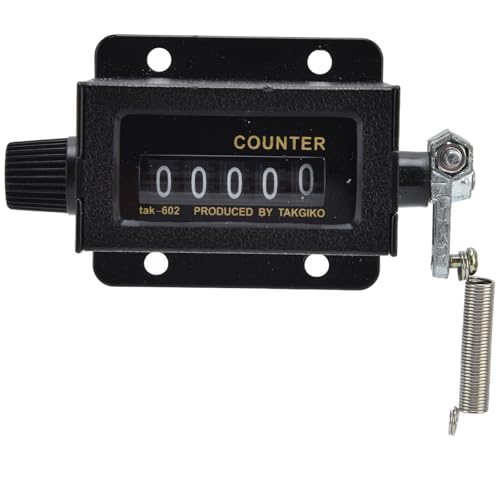
If you are the type of knitter who is hard on their tools, the Beadsmith mechanical counter is built to survive. It is a classic, no-nonsense dial-based counter that feels sturdy and substantial in the hand.
Unlike clickers that rely on internal springs, this dial system is virtually immune to mechanical failure. It is an excellent choice for those who work with heavy, rustic wools or chunky yarns that might snag on delicate digital screens or flimsy plastic buttons.

It doesn’t have the "quick-click" convenience of other models, but it makes up for it in longevity. If you want a tool that will still be in your knitting kit twenty years from now, this is the one to pick.
Susan Bates Handheld Counter: Best For Simplicity
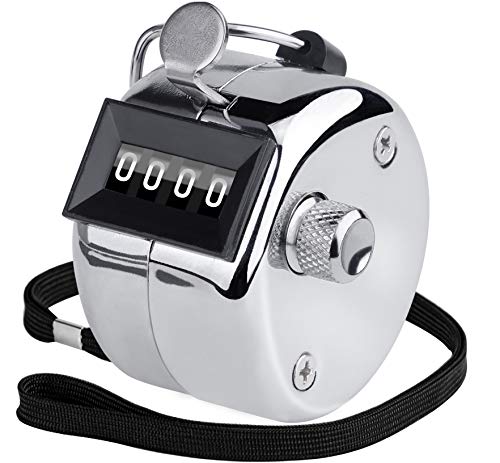
Sometimes, you don’t need bells and whistles; you just need a way to count to ten. The Susan Bates handheld counter is a classic, affordable option that has been a staple in local yarn shops for decades.
It is simple, lightweight, and does exactly what it promises. It is ideal for beginners who are just starting to learn the importance of tracking repeats in a scarf or a simple hat. You won’t feel overwhelmed by settings or magnets.
The only downside is that it is strictly a manual tool. It doesn’t offer the portability of a finger counter, so it stays on your table or in your lap. For a stationary knitter, however, it remains the gold standard of simplicity.
How to Choose the Best Counter for Your Projects
Selecting a counter depends largely on your knitting environment and the complexity of your project. If you are knitting a simple garter stitch blanket, a basic mechanical counter is more than enough.
However, if you are tackling a project with frequent short-row shaping or complex lace, you need a tool that is integrated into your workflow. Ask yourself these questions before purchasing:
- Do I knit on the go, or do I stay in one spot?
- Does my hand tire easily, or do I need a button with low resistance?
- Do I need to track multiple things, like rows and pattern repeats?
Ultimately, the best counter is the one you actually remember to use. If you find a device annoying, you will stop using it, and your project will suffer. Choose the form factor that feels most natural to your hands.
Comparing Digital Versus Mechanical Clickers
Digital counters provide a clear, illuminated display that is easy to read in low light, which is perfect for evening knitting. They are often more ergonomic, allowing for a light touch that doesn’t disrupt your tension.
Mechanical counters, conversely, offer a tactile, physical "thunk" that provides sensory feedback. Many knitters find that this physical action helps them mentally anchor the end of a row.
- Digital: Best for complex patterns, low-light conditions, and those with hand sensitivity.
- Mechanical: Best for longevity, battery-free reliability, and those who prefer a tactile experience.
Why Consistent Row Counting Improves Your Lace
Lace knitting is a game of geometry. If you miss a single row in a lace repeat, the entire pattern will fail to "bloom" correctly during the blocking process. Because lace often involves yarn-overs and decreases that rely on specific row placements, even one error can throw off the entire visual flow.
Consistent counting ensures that your increases and decreases are spaced exactly as the designer intended. When you block your finished piece, the stitches will align perfectly, creating that crisp, professional look that defines heirloom-quality lace.
Don’t view the counter as a distraction. View it as a rhythmic partner that allows you to trust your work, so you can focus on the joy of the yarn sliding through your fingers.
Troubleshooting Common Row Counter Slip-Ups
The most common mistake knitters make is forgetting to click the counter until after they have started the next row. To avoid this, make it a habit to click the counter the moment you complete the final stitch of the row, before you turn your work.
Another issue is the "double-click" or the accidental bump. If you suspect you’ve miscounted, don’t panic. Use your row counter in conjunction with a locking stitch marker placed every ten or twenty rows. This gives you a physical "checkpoint" to verify your count.
If you find yourself constantly losing your place, try keeping a small notepad next to your project. Write down the row number every time you put your knitting down for the night. This simple habit saves hours of frustration and keeps your project on track.
Finding the right row counter is about finding a tool that disappears into your process rather than interrupting it. Whether you prefer the tactile click of a mechanical dial or the precision of a digital screen, the goal remains the same: peace of mind. Invest in a tool that matches your knitting style, and you will find your projects becoming more accurate and far more enjoyable. Happy knitting, and may your rows always be perfectly counted.