6 Best Swivel Cords For Tangle-Free Knitting Reviewed
Tired of twisted yarn? We review the 6 best swivel knitting cords to ensure tangle-free projects. Discover our top picks for smooth, stress-free stitching.
There is nothing more frustrating than mid-row knitting interrupted by a cable that refuses to cooperate, twisting into stubborn loops while you work. Swivel cords have revolutionized the craft by allowing the needle tip to rotate independently of the cable, effectively ending the battle against tension buildup. After two decades at the needles, I can confidently say that investing in high-quality swivel technology is the single best upgrade you can make for your knitting comfort. This guide explores the top swivel options on the market to help you find the perfect match for your hands and your projects.
ChiaoGoo SWIV360 Cables: The Gold Standard Choice


When you talk to serious knitters about cable reliability, the ChiaoGoo SWIV360 is almost always the first name mentioned. These cables feature a multi-strand steel core coated in nylon, which provides a near-perfect balance of flexibility and memory-free movement.
The true magic lies in the swivel mechanism, which is smooth, silent, and incredibly durable. Whether you are working on a massive, heavy wool blanket or a delicate lace shawl, these cables never kink or fight your hands.
The only real tradeoff is that they are quite firm; if you prefer a very limp, "drapey" cable, these might feel a bit stiff at first. However, for most knitters, that slight firmness is exactly what prevents the cable from catching on your stitches.
Knitter’s Pride Mindful Collection Swivel Cords

The Mindful Collection is a beautiful departure from the utilitarian look of standard knitting tools, featuring a soothing teal color palette. These cords are specifically designed to be smooth and snag-free, with a stainless steel swivel join that rotates effortlessly.
They are particularly excellent for knitters who suffer from hand fatigue or joint pain. Because the cord doesn’t fight against the weight of your project, you spend less energy managing your tools and more time enjoying the rhythm of your stitches.
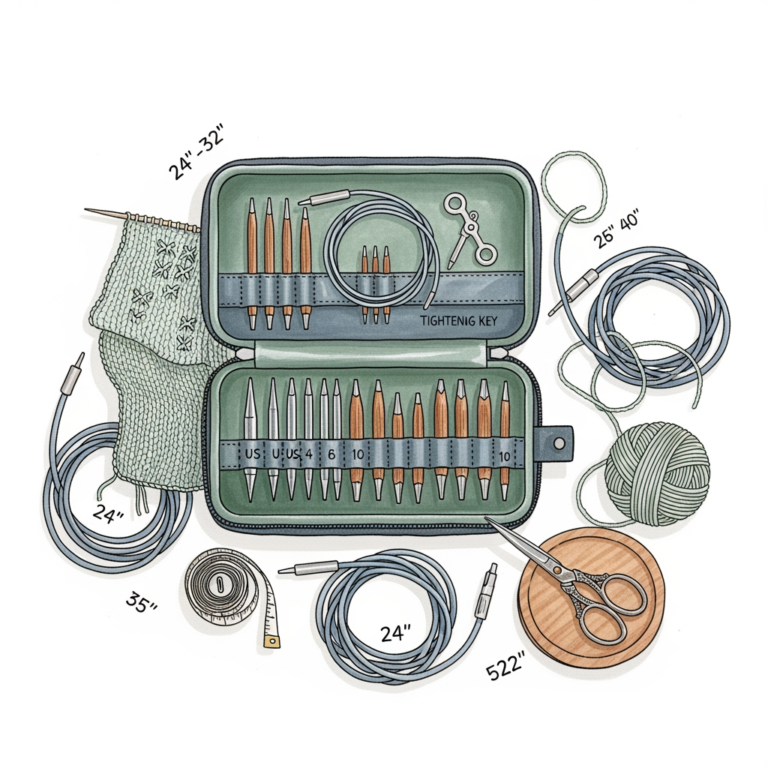
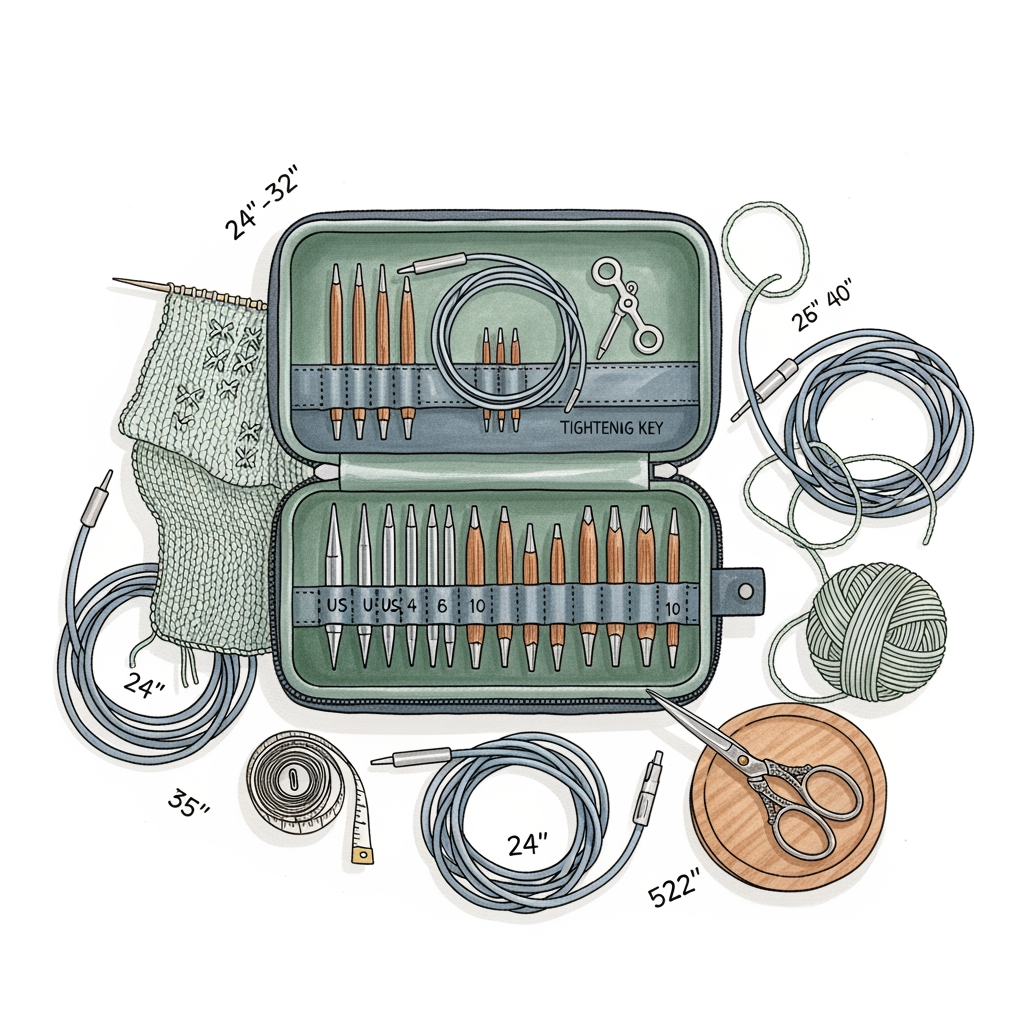
One thing to note is that the connection point is quite sleek, which is great for sliding stitches over, but you must ensure they are tightened properly with the provided key. If you don’t secure them, the swivel can feel slightly looser than the ChiaoGoo equivalent.
Lykke Interchangeable Swivel Cords Reviewed

Lykke is renowned for their gorgeous aesthetic, and their swivel cords maintain that high standard of quality. These cords are remarkably flexible, making them a top choice for those who prefer the "magic loop" method for knitting socks or sleeves.
The swivel action is fluid and integrates seamlessly with their signature driftwood or metal needle tips. They feel less "industrial" than steel-core cables, offering a softer, more organic feel in the hand that many traditionalists prefer.
If you are a knitter who tends to be hard on your equipment, be mindful that these softer cables can occasionally show wear at the join over many years of heavy use. Treat them with care, and they will reward you with a very comfortable, tangle-free experience.
HiyaHiya Steel Swivel Cables for Precision

HiyaHiya has long been a favorite for those who prioritize a sharp, precise needle tip, and their swivel cables are a natural extension of that precision. These cables are thin, light, and incredibly supple, which is a dream for lace knitters working with fine-gauge yarn.
The swivel mechanism is small and discreet, ensuring it doesn’t add unnecessary bulk to your needle setup. This makes them ideal for intricate colorwork or complex cable patterns where you don’t want a heavy cable dragging on your work.
Because they are so thin, they can be slightly more prone to "memory" if stored in a tight coil for a long time. I recommend storing these in a flat case or hanging them up rather than stuffing them into a small notions bag.
Addi Click SOS Swivel Cords: A Unique Option
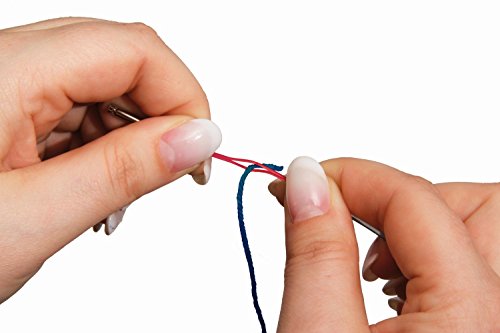
The Addi Click system is legendary for its secure, "click-in" connection that requires no tools, and their SOS swivel cords add a brilliant functional feature. These cords include a small hole near the join that allows you to insert a lifeline while you knit.
This is a game-changer for complex lace projects where a dropped stitch could ruin hours of work. The swivel function works just as well as the standard Addi cords, providing that signature German engineering and durability.
Be aware that the Addi Click system is proprietary; these cords will only work with Addi Click tips. If you have a collection of various needle brands, you will need to commit to the Addi ecosystem to use these specific, life-saving cables.
Seeknit Koshitsu Swivel Cords: Premium Feel
Seeknit offers a Japanese-made experience that feels entirely different from the mass-produced alternatives. Their Koshitsu process involves a high-pressure treatment of bamboo, resulting in a cable that is exceptionally smooth, strong, and resistant to warping.
The swivel mechanism on these cords is remarkably elegant, providing a gentle rotation that feels very natural. If you are a fan of bamboo needles, these cables will complement your setup perfectly without the "plastic" feel of other brands.
They are a premium investment, and they feel like one. Because they are bamboo-based, they have a unique tactile warmth that is unmatched by steel or nylon cables, making them a joy to use during long winter knitting sessions.
Why Swivel Cables Are Essential for Your Kit
The primary benefit of a swivel cord is the elimination of "torque" on your wrists. When you knit, your needles naturally rotate; on a fixed cable, this rotation causes the cord to twist into tight, frustrating coils.
- Reduced Wrist Strain: Less resistance means less repetitive motion stress.
- Faster Knitting: You spend zero time untwisting your cable mid-row.
- Better Stitch Definition: By removing cable tension, you keep your gauge more consistent.
Ultimately, swivel cables allow you to maintain your "flow state." Once you experience the freedom of a cord that moves with you rather than against you, it is very difficult to go back to standard, fixed-connection cables.
How to Choose the Right Cord Length for Projects
Choosing the right length is a balance between the circumference of your project and your personal comfort. A good rule of thumb is to choose a cable length that is slightly shorter than the total circumference of your project.
- For Hats or Cowls: Use a 16-inch or 24-inch cable to keep the stitches comfortably spread.
- For Sweaters: A 32-inch or 40-inch cable is usually best to accommodate the weight of the garment.
- For Magic Loop: Always opt for at least 40 inches to allow for the loops to pull out easily.
If you are between sizes, always size down for the cable. It is much easier to manage a slightly crowded cable than a project that is constantly stretching out because the cord is too long.
Maintaining Your Cables for Longevity and Use
Even the best swivel cables require basic maintenance to keep them performing at their peak. After every project, take a moment to wipe down the connection join with a soft, slightly damp cloth to remove any accumulated fiber dust or natural oils from your skin.
Never pull on the cable to tighten your stitches; this puts unnecessary stress on the swivel joint and can lead to premature failure. Instead, focus on your tensioning technique at the needle tip, keeping the cable as a passive participant in your knitting.
When storing, avoid extreme temperatures. If you live in a very cold climate, let your cables warm up to room temperature for a few minutes before use; the nylon or plastic components will be much more flexible and less likely to snap.
Troubleshooting Common Interchangeable Cord Issues
The most common issue with swivel cords is a "catch" at the join where the needle meets the cable. This usually happens because of a tiny burr on the metal or a slight misalignment during assembly; a quick buff with a fine-grit nail file can often smooth it out.
If your swivel stops rotating, it is likely packed with fiber debris. A quick soak in warm, soapy water (avoiding the needle tips if they are wood) and a gentle turn of the swivel usually clears the obstruction and restores movement.
If you find that your cords are constantly coming unscrewed, check the tightness of the join. Most knitters don’t use the tightening key firmly enough; a quarter-turn past "finger tight" is usually all that is needed to keep them secure for the duration of a project.
Finding the right swivel cable is a deeply personal choice that depends as much on your knitting style as it does on the project at hand. Whether you prioritize the industrial reliability of steel or the organic feel of treated bamboo, the goal remains the same: removing the friction between you and your yarn. By investing in these tools, you are giving yourself the gift of a more fluid, ergonomic, and enjoyable knitting experience. May your stitches be even, your cables be tangle-free, and your next project be your best one yet.