6 Best Wooden Knitting Looms For Beginners
Discover the 6 best wooden knitting looms for beginners. This guide reviews durable, easy-to-use options to help you start your crafting journey with ease.
Stepping into the world of rigid heddle weaving is a transformative experience for any knitter looking to expand their fiber arts repertoire. While knitting creates fabric through interlocking loops, weaving allows you to construct textiles from scratch using a warp and weft. Choosing the right wooden loom is the foundation of your success, as the right equipment makes the difference between a meditative hobby and a frustrating struggle. These six selections represent the best entry points for beginners ready to turn their yarn stash into bespoke cloth.
Ashford Knitters Loom: Best Overall Choice


The Ashford Knitters Loom is widely considered the gold standard for beginners because it is intuitive, sturdy, and remarkably well-engineered. Its design prioritizes ease of use, making the often-daunting task of threading the loom feel manageable even for those who have never handled a shuttle.
What makes this loom shine is its folding capability, which allows you to store your project mid-warp without losing tension. This is a game-changer for knitters with limited space who need to tuck their craft away between sessions.
The construction is solid silver beech, providing enough weight to stay stable on a tabletop while remaining light enough to transport. If you want a reliable workhorse that will grow with your skills, this is the definitive choice.
Schacht Cricket Loom: Best for Portability
If your lifestyle involves taking your fiber arts to retreats, guild meetings, or even the park, the Schacht Cricket is your best companion. It is compact, lightweight, and specifically designed to be carried without sacrificing the quality of the shed—the space between warp threads.
The Cricket is famous for its sturdy, simple tensioning system that holds up well even when weaving with varied yarn weights. Beginners often worry about tension, but this loom’s reliable ratchet system keeps your warp consistent, which is essential for preventing uneven edges.
Keep in mind that its smaller size means you are limited in width, but for scarves, cowls, and small table runners, it is perfection. It’s a specialized tool that excels at being exactly what it promises: a portable, high-quality loom for the traveler.
Kromski Harp Forte: Best for Versatility
The Kromski Harp Forte is a beautiful piece of equipment that brings a touch of European craftsmanship to your studio. It is perhaps the most feature-rich option for a beginner who wants to experiment with advanced techniques like double-heddle weaving right out of the gate.
This loom is uniquely designed to allow for two heddles to be used simultaneously, effectively doubling the density of your warp. This means you can move from simple plain weave to more complex patterns much faster than on other starter looms.
While it requires a slightly steeper learning curve than the Ashford, the reward is a level of creative freedom that lasts for years. It is the best choice for the knitter who knows they will eventually want to weave finer, more intricate fabrics.
Beka Weaving Loom: Best for Young Beginners
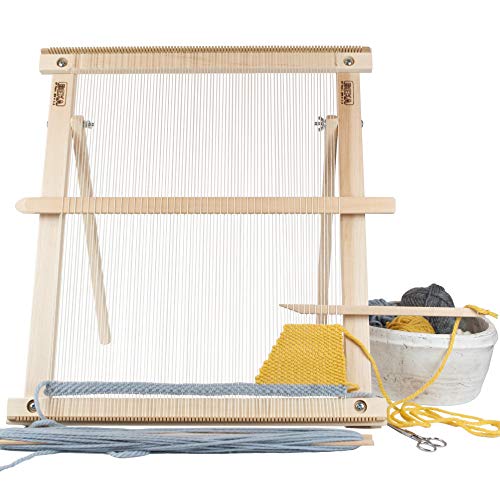
Beka looms are built with a straightforward, no-nonsense simplicity that makes them ideal for younger makers or those who find complex tensioning systems intimidating. They are essentially "what you see is what you get" tools, focusing on the joy of the weave rather than the mechanics of the machine.
Because these looms are often simpler in design, they are excellent for learning the rhythm of the shuttle and the mechanics of the shed. They are less about precision engineering and more about tactile discovery, which is perfect for building confidence.
Don’t expect the high-tension capabilities of the professional models, but do expect a durable frame that can withstand the learning process. It is a fantastic entry point for those who want to focus on the basics of color and texture.
Melissa & Doug Loom: Best Budget Option
The Melissa & Doug loom is frequently dismissed by serious weavers, but it serves a very specific purpose for the absolute beginner. If you are unsure whether you will enjoy weaving and don’t want to invest hundreds of dollars, this is your low-risk entry point.
It is best suited for small, decorative projects like coasters or wall hangings rather than garments. Because the frame is not designed for high-tension warp, you should stick to thicker, more forgiving yarns like wool or cotton blends.
Use this loom to learn the fundamental "over-under" motion of weaving. Once you master the mechanics, you will know exactly what features to look for in a more permanent, professional-grade upgrade.
Ashford SampleIt Loom: Best for Small Projects

The SampleIt loom is essentially a smaller, more focused version of the Ashford Knitters Loom. It is designed specifically for weavers who want to test out new yarn combinations, try out color theory, or create small-scale accessories.
Because the width is narrow, you can warp it in a fraction of the time it takes for a full-sized loom. This makes it an essential tool for sampling—a practice where you weave a small swatch to check how a yarn behaves before committing to a large project.
It is incredibly user-friendly and features the same high-quality hardware as the larger Ashford models. If you are a knitter who loves to experiment with different fiber blends and textures, this is the perfect laboratory for your ideas.
Understanding Rigid Heddle Loom Terminology
To navigate the world of weaving, you must understand the two primary components: the warp and the weft. The warp consists of the vertical threads held under tension on the loom, while the weft is the horizontal thread you weave through them.
- Heddle: The rigid piece with slots and holes that holds your warp threads and creates the shed.
- Shed: The opening created when you lift or lower the heddle, allowing the shuttle to pass through.
- Dent: The measurement of the heddle, indicating how many threads per inch (TPI) it can accommodate.
Understanding these terms is like knowing the difference between a circular needle and a double-pointed needle. Once you grasp the vocabulary, the instructions in your pattern books will finally make sense.
Essential Weaving Tools for New Beginners
Beyond the loom itself, you need a small kit of accessories to make your weaving process efficient. Start with a warping peg, which helps you measure your warp threads to the correct length before putting them on the loom.
- Shuttles: These hold your weft yarn; boat shuttles are faster, but stick shuttles are easier for beginners.
- Threading Hook: An essential tool for pulling warp threads through the eyes of the heddle.
- Measuring Tape: Crucial for ensuring your warp ends are equal in length to maintain even tension.
Investing in a high-quality threading hook will save you hours of frustration. Don’t skimp on the basics, as they are the tools you will touch every single time you weave.
How to Properly Warp Your Wooden Loom
Warping is the process of setting up your loom, and it is the most critical step for a successful project. Begin by calculating your warp length and ensuring your threads are wound with consistent tension; loose threads will create "bubbles" in your fabric.
Use the direct warping method if your loom supports it, as it is generally the most straightforward for beginners. This involves threading the heddle and winding the warp directly onto the back beam in one continuous motion.
Always use a lease stick or cardboard strips between layers of warp on the back beam to prevent tangling. If your warp is uneven, your finished fabric will show gaps or puckers, so take your time during this setup phase.
Troubleshooting Common First-Time Weaving Errors
The most common mistake beginners make is "draw-in," where the edges of the fabric pull inward, causing the width to shrink. This usually happens because you are pulling the weft thread too tightly as you pass it through the shed.
- Skipped threads: Usually caused by a threading error where a warp thread was missed in the heddle.
- Uneven tension: Often the result of warping too quickly; slow down and ensure every thread feels equally taut.
- Broken threads: If a warp thread snaps, don’t panic; use a "weaver’s knot" to join the ends and keep going.
Remember that every weaver makes mistakes, especially at the start. Treat these errors as a natural part of the learning process rather than a failure of your skill.
Weaving is a rhythmic, rewarding craft that complements knitting by allowing you to create your own unique textiles. Whether you choose the portable Schacht Cricket or the versatile Kromski Harp, the goal remains the same: to enjoy the process of turning individual threads into a cohesive piece of art. Start with a simple project, embrace the occasional mistake, and keep your tension consistent to see the best results. Happy weaving, and may your shed always be clear and your shuttle fly true.