7 Best Ergonomic Grips For Reducing Hand Fatigue
Discover the 7 best ergonomic grips to minimize hand fatigue. This guide explores top designs that improve comfort and boost productivity during daily tasks.
Spending hours on a complex lace shawl or a dense, cabled sweater can leave your hands feeling stiff, cramped, and achy. Many makers mistakenly believe that hand fatigue is simply the price of admission for a beautiful finished object. In reality, the right ergonomic tools can transform your crafting experience from a painful chore into a fluid, sustainable practice. Here are the seven best ergonomic grips to help you stay comfortable through your longest projects.
Addi Swing Ergonomic Crochet Hooks for Comfort
The Addi Swing hooks feature a unique, curved handle design that mimics the natural shape of your hand. This curvature encourages a relaxed grip, which is essential when working with high-twist yarns that can otherwise cause tension buildup in the wrist.
Unlike traditional straight hooks, the Swing allows your hand to rest in a neutral, slightly bent position. This significantly reduces the need for the "death grip" often associated with intricate stitch work.
However, the unconventional shape can feel strange to those accustomed to standard inline hooks. It requires a period of adjustment to find your rhythm, especially if you move between different hook styles frequently.
Clover Amour Crochet Hook Set for Easy Gripping


Clover Amour hooks are widely considered the gold standard for makers who struggle with arthritis or carpal tunnel symptoms. The handles are made from a soft, elastomer rubber that provides a gentle, non-slip surface.
The head of the hook is perfectly polished, allowing yarn to glide smoothly through stitches without snagging. This is particularly helpful when working with delicate fibers like silk or mohair, where friction can lead to unnecessary tugging and hand strain.
While these hooks are fantastic for most, the handles are a fixed size across the range. If you have larger hands, you may find that the grip feels slightly too short for a comfortable hold during marathon sessions.
Tulip Etimo Rose Hooks for Reduced Hand Strain

Tulip Etimo Rose hooks are celebrated for their exceptionally smooth finish and perfectly balanced weight. The cushion grip is designed to sit comfortably in the palm, distributing pressure evenly across the base of the thumb.
These hooks are ideal for knitters who also crochet or those who use a "pencil grip" rather than a "knife grip." The material is soft to the touch but firm enough to provide the tactile feedback needed for maintaining a consistent gauge.
Be aware that these are an investment piece. While the quality is undeniable, they are best suited for those who are committed to their craft and want to prioritize long-term hand health over budget-friendly options.
Boye Ergonomic Aluminum Hooks for Beginners
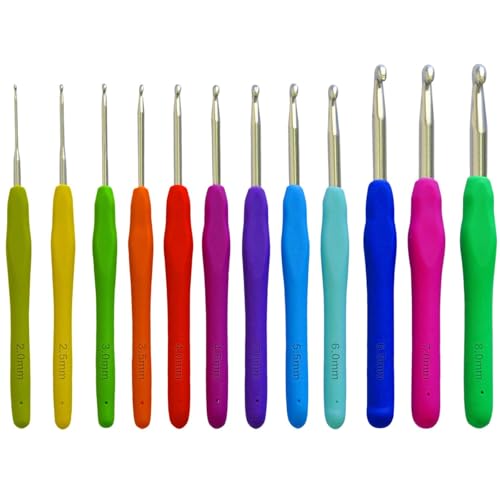
Boye ergonomic hooks offer a familiar, straightforward design that is highly accessible for those just starting their fiber arts journey. The handle is wider and flatter than a standard metal hook, which helps prevent the fingers from cramping during repetitive motions.
These are an excellent entry point because they don’t require a radical change in your holding style. If you are learning to manage your tension with cotton or wool-blend yarns, these hooks provide enough stability to keep your stitches even.
Keep in mind that the aluminum shaft is quite slick. If you are working with slippery synthetic yarns, you may find yourself over-gripping to keep the yarn in place, which partially defeats the ergonomic benefit.
Prym Ergonomic Hooks for Lightweight Knitting

Prym has taken a different approach by using high-performance synthetic materials to create a hook that is incredibly lightweight. The shape is slightly flattened, which prevents the hook from rolling around in your hand while you work.
The lightness of these hooks is a major advantage for those with joint sensitivity. When the tool itself weighs almost nothing, your muscles don’t have to work as hard to stabilize the hook during every stitch.
However, the material is more flexible than metal. If you are a "tight" knitter or crocheter who tends to put a lot of pressure on the shaft, you might find that the hook flexes slightly, which can feel unsettling.
Furls Odyssey Metal Hooks for Wrist Support

Furls Odyssey hooks are heavy, balanced, and beautifully weighted tools designed to do the work for you. The weight of the metal helps the hook glide through the yarn, requiring less physical effort to pull the yarn through each loop.
The ergonomic shape is specifically engineered to fill the palm, which helps prevent the hand from curling into a tight, strained fist. This is a game-changer for people who suffer from chronic hand fatigue during long projects.
Because they are heavier than plastic or wood, they can be tiring for some users during very long sessions. It is a matter of personal preference whether you prefer a weightless feel or the momentum provided by a heavier tool.
Susan Bates Soft Ergonomic Hooks for Control

Susan Bates hooks are famous for their inline head, which is favored by many for its precision. The soft ergonomic version adds a comfortable, squishy grip to this classic shape, making it much easier to handle for extended periods.
This combination is perfect for those who prioritize stitch definition and control above all else. If you are working on complex patterns where exact stitch placement is critical, the inline head gives you the accuracy you need.
The grip is quite soft, which can sometimes collect lint or dust from your yarn. It is a small trade-off, but one that requires a bit of maintenance to keep the grip feeling clean and tacky.
Why Ergonomic Grips Matter for Long Projects
Ergonomics isn’t just about comfort; it’s about longevity. When your hands are strained, your tension fluctuates, leading to uneven fabric and potential long-term repetitive strain injuries.
- Muscle fatigue: Constant gripping leads to tired tendons.
- Tension consistency: Relaxed hands produce a more even gauge.
- Project speed: Comfortable hands allow you to work longer without breaks.
Investing in ergonomic tools is essentially an investment in your ability to keep creating for decades. Don’t wait until you feel pain to make the switch to a more supportive tool.
How to Choose the Right Grip for Your Hand Size
There is no "one size fits all" when it comes to ergonomic grips. You must consider the size of your palm and the length of your fingers.
- For large hands: Look for thicker, longer handles that fill the palm entirely.
- For small hands: Seek out slim but contoured grips that don’t force your fingers to over-extend.
- For joint pain: Prioritize soft, rubberized coatings that require less pressure to hold securely.
Always try to hold a tool before buying if possible. If that isn’t an option, look for tools with adjustable grips or those that offer a variety of sizes in the same ergonomic range.
Essential Stretches to Prevent Knitting Fatigue
Even with the best tools, you must give your muscles a break. Incorporating simple stretches into your crafting routine can prevent stiffness before it starts.
- Wrist circles: Rotate your wrists slowly in both directions to loosen tight joints.
- Finger fans: Spread your fingers wide as far as they go, then clench them into a fist; repeat ten times.
- Thumb stretches: Gently pull your thumb back toward your wrist to stretch the tendons that work hardest during knitting.
Perform these stretches every hour you spend working. Your hands are your most valuable tools; treat them with the care they deserve.
Finding the perfect ergonomic grip is a personal journey that depends on your unique anatomy and project style. By experimenting with these different designs, you can significantly reduce fatigue and keep your hands healthy for years to come. Remember that the best tool is the one that allows you to enjoy your craft without discomfort. Happy making, and may your stitches always be even and your hands always be relaxed.