7 Best Wooden Dowels For Macrame Fiber Art To Try
Discover the 7 best wooden dowels for macrame. This guide explores essential materials, durability, and sizes to elevate your fiber art projects with ease.
Choosing the right foundation for your macrame piece is just as crucial as selecting the perfect yarn for a delicate lace shawl. While many beginners focus solely on the cord, the structural support—your dowel—dictates the drape, tension, and final aesthetic of the finished wall hanging. Over my two decades in fiber arts, I’ve learned that the wood you choose acts as the "needle" of your macrame project, influencing how your knots sit and how the piece hangs over time. Here are seven excellent options to elevate your fiber art.
Ganzoo Natural Beechwood Rods: Best Overall Choice
When you need a reliable, consistent foundation that won’t distract from your intricate knotwork, beechwood is the industry standard. These rods are incredibly dense and smooth, offering a neutral canvas that allows your cord color and texture to take center stage.
In my experience, the uniformity of beech is its greatest strength. Much like choosing a high-quality stainless steel needle for consistent gauge, these rods ensure your knots don’t snag on hidden splinters or uneven grain.
They are perfect for medium-to-large wall hangings where structural integrity is paramount. If you are working with heavy cotton cord, the rigidity of beech prevents the dreaded "bowing" effect that occurs with softer, thinner woods.
Walnut Hollow Unfinished Dowels: Best for Staining
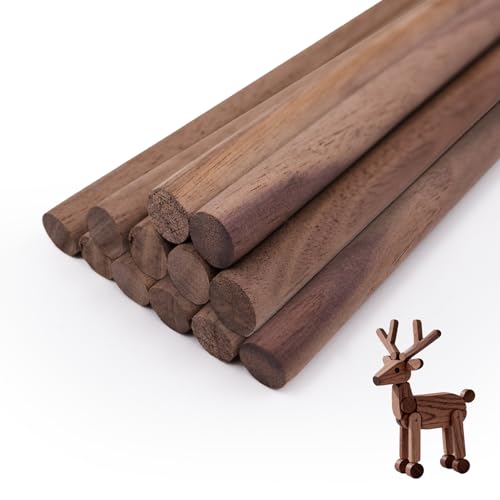

If your design calls for a specific mood—perhaps a moody, dark aesthetic to contrast with cream-colored cotton—Walnut Hollow is the gold standard. These unfinished dowels have a receptive grain that drinks up wood stain or wax finishes with remarkable evenness.
Think of this like choosing a natural, untreated wool yarn versus a superwash variety; you have complete control over the final color profile. You can achieve a deep, professional walnut finish or a light, weathered gray by simply adjusting your stain application.
Be mindful that these require a bit of sanding before you begin. Just as you might "swatch" your yarn to check for dye bleeding, test your stain on a small off-cut of the dowel to ensure the color matches your creative vision.
Darice Smooth Birch Dowels: Best for Small Projects

For delicate plant hangers or intricate, small-scale wall art, you don’t need a heavy-duty rod. Darice birch dowels offer a lightweight, slender profile that keeps the focus on your knotting technique rather than the hardware.
Birch is naturally light in color and possesses a very subtle grain, which makes it ideal for projects where you want a clean, minimalist look. It’s the fiber arts equivalent of using a 2.5mm needle—precise, unobtrusive, and perfect for detail work.
Because these are often sold in smaller diameters, they are excellent for beginners practicing their square knots and lark’s head knots. Just keep in mind that they aren’t suitable for massive, heavy tapestries, as they may flex under significant weight.
Woodpeckers Hardwood Dowels: Best Heavy-Duty Option

When you are tackling a massive, floor-to-ceiling macrame installation, your choice of dowel is a structural decision. Woodpeckers hardwood dowels are built to handle the weight of heavy, multi-ply cotton cords without bending.
Using a flimsy rod for a large project is like trying to hold a heavy, cabled wool blanket on needles that are too thin; the weight will cause the rod to bow, distorting your knots. These hardwood options provide the necessary tension and resistance.
They are incredibly durable and resistant to warping, even in humid environments. If you are gifting a piece that needs to last for years, investing in this level of quality is a non-negotiable step in your project planning.
West Coast Driftwood Pieces: Best for Boho Texture

Sometimes, the "perfect" manufactured rod is exactly what you don’t want. For that organic, "boho" look, nothing beats the raw, weathered aesthetic of genuine driftwood.
Each piece is unique, offering a tactile contrast to the soft, plied cotton cord. Using driftwood is similar to incorporating a hand-spun, art-yarn into a project; the irregularity adds character that a factory-made dowel simply cannot replicate.
The trade-off here is stability. Because the surface is uneven, you will need to adjust your tension slightly to ensure your knots don’t slide. I recommend using a bit of clear-drying craft glue behind the loops of your starting knots to keep them anchored on the irregular surface.
Kurtzy Bamboo Dowel Rods: Best Eco-Friendly Pick

Bamboo is a fantastic, sustainable alternative that offers a unique aesthetic and impressive strength-to-weight ratio. These rods are naturally lightweight and have a distinct, light-toned finish that works beautifully with natural-fiber cords.
If you are conscious of your environmental footprint, bamboo is a stellar choice. It grows rapidly and requires fewer resources than many traditional hardwoods, mirroring the shift toward eco-conscious, plant-based fibers in the knitting world.
Be aware that bamboo can be quite slick. If you find your knots are sliding around too easily, a light sanding with fine-grit sandpaper can provide just enough "tooth" to keep your work securely in place.
Plaid Crafts Pine Dowels: Best Budget-Friendly Buy

If you are just starting out and want to experiment with different knotting patterns, you shouldn’t feel pressured to buy the most expensive materials. Pine dowels are accessible, affordable, and perfectly adequate for learning the ropes.
Think of these as your "practice yarn." They are inexpensive enough that you won’t feel guilty if your first few attempts at a complex pattern don’t turn out exactly as planned.
The only drawback is that pine is a soft wood; it can dent or splinter if handled roughly. Always inspect these closely at the store to ensure you aren’t picking up a rod with a deep knot or a crack, which could compromise your finished piece.
How to Select the Right Diameter for Your Macrame
Choosing the diameter is a balance between the scale of your project and the weight of your cord. A 1/4-inch dowel might look elegant for a small wall hanging, but it will look overwhelmed by thick, 6mm braided cord.
- Small/Delicate: 1/4" to 3/8" diameter.
- Medium/Wall Hangings: 1/2" to 3/4" diameter.
- Large/Heavy Installations: 1" diameter or greater.
Always consider the "visual weight" of the wood. If your macrame is very dense, a thicker dowel provides a better visual anchor, preventing the piece from looking top-heavy.
Essential Tips for Preparing Your Wood for Hanging
Before you tie a single knot, take a moment to prep your wood. A quick pass with fine-grit sandpaper (around 220 grit) will remove any stray splinters that could catch on your cotton cord and fray the fibers.
If you are using a natural wood, consider applying a light coat of mineral oil or a beeswax finish. This protects the wood from moisture and gives it a rich, polished look that elevates the entire piece.
Finally, ensure your dowel is long enough to accommodate your design, including any fringe that might flare out at the edges. A good rule of thumb is to have at least two inches of "empty" space on either side of your knots for a balanced look.
Proper Maintenance to Prevent Warping and Splinters
Wood is a living material, and it will react to the humidity in your home just like natural wool fibers react to their environment. Keep your finished macrame away from direct heat sources or damp areas to prevent the dowel from bowing or cracking over time.
If you notice a splinter developing, don’t panic; simply sand it down gently and re-seal the area with a touch of wax or oil. Treat your dowel with the same care you would a set of high-end wooden knitting needles, and it will support your art for years to come.
The journey of a macrame artist is defined by the quality of the materials you choose to combine. Whether you opt for the raw, weathered beauty of driftwood or the professional-grade stability of beechwood, your choice of dowel is the foundation of your success. Experiment with different woods, pay attention to the grain, and don’t be afraid to let the natural characteristics of your dowel influence your design. Happy knotting, and may your tension always be even and your fibers always stay true.