6 Best Blocking Boards For Oversized Sweaters
Achieve professional results with our top 6 blocking boards for oversized sweaters. Discover durable, spacious options to ensure your knits stay perfectly set.
Blocking an oversized sweater is the final, crucial step that transforms a pile of disparate knitted panels into a professional-looking garment. Without the right surface, you risk uneven edges, distorted stitch patterns, and a sweater that lacks the drape you spent weeks crafting. Investing in a robust blocking system ensures your hard work doesn’t lose its shape during the finishing process. These six options offer the stability and space required to handle large-scale knitwear with confidence.
Knitter’s Pride KnitIQ Extra Large Blocking Mats


These mats are a gold standard for many because of their generous size and high-density foam construction. When you are blocking a bulky sweater, you need a surface that won’t compress under the weight of wet wool.
The inclusion of a grid pattern is a game-changer for symmetry. If you are trying to match the armhole shaping on two separate sleeves, having a printed guide helps ensure they are identical down to the millimeter.
The thickness is the real standout feature here. Because they are thicker than standard craft store foam, you can insert T-pins deeply without hitting the floor or damaging your table surface.
Exquiss Interlocking Foam Blocking Tile Set

Interlocking tiles are the most versatile choice for the knitter with limited storage space. You can configure them into a long rectangle for a sweater body or a wide square for a circular shawl.
The edge-to-edge connectivity is remarkably secure, meaning the pieces won’t slide apart when you are aggressively pinning a heavy, wet garment. This stability is essential when working with fibers like cotton or linen, which require significant tension to set their shape.
Be mindful that these are often thinner than premium professional sets. If you use long, heavy-duty pins, you may need to place a protective layer underneath to avoid scratching your floor.
Boye Large Modular Blocking Board System

The Boye system is a classic for a reason: it prioritizes durability for long-term use. If you are a dedicated garment knitter, you want a board that won’t degrade after repeated exposure to moisture and steam.
The modular nature allows you to expand your surface area as your project grows. I often recommend this for knitters who move between different sweater styles, as it adapts to both cropped fits and long, tunic-length designs.
The material is firm, providing excellent resistance against the "pull" of heavy wool. However, it is heavier than foam alternatives, so it is best suited for a permanent blocking station rather than a setup you need to pack away constantly.
Mindful Collection Lace Blocking Mat Set

While marketed for lace, these mats are excellent for sweaters because of their superior grip. The surface texture holds onto stitches, preventing the garment from shifting while you are adjusting your pins.
The color palette is calming, which might seem trivial, but it actually helps you see your stitches more clearly. When you are blocking a dark navy or black sweater, a neutral-colored mat makes it much easier to spot tension irregularities.
These mats are designed to withstand frequent pins. They don’t leave unsightly holes that widen over time, ensuring your investment lasts for years of sweater seasons.
Grassland Extra Thick Foam Blocking Tiles
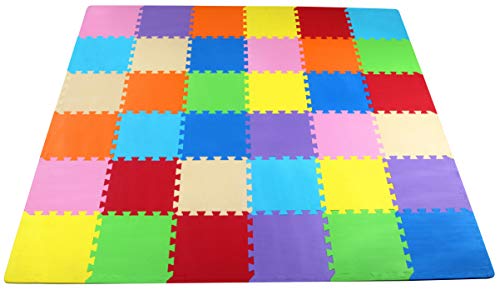
If you work primarily with heavy, high-ply wools, you need an extra-thick surface. These tiles provide an exceptional depth that allows for deep pinning without compromising the integrity of the mat.
The density of the foam is high, which prevents the "sagging" effect that happens when you pin a heavy sweater to a soft, low-quality mat. If your mat sags, your sweater will sag, leading to a distorted finished fit.
These are particularly useful if you prefer to block on a carpeted floor. The thickness provides a barrier that prevents the moisture from the garment from soaking into your rug or carpet.
Sew Easy Large Grid Pattern Blocking Mats

Grid-based mats are essential for knitters who struggle with garment geometry. If you find your sweater panels are consistently slightly off-kilter, the printed lines on these mats will force you to be more precise.
The grid is printed with high-contrast ink, making it easy to read even under dim lighting. This is a practical advantage for those of us who do our blocking in the evening after the kids are in bed or the work day is done.
They offer a perfect balance between portability and utility. They aren’t as bulky as wooden boards, yet they provide more structure than basic interlocking craft mats.
Why Oversized Sweaters Require Specific Boards
Oversized sweaters are deceptive; they look manageable on the needles but become incredibly heavy and unwieldy once saturated with water. A standard ironing board or a towel on the floor simply cannot provide the structural support required for a large garment.
If you don’t have a dedicated board, you risk stretching the ribbing or distorting the shoulder seams. A proper board allows you to lay the sweater flat, pinning it into a perfect rectangle or silhouette without gravity pulling on the fabric.
Furthermore, oversized knits often feature complex textures like cables or brioche. These patterns need to be opened up and pinned precisely to showcase their depth; a soft surface will swallow the texture, while a proper board will allow it to pop.
How to Properly Measure Large Garment Pieces
Measuring should always happen before you start pinning. Use a flexible tape measure to check the width and length against your intended schematic, not just your body measurements.
- Check the armscye depth: Ensure both sides match perfectly.
- Verify the hem width: It should be consistent across the entire bottom edge.
- Align the shoulder seams: They must be identical in width to ensure the neck hole sits correctly.
It is common to over-stretch a piece during the pinning process. Always measure twice and pin once; it is much easier to adjust your pins while the garment is damp than it is to re-wet and re-block a sweater that has dried in the wrong shape.
Essential Tools for Pinning Heavy Knit Fabrics
Standard sewing pins are rarely sufficient for a heavy, oversized sweater. You need T-pins, which have a flat head that is easy to grip and a shank thick enough to hold heavy wool in place without bending.
For delicate fibers like mohair or alpaca, consider using rust-proof stainless steel pins. You do not want to risk oxidation stains on your expensive, hand-dyed yarn after all the hours you’ve invested.
A blocking wire kit is also a fantastic addition for straight edges. By threading a wire through the edge of your sweater panel, you can create a perfectly straight line with only a few pins, rather than wrestling with dozens of individual ones.
Steam vs. Wet Blocking: Best for Large Knits
Wet blocking involves soaking the garment in cool water with a wool wash before pinning. This is the gold standard for natural fibers like wool and alpaca, as it allows the fibers to relax completely and bloom.
Steam blocking is faster and effective for synthetic blends or superwash wools that don’t need to "bloom" as much. However, be careful not to touch the iron directly to the fabric, as this can flatten the stitches and ruin the loft of the yarn.
For an oversized sweater, I almost always recommend wet blocking. It provides the most even tension across the entire piece and ensures that the garment will maintain its shape after its first real wash at home.
Choosing the right blocking board is an investment in the longevity and professional finish of your oversized sweaters. Whether you prioritize modular flexibility or heavy-duty thickness, the right surface will make your finishing work feel like a treat rather than a chore. Take your time with the pinning process, respect the weight of your fibers, and enjoy the transformation of your stitches. Your future self will thank you every time you pull that perfectly blocked sweater out of your closet.