6 Best Linen Threads For Decorative Stitching To Try
Elevate your projects with these 6 top-tier linen threads. Discover the best durable, vibrant options for precision and texture in your decorative stitching.
Decorative stitching on knitwear adds a layer of sophistication that transforms a simple garment into a true heirloom piece. Choosing the right linen thread is as critical as selecting the perfect yarn weight, as the wrong tension or texture can distort your delicate fabric. This guide explores the best linen threads available to help you achieve professional-level embellishments. Whether you are adding surface embroidery to a wool cardigan or reinforcing buttonholes, these selections offer the durability and aesthetic finish your work deserves.


Au Ver à Soie Soie d’Alger: The Versatile Choice
This thread is a staple for a reason, offering a beautiful silk-linen blend that behaves exceptionally well under tension. Its unique construction allows you to separate the plies, giving you total control over the thickness of your decorative stitches.
If you are working on a fine-gauge lace shawl, you can pull a single ply to add subtle, tonal embroidery that won’t weigh down the delicate fabric. It is remarkably smooth, which helps prevent the snagging that often occurs when pulling thread through dense, knitted stitches.
The main trade-off is the price point, as it is a luxury product that requires careful handling. However, for heirloom projects where the embroidery is the focal point, the consistency of this thread is unmatched.
DMC Natura Linen: Best for Delicate Embroidery

DMC Natura Linen is a fantastic choice if you want a matte, natural finish that mimics the look of raw flax. It is incredibly soft to the touch, making it less abrasive than some of the more rigid, traditional linen threads on the market.
Because it has a slightly looser twist, it lays perfectly flat against the surface of your knitting. This is ideal for satin stitch or long-and-short stitch work, where you want the thread to fill space without creating bulky ridges.
Be aware that because it is quite soft, it can fray if you drag it through too many layers of heavy wool. Keep your needle eye appropriately sized to prevent unnecessary friction on the fiber.
Valdani Hand-Dyed Linen: Rich Color Selection
Valdani is the go-to brand when you need deep, variegated colorways that add movement to your decorative stitching. Their hand-dyed process creates subtle shifts in tone, which can make a simple cross-stitch on a sweater cuff look like a complex, multi-layered design.
Since this thread is colorfast, you won’t have to worry about bleeding when you eventually block your finished garment. This is a crucial consideration, as there is nothing more heartbreaking than having a beautiful project ruined by dye migration during the final soak.
The thread is slightly thicker than others, so it works best for bolder, more graphic embroidery. It is perfect for those who want their decorative work to stand out rather than blend in.
Sajou Retors du Nord: Quality for Fine Detail
Sajou is legendary for its heritage quality, and this thread is designed specifically for precision work. If you are doing tiny, intricate detail work on a baby bonnet or a delicate collar, this is the thread you want in your needle.
It is tightly twisted, which gives it a crisp, clean appearance that holds up beautifully over time. It doesn’t pill or fuzz, even when worked into high-friction areas like the edges of a button band.
Because it is so fine, it can be difficult to manage if you are prone to tangling. Use shorter lengths of thread as you work to keep the tension consistent and avoid knots.
Venus Linen Thread: Reliable for Heirloom Work

Venus thread is often overlooked, but it is a workhorse for those who prioritize durability above all else. It is a traditional, high-twist linen that feels sturdy and substantial in the hand.
If you are reinforcing the necklines of heavy sweaters or adding structural embroidery to a coat, this thread provides the necessary strength. It acts almost like a structural component of the garment, preventing stretching in high-stress areas.
It is stiffer than silk-blends, so it requires a bit more patience during the stitching process. You will find that it holds its shape perfectly, which is ideal for rigid decorative techniques like stem stitch or chain stitch.
Weeks Dye Works Linen: Best for Primitive Style

If your aesthetic leans toward the rustic or "primitive," Weeks Dye Works offers a wonderful, slightly irregular texture. The thread has a matte, earthy quality that pairs beautifully with hand-spun yarns or wools with a lot of character.
The colors are muted and sophisticated, providing a grounded look that feels very authentic to traditional fiber arts. It is less about perfection and more about the charm of the handmade process.
Because of its texture, it can be slightly "grabby" when pulled through your knitting. Use a blunt tapestry needle to guide the thread through your stitches without piercing the yarn fibers themselves.
Understanding Linen Thread Weights and Thickness
Linen thread is typically measured by a numbering system that can be confusing for those used to standard knitting yarn weights. Generally, a higher number indicates a finer thread, while a lower number indicates a thicker, more robust strand.
- Fine (60-80 weight): Best for delicate surface embroidery and fine detail.
- Medium (30-40 weight): The "all-rounder" for most decorative stitching and light reinforcement.
- Heavy (12-20 weight): Ideal for structural work, buttonholes, and bold, graphic lines.
Always match the thread weight to the weight of your knitted fabric. If you use a heavy thread on a lightweight fingering-weight sock, the embroidery will look clunky and distort the gauge of the knitting.
How to Prevent Linen Thread From Tangling Easily
Linen is naturally prone to twisting and knotting because of its long, smooth fibers. To mitigate this, always draw your thread through a piece of beeswax before you begin stitching.
This simple step coats the fibers, keeping them smooth and preventing them from catching on themselves. It also makes the thread slightly stiffer, which makes it much easier to thread through the eye of your needle.
If you find the thread still tangles, try working with shorter lengths—no longer than 18 inches. It is better to re-thread your needle more often than to spend twenty minutes picking out a knot in the middle of a delicate design.
Essential Tools for Precision Decorative Stitching
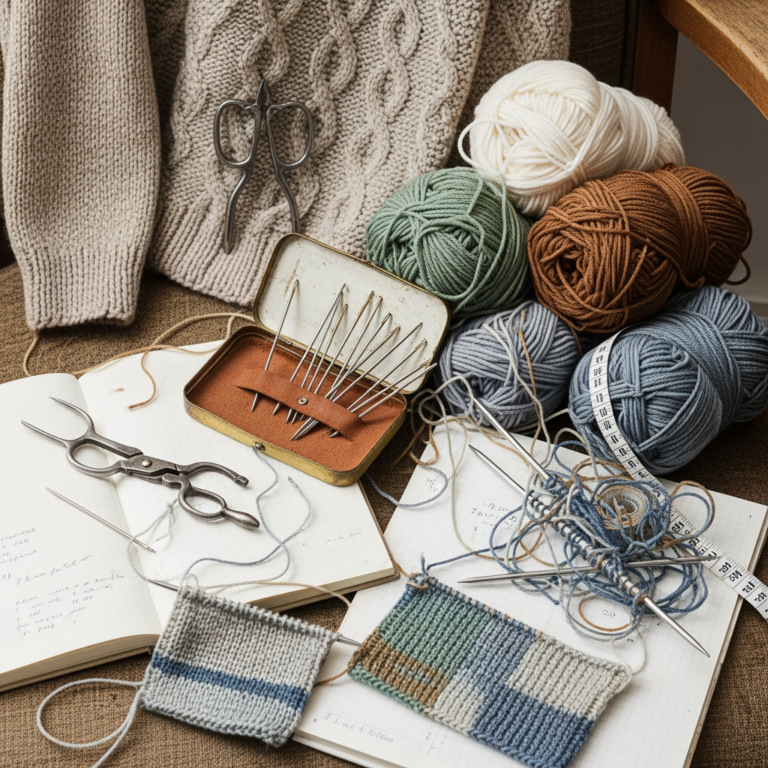
Having the right needle is just as important as the thread itself. For embroidery on knitwear, use a blunt-tipped tapestry needle to avoid splitting the plies of your yarn.
- Tapestry Needles: Essential for sliding between stitches without snagging.
- Embroidery Hoops: Use with caution; keep them loose to avoid crushing the loft of your knit fabric.
- Beeswax: The best way to tame unruly linen fibers.
- Small, Sharp Scissors: Necessary for clean cuts, which prevents fraying at the start of your stitch.
If you are working on a complex design, a small magnifying lamp can save your eyes and improve the accuracy of your stitch placement. Never underestimate the benefit of good lighting when working with fine thread.
Tips for Storing and Preserving Your Linen Threads
Linen is a natural fiber that can become brittle if stored in direct sunlight or overly dry conditions. Keep your threads in a cool, dark place, preferably in a wooden box or a linen bag that allows the fibers to breathe.
Avoid plastic bags, which can trap moisture and lead to mold if the environment is humid. If you have leftover thread, wind it neatly onto a cardboard bobbin to prevent the tangling that occurs when threads are left loose.
Proper storage ensures that your thread remains strong and supple for years to come. By treating your thread with the same care you give your premium wool, you ensure that your decorative work stays beautiful for the life of the garment.
Decorative stitching is a rewarding way to elevate your knitting projects, turning them into one-of-a-kind treasures. By understanding the unique properties of linen and choosing the right thread for your specific fabric, you can ensure your work is both beautiful and durable. Experiment with different weights and textures to find what feels best in your hands. Most importantly, enjoy the slow, meditative process of adding these personal details to your handmade garments.