6 Best Weaving Needles For Heavy Weight Yarns
Selecting the right weaving needle is vital for heavy yarns. Our guide reviews the top six durable, eye-friendly options to ensure seamless, efficient work.
Weaving in ends on a chunky sweater is often the most dreaded part of the knitting process, yet it is the single most important step for garment longevity. Using the wrong tool for thick, heavy-weight yarn can lead to frayed fibers, split plies, and ends that eventually work their way loose. Having the right needle in your kit turns this tedious chore into a satisfying, quick finish. Here are the best tools to ensure your bulky projects stay secure and professional.
Clover Chibi Bent Tip Tapestry Needles: Best Overall


These needles are a staple in my notions bag because the bent tip makes picking up stitches behind the work incredibly intuitive. When you are dealing with bulky yarn, you need a tool that can navigate through dense fabric without snagging the surrounding loops.
The slightly curved point acts like a hook, allowing you to slide under stitches with minimal resistance. This design is particularly helpful when working with lofty, single-ply yarns that tend to catch or pill if you poke them with a sharp, straight needle.
While the plastic material is smooth, it can occasionally feel a bit bulky for fine-gauge work, but for anything worsted weight and above, they are unmatched. They are lightweight, comfortable to hold, and the vibrant colors make them easy to spot if you drop one on the carpet.
Dritz Extra Large Steel Yarn Needles: Best Value

If you are the type of knitter who constantly loses needles in the couch cushions, this multi-pack is your best friend. These steel needles are straightforward, no-nonsense tools that get the job done without any bells or whistles.
The nickel-plated steel finish is exceptionally slick, which helps the needle glide through tight, dense stitches where a plastic needle might get stuck. Because they are metal, they are much thinner than plastic alternatives, making them ideal for weaving into tighter cable crossings.
Keep in mind that because these are metal, they lack the "grip" of plastic, so they can slide out of your stitches if you aren’t careful. However, at their price point, they are the most reliable workhorse for a high-volume knitting lifestyle.
Susan Bates Finishing Needles: Best for Chunky Yarn
When you reach for super-bulky or jumbo-weight yarn, standard tapestry needles simply won’t accommodate the thickness of the strand. These finishing needles are specifically designed with a wider eye that makes threading thick, multi-ply wool a breeze.
The nylon loop design is the standout feature here; it collapses flat when you pull it through the work, meaning you aren’t trying to force a rigid eye through tight fabric. This is a game-changer for those of us who struggle with hand fatigue or arthritis.
Be aware that the nylon loop can fray over time if you are constantly using it with abrasive, rustic wools. Treat them as a specialized tool for your thickest projects rather than an everyday needle, and they will serve you well for years.
Bohin Extra Large Eye Needles: Best for Durability
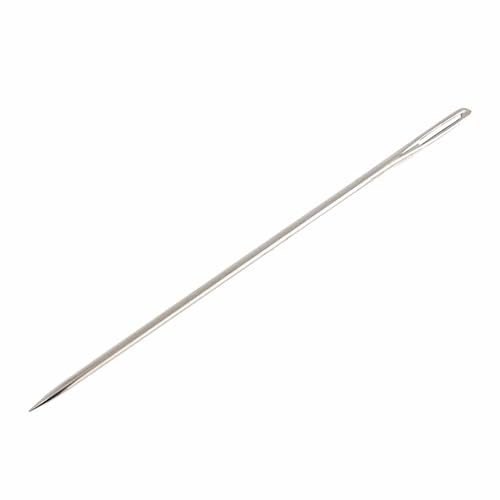
Bohin has a long-standing reputation for manufacturing high-quality steel tools, and their tapestry needles are no exception. These are incredibly sturdy and resistant to bending, even when you are forcing them through thick, felted, or tightly knit wool.
The eye is polished perfectly smooth, which is vital because a rough eye will shred your yarn as you pull it through the fabric. If you work with luxury fibers like alpaca or mohair, this smooth finish protects the delicate halo of the yarn.
They are an investment compared to bulk packs, but they don’t rust or lose their shape. If you want a "buy it for life" needle that can handle heavy-duty finishing, this is the gold standard.
ChiaoGoo Bent Tip Tapestry Needles: Best Precision
Precision is the name of the game with ChiaoGoo. These needles are crafted with a surgical-grade stainless steel finish that feels incredibly smooth in the hand, allowing for surgical accuracy when weaving into intricate colorwork or complex stitch patterns.
The bent tip is angled just enough to grab a single strand of yarn without splitting the neighboring stitches. This level of control is essential when you are weaving into a project that has a high stitch density, where there is very little room to maneuver.
They are slightly heavier than plastic needles, which gives them a premium, balanced feel. If you are a perfectionist who wants your tails hidden perfectly within the structure of the garment, these will give you the control you need.
Tulip Tapestry Needles: Best for Heavy Wool Blends
Tulip needles are famous in the sewing world for their polished, high-quality steel, and their tapestry needles bring that same level of refinement to knitting. They have a unique tip that is sharp enough to pierce fiber if necessary, but rounded enough to avoid splitting.
For heavy wool blends—especially those with a bit of nylon or acrylic content—these needles glide through the fabric with zero friction. The eye is large and well-shaped, ensuring that even thicker yarns don’t bunch up or twist while you are weaving.
They come in beautiful, reusable packaging, which makes them a lovely gift for a fellow knitter. While they are on the pricier side, the ease with which they navigate heavy yarns makes them worth every penny.
Understanding Eye Size for Bulky Weight Projects
The biggest mistake I see beginners make is trying to force a thick yarn through an eye that is too small. When you struggle to thread the needle, you end up fraying the yarn before you even start weaving, which weakens the tail and makes it more likely to pop out later.
Always match the eye of the needle to the diameter of your yarn. If you are working with a jumbo-weight roving, you need a needle with a massive eye to prevent the yarn from flattening out and becoming difficult to manage.
Remember that the eye size also dictates how much bulk you are pulling through the stitch. If your fabric is tight, a needle with a massive eye might stretch your stitches; in that case, use a needle with a smaller profile but a flexible eye, like a nylon loop needle.
How to Properly Weave in Ends for Heavy Yarns
Weaving in ends isn’t just about hiding the tail; it’s about anchoring the yarn so it doesn’t migrate. With heavy yarns, I always recommend weaving in the direction of the stitch structure, following the path of the yarn as it travels through the fabric.
Don’t just pull the tail tight and snip it; that is a recipe for a hole. Instead, weave the tail through the "bumps" on the back of the knitting, alternating directions to create a secure lock that won’t unravel with wear.
If you are working with a superwash wool, which can be slippery, take extra care to weave the tail in multiple directions. The lack of "grab" in superwash fibers means that a simple linear weave-in is much more likely to come undone over time.
Material Matters: Steel vs. Plastic Yarn Needles
Steel needles are generally superior for tight, dense fabrics because they are thinner and slicker. They can slide into places that plastic needles simply cannot reach, making them essential for finishing tight ribbing or cables.
Plastic needles, however, are king when it comes to lofty, delicate, or hand-dyed yarns that might be prone to snagging. The plastic surface is less likely to catch on the fibers, and the blunt tip is much more forgiving if you accidentally hit a stitch wrong.
Consider your project fiber when choosing your tool:
- Slick, synthetic blends: Steel needles work great.
- High-mohair or delicate protein fibers: Use plastic to avoid snagging.
- Dense, felted, or heavy wool: Steel is necessary for the strength required.
Essential Tips for Securing Thick Yarn Tails
For the most secure finish, I often use a "duplicate stitch" method for weaving in ends. By following the path of the existing stitches with your needle, you make the yarn tail essentially invisible and lock it into the fabric’s structure.
If you are working with a very thick, multi-ply yarn, you can even split the yarn tail in half, thread one half through the needle, and weave the two halves in different directions. This drastically reduces the bulk of the tail, making it disappear into the fabric without creating a noticeable lump.
Finally, never cut your tail too short. Leave at least three to four inches of yarn to weave in; this allows you to travel far enough through the fabric to ensure the end is truly locked in. A little extra length is a small price to pay for a garment that lasts for years.
Choosing the right weaving needle is a small detail that makes a massive difference in the professional quality of your finished knits. Whether you prefer the precision of steel or the comfort of a bent-tip plastic, ensure your tool matches the weight and texture of your yarn. Take your time with those final ends, and your handmade pieces will remain beautiful and secure for seasons to come. Happy knitting, and may your tails always stay tucked away!